Blog Home | All Posts | Liberty Timeline | Faith in Freedom | Heroes | Science Timeline | Artists | Life | Sports | Calendar | Brits Worldwide | Imagine
|
|
Blog Home | All Posts | Liberty Timeline | Faith in Freedom | Heroes | Science Timeline | Artists | Life | Sports | Calendar | Brits Worldwide | Imagine |
|
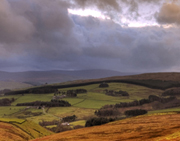
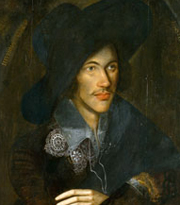
Forsake thy cage, Photo by Jeff Creswell Poet George Herbert Love Bade Me Eat Born in 1593, the seventh child of ten children, George Herbert lost his father when he was three. He was brought up by his irrepressible mother in a household of twenty-six in London. She kept livestock in the garden, had the composer William Byrd over for dinner, and made sure that her sons were educated by tutors. A woman of passion and principle she summoned her children to their daily prayers with the cry, ‘For God's sake let's go!’ George studied at Westminster School and later at Cambridge. At Westminster, his essays were marked by the great Lancelot Andrewes. He was twelve when the Gunpowder Plot against the King and Parliament came dangerously close to the school. Herbert was regarded as brilliant at Cambridge, but his health was poor, and he often lacked the money he needed for books. Still he was at the top of his class. He became major fellow and master of arts at Trinity College, Cambridge, and he began to write poetry. He was fifteen when his cheerful mother married a man half her age, the handsome Sir John Danvers, and set up a second family home in Chelsea. John Donne visited the Thames-side house frequently. Herbert's mother encouraged both Donne and her son to write. In 1625 Donne took refuge from plague in the city and spent six months with them. Herbert celebrated his mother's ‘wit and wisdom’ and her ‘spirit bright’ which illuminated the whole house; noting, ‘you taught me how to write’. It is a lovely tribute to a mother from one of the great English poets. In the mid-1620s Herbert began making a career as a Cambridge orator and MP. You will not be surprised to learn that his poetic soul failed to thrive in Parliament. After losing two brothers as a result of war in the Low Countries - his early poem "Affliction" describes his depression at 'a world of strife' - he left politics. He decided to take a different path. After an epistolary courtship - the 17th century version of falling in love via email - Herbert married Jane Danvers, a loving woman with a keen mind. In 1629 they moved to the parish of Fugglestone-with-Bemerton, near Salisbury, where Herbert served as rector. At Bemerton the couple opened their doors to his nieces and widowed sister and to their friends. Herbert rode round the large parish, dispensing sorely needed charity, legal advice and health care, along with spiritual direction and laughter. Herbert believed that priests should be neither 'witty, or learned, or eloquent, but Holy'. In his practical book on pastoral care, The Country Parson, he advised teaching by example rather than haranguing parishioners. Because he walked his talk, his parishioners regarded him as a saint. But his brother frankly reports that Herbert was not exempt from passionate anger, "to which all our Race is subject". No goody-two shoes, then. Herbert enjoyed playing the lute and writing poetry. He composed lines while riding or walking round his parish. Some poems he set to music, now lost. His words, which survived, carry heartbreak and happiness, sometimes simultaneously. LOVE BADE ME WELCOME Love bade me welcome, yet my soul drew back, “A guest,” I answer'd, “worthy to be here”; “Truth, Lord, but I have marr'd them; let my shame Herbert created images from farming, the trades, music, science and daily home life. and employed a conversational tone in his poems. He candidly described his spiritual conflicts. Faced with tuberculosis and certain death, he responded with irritation and courage. He did not appear to fear death, but he did dislike feeling tired and unwell and unable to do his work. Dearly loved by his wife, his nieces, and his friends, Herbert died in 1633, just short of his fortieth birthday. On his deathbed he entrusted his unpublished book of poems to a friend, and asked him to take it to their mutual friend, Nicholas Ferrar of Little Gidding. Ask Nicholas to publish them, Herbert said, if he thinks they will be to 'the advantage of any dejected poor Soul’. If not, let him burn them. Herbert's friends had not seen his poetry before he died. What must Ferrar have thought, leafing through the handwritten pages of one of England's greatest poets? He published Herbert's "lyric conversations, allegories, fables, monologues, epigrams, and meditations, and prayers" (Oxford DNB) in 1633. Refreshing like water in a desert, they had the clarity of crystal - Who would have thought my shriveled heart . . . And now in age I bud again, Humorous as well as passionate, Herbert liked collecting colloquial sayings - 'his bark is worse than his bite", "the mouse that hath but one hole is quickly taken", "a dwarf on a giant's shoulders sees farther of the two". They were published in Herbert's Remains. Herbert's lyrics have been set to music by Purcell, Ralph Vaughn Williams and William Walton. His tender, true poetry troubles and inspires. He fascinates both those with faith and those without - THE COLLAR I will abroad. But as I rav'd, and grew more fierce and wild Herbert is called one of the 'metaphysical' poets, a term first used by Samuel Johnson, who disliked the excessive learning cramping early 17th century poetry. This was not a charge he levelled at Herbert. Herbert's poetry flared in popularity for a brief time after his death and then sank into obscurity for a hundred years. It was rediscovered in the 20th century. Writing of music, Herbert said, "Sweetest of sweets, I thank you." Those who love poetry might say the same to him.
In the Anglican Communion of Saints,
When you contribute to this website,
|
BRITISH ARTISTS ONLINE
COWBOY SINGER HERE
SHAKESPEARE'S
LOVE'S MYSTERIES
STEPHEN LANGTON'S GOLDEN SEQUENCE HERE
Poetry by George Herbert For UK orders
For US orders  George Herbert is one of the saints celebrated in the Anglican Communion. Faithful, brave, and eccentric, BRITISH SAINTS ARE HERE
Charles I, who had given Herbert the living of Bemerton, read his poems while imprisoned at Carisbrooke Castle, shortly before his execution. |
This wonderful book describes Britain's gifts to the world. Adults will refresh their understanding of profound events in British history, and young people will find inspiration. Warning: This book defies aggressive secularism and unthinking multiculturalism. Written by the co-editors of this website, Share the Inheritance is beautifully illustrated with 125 colour images and a timeline. Available at Amazon UK and at Amazon USA.
|
 |
||