Blog Home | All Posts | Liberty Timeline | Faith in Freedom | Heroes | Science Timeline | Artists | Life | Sports | Calendar | Brits Worldwide | Imagine
|
|
Blog Home | All Posts | Liberty Timeline | Faith in Freedom | Heroes | Science Timeline | Artists | Life | Sports | Calendar | Brits Worldwide | Imagine |
|
Crested bittern Catesby in America There were a number of challenges that Mark Catesby had to meet, and any one of them might have proved too difficult - exploring the American wilderness and spending hours and days absolutely still, watching; learning to speak with the Indians so they could teach him what they knew; teaching himself how to capture on paper with watercolours the birds and animals and reptiles he saw before they vanished (he refused to paint them dead); and raising enough money to sail to America from Britain - in 1712 - in the first place. Learning how to etch big book plates came later. Finally completed in 1747, his Natural History of Carolina, Florida, and the Bahama Islands was the first major illustrated publication on the flora and fauna of Britain's American colonies. Mark Catesby had been fascinated by his grandfather's knowledge of plants. His grandfather knew John Ray, who classified plants, fish and birds by their total physical structure. Ray was the first to realize that trees are vascular. Catesby could have gone to university, but he didn't. Instead he farmed until he could raise enough money to sail to Virginia in 1712. He was twenty-nine. Larger, red-crested woodpecker in action. Exploring Virginia and Carolina Catesby learned everything he could from the Indians he met, and studied and made watercolours of birds, reptiles, fish and animals outdoors. It's wonderful to think of him going alone into a great wilderness teeming with trees and birds and animals he had never seen before, camping out, without any kind of camera that would help him fix in his mind the size and shape and appearance and habits of the birds and animals he saw, and bringing out hundreds of sketches - and botanical treasures. Catesby returned to England in 1719 with a collection of dried plants, reportedly "the most perfect ever brought into the country" (DNB). Word of the collection and the man who had collected them spread, and attracted the attention of men of science, including Sir Hans Sloane and Dr Sherard. With assistance from Sloane, whose collection was the impetus for the British Museum, Catesby travelled to America again in 1722. As you know, these were not the trips we make, flying for six hours in a plane across the Atlantic, but month-long journeys in a small ship. Chipmunk Back in America, Catesby prepared large drawings, and sent quantities of biological material to London, including living seeds and plants with specific planting instructions. He was the first to introduce new American plants to Britain, including the catalpa tree and Magnolia altissima. He always sketched living creatures. In 1725, Catesby embarked for the Bahama Islands and explored them, returning to Britain In 1726. He immediately began preparing the large plates for The Natural History of Carolina, Florida, and the Bahama Islands, including a map he had drawn showing the lands he had explored. Two volumes were published in parts from 1729 to 1747 - "volume one contained 120 plates and volume two 100 plates, all the figures of the plants and animals being drawn and etched by Catesby himself. He also coloured all the first copies, and the tinted copies required were executed under his inspection." He continued to study birds. The Royal Society invited him to become a fellow, and on 5 March 1747 he read a paper on birds of passage before the Royal Society "which contained much new and striking evidence on the migration of birds". He was becoming famous as an ornithologist, but meanwhile he was working against time, trying to finish Hortus Britanno-Americanus, a book with plates and descriptions of eighty-five American trees and shrubs suitable for British gardens. He died before it could be finished, in 1749, and Hortus Britanno-Americanus was not published until 1763, when it was pirated by European publishers. Catesby died poor, and his wife had to relieve her penury by selling his original drawings. This turned out to be lucky for us. George III does not have an enviable reputation, but between bouts of madness he was a faithful supporter of scientists, including Harrison and Herschel. He bought Catesby's original plates, and they can now be seen in the Royal Collection at Windsor.
When you contribute to this website,
|
BRITISH SCIENCE TIMELINE INVENTIONS INNOVATIONS
THE SCIENCE TIMELINE IS HERE
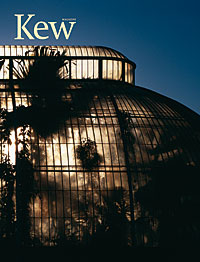
Collaborating with London nurserymen such as Thomas Fairchild at Hoxton and Christopher Gray at Fulham, Catesby sent detailed accounts of his new plants, recommending the Liquidambar tree as "good timber" for wainscotting and joinery, and its "fragrant gum", prized by the Indians, as "a preservative of the teeth." Catesby's work may have inspired the Royal Botanic Gardens at Kew, and his philosophy has been adopted by Kew. As he enthusiastically explained about his plants, "By the concurrent endeavours of the philosopher and artisan, I question not but many of them will be found useful to purposes, of which at present we have not the least conception."
Royal quarrels, southern voyages, and the storied Gardens are HERE
|
This wonderful book describes Britain's gifts to the world. Adults will refresh their understanding of profound events in British history, and young people will find inspiration. Warning: This book defies aggressive secularism and unthinking multiculturalism. Written by the co-editors of this website, Share the Inheritance is beautifully illustrated with 125 colour images and a timeline. Available at Amazon UK and at Amazon USA.
|
 |
||