John O'Sullivan - a good time to remember Margaret Thatcher
John O'Sullivan is quite different from Peter Hitchens, another commentator I admire. Peter loathes what he believes was Margaret Thatcher's failure to confront cultural and moral decay and to recognize the threat of the EU, among other things.

The first criticism seems unfair since Thatcher writes sincerely about the importance of Christian principles to a nation and to individual happiness. However, she doesn't see Christianity as a government programme, but an individual choice. The historical fact that nations trying to live by Judeo-Christian principles have done far better than nations that don't underscores her preference for rubber that meets the road.
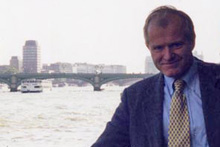
O'Sullivan is the Executive Editor of Radio Free Europe/Radio Liberty, a former senior editor at the Times and the Daily Telegraph, a former editor-in-chief of United Press International and a special advisor to Margaret Thatcher. In Imprimis, a publication of Hillsdale College that has over 1,500,000 readers, he describes Margaret Thatcher's economic reforms, which did not come without pain. This may be a good time to remember them -
Owen Harries, the distinguished Australian editor of the National Interest magazine, once remarked to me that Thatcher would probably be regarded by history as more important than Reagan when it came to economic reform. That seems a shrewd judgment to me. And I would hazard the following reasons for it.First, the recovery of the British economy in the 1980s was more impressive than America’s revival because it started from a lower economic point and occurred in a more left-wing country. Jimmy Carter might have been moderately efficient at ruining an economy, but he was no match for 50 years of socialism and Labour government.
Second, Thatcher had harder opposition to overcome. Her labor market deregulation had to run the gauntlet not only of Labour MPs, but also of timid Tories.Third, even after passing into law, her labor and economic policies had to survive major non-parliamentary challenges from the labor unions, notably the 1984-85 miners strike. This was a hard-fought battle, but it was also a victory for Thatcher as important in domestic politics as the Falklands War was in foreign policy. It removed the last lingering, nervous fear of both the voters and the markets that labor unions could render Britain ungovernable and the elected government impotent. And it weakened the extreme left everywhere, including in the Labour Party, by demonstrating that its trump cards amounted to a busted flush. Though Labour took some years to realize the fact, Thatcher’s victory entrenched her economic and labor reforms as the new consensus of British politics.
Once that happened, as Harries pointed out, the British economy began its long boom, combining economic growth with price stability. Loss-making industries were closed down or reduced in size. Manufacturing industries shed labor, often while increasing output, as they restructured to meet foreign competition. New companies or entrepreneurs from academic and non-industrial backgrounds established new industries in the financial services, information, and high-tech sectors. Privatization transformed inefficient state-owned industries into dynamic private sector enterprises. New financial instruments allowed entrepreneurs to take over sluggish low-earning companies and put their assets to more profitable uses.
In general, Thatcher’s British economy, like Reagan’s revived U.S. economy, was characterized by change, profitability, growth, the better allocation of resources (including labor), and the emergence of new industries—indeed of an entirely new economy—based on the information revolution.
Allied with these reforms was the spread of capital ownership. Thatcher had drawn the battle lines with Labour in a 1987 election speech: “Labour believes in turning workers against owners; we believe in turning workers into owners.” Two-thirds of Britain’s state-owned industries were sold to the private sector, resulting in more efficient industries and wider capital ownership. Between 1979 and 1989, the proportion of the British public owning shares rose from seven percent to fully one-quarter. And more than a million people bought their own homes from often reluctant local authorities.
There was a social side to this economic liberalization too. And this was more significant in Britain than in the U.S., which has long had a strong enterprise culture under governments of both parties. Here is Thatcher’s Finance Minister, Nigel Lawson, pointing out some of the signs of a growing enterprise culture in Britain:
For many years there was an average increase of 500 new firms per week—after deducting closures. There was a rise from little more than one million to over three million in the number of self-employed. The UK venture capitalist industry, which scarcely existed when we first took office, had by 1985 become twice as large as its counterparts in the rest of the European Community taken together.I would underpin this with an example from my own life. When I graduated in 1964, there was not a single member of my graduating class who intended to start his own business. They all wanted to become trainee managers at large corporations such as Imperial Chemical Industries and Metal Box. Twenty years later, at the height of the Thatcher revolution, half the science graduates of Cambridge intended to start a software company and half of the graduates of the Royal College of Arts became famous fashion designers within weeks of putting out their shingles.
All these changes were a revival of what Shirley Robin Letwin, the distinguished Anglo-American political theorist, called the “vigorous virtues” in her important study of Thatcherism. These are such qualities as self-reliance, diligence, thrift, trustworthiness, and initiative that enable someone who exhibits them to live and work independently in society. Though they are not the only virtues—compassion might be called one of the “softer virtues”—they are essential to the success of a free economy and a civil society, both of which rely on dispersed initiative and self-reliant citizens.
That transformation did not stop at the Atlantic’s edge. Thatcher (and Reagan) also changed the world economy by virtue of the demonstration effects of Reaganism and Thatcherism. They had provided the world with successful models of free and deregulated economies.
These demonstration effects were similar but not identical. Tax cuts were America’s principal intellectual export; privatization was Britain’s.
Of the two, privatization was the more important globally, since the Third World and post-communist economies were encumbered with a vast number of inefficient state industries. Privatization expertise became one of the City of London’s most profitable services over the next two decades. Even the Soviets and Western European communists were forced to change course by the widespread adoption of privatization internationally—and also by the equally widespread acceptance of the market logic behind it.
In the Politburo archives I found this unwitting tribute to Lady Thatcher in a 1986 conversation between Gorbachev and Alexander Natta, the General Secretary of the Italian Communist party:
Natta: At the same time we, the communists, having either overestimated or underestimated the functions of the “welfare state,” kept defending situations which, as it became clear only now, we should not have defended. As a result, a bureaucratic apparatus, which serves itself, has swelled. It is interesting that a certain similarity with your situation, which you call stagnation, can be seen here.Gorbachev: “Parkinson’s law” works everywhere. . . .
Natta: Any bureaucratization encourages the apparatus to protect its own interests and to forget about the citizens’ interests. I suppose that is exactly why the Right’s demands of re-privatisation are falling on a fertile ground in Western public opinion.
Once the command economies of the Soviet Bloc collapsed in 1989, revealing the extraordinary bankruptcy of state planning, it was the Thatcher model that the new democracies mainly sought to emulate.
Lady Thatcher became a hero to these new societies. But when she visited them, her message was political as much as economic: It was that they should treat the rule of law as being vital to both democracy and market freedom. Her message was one of ordered liberty.
That is a battle she believes has yet to be won. . .