Blog Home | All Posts | Liberty Timeline | Faith in Freedom | Heroes | Science Timeline | Artists | Life | Sports | Calendar | Brits Worldwide | Imagine
|
|
Blog Home | All Posts | Liberty Timeline | Faith in Freedom | Heroes | Science Timeline | Artists | Life | Sports | Calendar | Brits Worldwide | Imagine |
|
Visionary, traveller, mother, wife, writer
Margery Kempe was a 15th century woman who became a model for daring Englishwomen who raised children, travelled and wrote. Through it all she tried to stay true to her inner spiritual life. Margery Kempe Margery Kempe managed to bear more than a dozen children, travel thousands of miles and defy arrest by the Church. With a persona that could have inspired Joyce's Molly Bloom, she wrote a colourful autobiography though unable to read or write. She died unpublished, but her book would have a miraculous publication history.
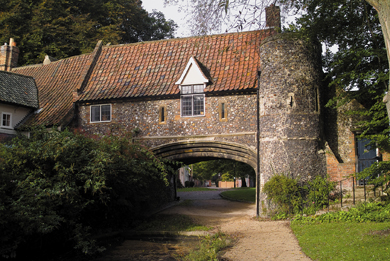
Margery Kempe (1373 - 1438) lived in Norfolk at the time this house was built. Children, a vision and travel She bore thirteen more children and ran a brewery and grain mill. Both failed. By then she had experienced a vision of Christ, comforting her when she lay in childbed. She decided to reexamine her life, and in 1413, when she was 40, she headed off on a series of pilgrimages around England and Europe. Always a seeker, she interviewed persons of interest, to discover how they lived. She met and interviewed Julian of Norwich. Margery reached Jerusalem, Spain, and Norway by living off alms. She was a doughty traveller, unafraid of going anywhere. Arrests During her travels she had a series of visions that reduced her to tears. On her return to England, her 'noisy tears' scandalized other worshippers and she was arrested and accused of being a Lollard. The Lollards were English Christians who were inspired by reading the Bible. They opposed the Church’s power and wealth, affirmed that women as well as men could be preachers, and advocated the teachings of the inner Spirit and simplicity of life and prayer. These views were unhappily joined with their belief in a theocratic state. The Lollards were crushed by Henry IV and Henry V. But pity the Church when it brought Margery to trial on charges of heresy. Despite her tears, Margery made short work of the accusations and her accusers. In doing so, she enlarged the public tolerance for varieties of Christian religious expression. In the 1420s she returned to her husband, who had been injured, and nursed him through senility until his death in 1431. Determined to write Unable to read or write, but possessing a keen memory and a fierce will, Margery dictated her adventures, thoughts, feelings, social commentary, and spiritual experiences. Her first scribe had terrible handwriting, difficult to decipher by anyone, so she started all over again. Her memoirs included her conversations with Christ. The result in 1438 was The Book of Margery Kempe. She died not long after. Barry Windeatt, the author of the edition of her work seen below and a Fellow of Emmanuel College, Cambridge, provides commentary and social context. English Historical Review reports that Margery Kempe "bursts from the pages of this careful and sober critical edition like Molly Bloom." Margery was not always wise. She was curious and passionate. Almost as unique as her life was the life of her book, which was lost for centuries. In 1934 her manuscript was discovered in the private library of the Butler-Bowdon family in Lancashire. Her book was finally published in 1936.
When you contribute to this website,
|
BRITISH ARTISTS ONLINE
CHRISTIAN CONTEMPLATION
English poetry is born when a cowboy in England gets a call to sing. COWBOY SINGER
The luminous links between Georgian architecture, music, and breaking waves. SEEING MUSIC
Julian of Norwich is HERE
|
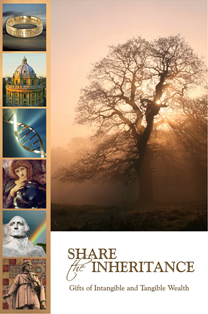
This wonderful book describes Britain's gifts to the world. Adults will refresh their understanding of profound events in British history, and young people will find inspiration. Warning: This book defies aggressive secularism and unthinking multiculturalism. Written by the co-editors of this website, Share the Inheritance is beautifully illustrated with 125 colour images and a timeline. Available at Amazon UK and at Amazon USA.
|
 |
||