Blog Home | All Posts | Liberty Timeline | Faith in Freedom | Heroes | Science Timeline | Artists | Life | Sports | Calendar | Brits Worldwide | Imagine
|
|
Blog Home | All Posts | Liberty Timeline | Faith in Freedom | Heroes | Science Timeline | Artists | Life | Sports | Calendar | Brits Worldwide | Imagine |
|
WINSTON CHURCHILL
By nature he was half romantic and GOING THROUGH HELL 1874 - 1914 Winston Churchill's critical father scathingly declared that his young, red-haired son was a dull slacker. Preoccupied with parties and her social standing, his American mother was uninterested in him. They both found him a handful. Winston was hyperactive, talkative, scrawny, rebellious, physically brave, and stubbornly determined to learn only what interests him. He masters literature and history, trains hard so he has the physical strength to enter the Army, and learns to play polo, riding and whacking the ball as intensely as he would later practice delivering a speech in Parliament. When he injures an arm, he makes goals single-armed, with his damaged arm tied to his side. Facing the Dervishes Even when he is young, Churchill is able to really see and respect his enemy on the battlefield. In North Africa, he writes about the situation in the Sudan, where for several centuries "the dominant race of Arab invaders was unceasingly enslaving the black aboriginal population." Facing their armies at Omdurman, the 24 year old Lieutenant can also pity the slaughter of the immense Dervish armies as first shells, then Maxims and finally a torrent of bolt-action rifle fire destroy their advance. Concerned that the retreating army may make a stand in the city, Churchill and the 21st Lancers are sent to stop them. The Lancers ride forward with drawn swords. The Arabs release a volley of gunfire, and the Lancers charge. Churchill writes, The pace was fast and the distance short. Yet, before it was half covered, the whole aspect of the affair changed. A deep crease in the ground – a dry watercourse, a khor – appeared where all had seemed smooth, level plain; and from it there sprang, with the suddenness of a pantomime effect and a high-pitched yell, a dense white mass of men nearly as long as our front and about twelve deep. . . .The Lancers acknowledged the apparition only by an increase of pace. . . The Dervish line is broken by the impetus of the Lancer charge, but "Riderless horses galloped across the plain. Men, clinging to their saddles, lurched helplessly about, covered with blood from perhaps a dozen wounds. Horses, streaming from tremendous gashes, limped and staggered with their riders. In 120 seconds five officers, 65 men, and 119 horses out of fewer than 400 had been killed or wounded." The Lancers tended their wounded then regrouped, and used their carbines to force the Dervishes to retreat. Rage at the loss of friends would have animated most men. Churchill mourns, but he is also able to acknowledge that their Dervish opponents "were as brave men as ever walked the earth," and wishes them more dignity in their death, though they were slavers, and "hunters of men". Capture and escape in South Africa Churchill is a newspaper reporter in South Africa when he rallies the troops who come under fire from the Boers. According to the Guardian » of November 17, 1899: On Wednesday an armoured train was derailed near Chieveley and attacked. The escort was composed of half a company of Dublin Fusiliers, and another half company of Durban Light Infantry, 120 of whom are missing. Mr. Winston Churchill is among the missing. The armoured train consisted of, in the front, a flat truck with a seven-pounder gun, manned by a petty officer and five bluejackets from Her Majesty's ship Tartar. It contained 100 men in all. The train was despatched for the purpose of reconnoitring the Boer positions near Colenso and to ascertain the truth of reports that railway track had been destroyed. Churchill was captured by the Boers, but he makes a daring escape, and reaches British lines. He is twenty-five, and a media sensation. Heading into Parliament Partly motivated by love of his father, in 1901 at the age of 26, he enters Parliament. The House of Commons is a deceptively decorous chamber. Men, including Winston's father, have been destroyed in battles on its floor. A man in a hurry, Churchill has a "contempt of the conventional," and likes to think for himself. When he faces the issue of Free Trade or tariffs, he sits down to study economics for eight intense weeks before deciding for free trade. The British people had thrived for more than half a century on free trade and cheap food. "Why should we deny ourselves the good and varied merchandise which the traffic of the world offers, more especially since the more we trade with others, the more they must trade with us; for it is quite clear that we give them something else back for everything they give to us." The issue may be supposed to be more complex than Churchill suggests, but having flouted the Conservatives on building up the Army – "Europe is now groaning beneath the weight of armies. . . .There is not a Parliament or people from whom the cry of weariness has not been wrung" – he leaves the Conservative Party to join the Liberals in 1904. Suffragettes, love, and welfare With the Liberals he supports wider suffrage, an eight-hour day, a graduated income tax, and less expenditure on foreign affairs. Despite death threats from the Ulstermen, and almost alone among the Liberals, he supports Home Rule for the Irish. He votes for the one bill supporting women's right to vote in the House (the bill fails), but Suffragettes insist he do better, and throw his campaign appearances into pandemonium. Churchill takes these exploits with good humour, although he is nearly killed by a suffragette who tries to drag him in front of a train. By then he has made what he considers the best and most momentous decision of his life: He has married his much loved Clementine, who is far more liberal than he. Appalled by the destitution of some of his constituents (or, his perennial critics claim), motivated by political opportunism, Churchill passes legislation for a maximum workday for miners, minimum wages, and unemployment insurance. He drafts a budget that increases taxes on the wealthy. He believed he was helping those who were poor to be independent and free, but he is one of the grandfathers of the Welfare State which has had the unintended and negative effect of helping to make people dependent on the State. Though the government's interventions helped some, they devastated the Friendly Societies, the free and voluntary organisations which provided life and unemployment insurance to 10 million of 12 million workers. Churchill is tarred by Tories who believe he handles rioting miners too gently, and by Labour which mistakenly believes his actions had been instrumental in the deaths of two miners. As Home Secretary he is in the boiling centre of the Sidney Street Siege of anarchists and, later, trade union strikes. We leave accusations that he was too energetic to those who have carefully studied the matter. One thing is clear: Winston Churchill is cool and courageous when confronted with violent crowds, armed men, and extreme physical danger. He supports the right of women to vote, though almost killed by a suffragette. (His wife Clementine drags him by his coat out of the path of a moving train.) Rumours of war Churchill has supported the reduction of Britain's Navy until he makes several visits to Germany, and is alarmed by the size and technical brilliance of the Kaiser's armies. Now a doting father, he writes from Germany, "I feel more deeply every year – & can measure the feeling here in the midst of arms – what vile & wicked folly & barbarism it all is." Confronted with Germany's arms build up, for which he can find no good reason, he doubts Germany's peaceful intentions. His doubts are reinforced by government posters with slogans such as "England the Foe!" and "The Coming War!" In 1911 Churchill becomes First Lord of the Admiralty with responsibility for the Royal Navy, Britain's first line of defense, which protects the safety, livelihood and food supplies of Brits. Churchill's inspections of ships are popular with bluejackets. A naval magazine writes, "No First Lord in the history of the Navy has shown himself more practically sympathetic with the conditions of the Lower Deck than Winston Churchill." Through dynamic energy and genius he learns naval affairs inside out, reorganises, and rebuilds the fleet. He also learns to fly, and undaunted and undeterred survives several crash landings. Meanwhile, in northern Ireland, Ulster ferociously opposes Irish Home Rule, since Ulster is Protestant, and southern Ireland is Catholic. Despite death threats Churchill bravely pushes Home Rule, which would make a united Ireland an integral unit in a federal system. The compromise eventually passed by Parliament pleases no one, but interest in this inflammatory issue temporarily wanes when the Austro-Hungarian Crown Prince is assassinated in Sarajevo. Austria-Hungary issues an insolent ultimatum to Serbia, and war looms. Winston is concerned by these events, but heads off for the weekend to Pear Tree Cottage on the Norfolk coast to be with his wife and children. There he organises a bucket and spade brigade: "We dammed the little rivulets which trickled down to the sea as the tide went out. It was a very beautiful day. The North Sea sparkled to a far horizon." He does not fear a conflagration until, later that weekend, he is warned by phone that the Austro-Hungarian Empire has rejected the Serbian response to its ultimatum, and is mobilizing its troops.
When you contribute to this website,
|
BRITISH HISTORY THE STORY of
Love of freedom inspires
"It is enough of a claim to historic greatness for a man to have saved his own country.
Winston's early life in his own inimitable words.
For US orders:
Churchill writes about being captured and escaping during the Boer War. For UK orders:
For US orders:
Winston has a younger brother Jack who is affectionate, resilient, and helpful. Jack will keep the family's finances afloat during the Depression.
To learn how Churchill became a man, a husband, a father, and a hero, read Manchester's terrific book. For UK orders:
For US orders:
"You were given the choice between war and dishonour.
"They have done what they like. Their difficulty is to like what they have done." A man who reveled in chiasmus (a reversal in the order of words in two parallel phrases) Winston is irresistibly quotable. For UK orders:
For US orders:
|
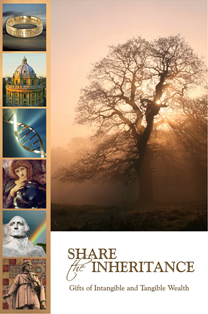
This wonderful book describes Britain's gifts to the world. Adults will refresh their understanding of profound events in British history, and young people will find inspiration. Warning: This book defies aggressive secularism and unthinking multiculturalism. Written by the co-editors of this website, Share the Inheritance is beautifully illustrated with 125 colour images and a timeline. Available at Amazon UK and at Amazon USA.
|
 |
||