Blog Home | All Posts | Liberty Timeline | Faith in Freedom | Heroes | Science Timeline | Artists | Life | Sports | Calendar | Brits Worldwide | Imagine
|
|
Blog Home | All Posts | Liberty Timeline | Faith in Freedom | Heroes | Science Timeline | Artists | Life | Sports | Calendar | Brits Worldwide | Imagine |
|
Around 100 flashes of lightning occur every second around the globe. Almost 2 million hit the ground every day. Photo: [email protected] FASTER SHIPS, FLUSH TOILETS, THE POWER OF EXPERIMENTING, ELECTRICAL DISCOVERIES
Pencils have seen a lot of thinking. Photo: [email protected] 1564 BRITS INVENT PENCILS The earliest meaning of pencil was a paintbrush of fine hairs gathered into a quill. It was used for delicate work. Then an unknown Brit invents the pencil we use today by placing graphite inside a wooden holder. The faint, familiar, schoolroom smell of a pencil comes from incense cedar, the wood of choice to enclose the graphite. In Freedom to Choose, Nobel Prize winning economist Milton Friedman observes that no single person could make the pencil we casually buy today. It requires a tree that is cut by a saw which requires steel, which requires iron ore. It requires "lead", acutally compressed graphite, from mines in South America; a rubber eraser, from rubber trees in Malaysia (the rubber tree was imported from South America to Malaysia by Brits); plus someone to make the brass ferrell and the paint and glue. Thousands of people cooperate to make the pencil – people who don’t speak the same language and who practice different religions. No commissar brings them together. You can buy a pencil for a trifling sum due to a free economy that makes production efficient and fosters peace and harmony between the peoples of the world. The first person to write about these transformative ideas is Adam Smith 1580s BRITS REDESIGN SHIPS TO EMPHASISE MANOEUVERABILITY AND SPEED Brits chop down the high, heavy forecastles that make boats so ungainly, and build lower, faster ships. These improvements help the Brits repel the invasion of the Spanish Armada in 1588. They also facilitate exploration and trade and, unfortunately, contribute to the success of pirates. 1580s-1620s BACON GIVES IMPETUS TO SCIENTIFIC EXPERIMENTATION Francis Bacon enters Cambridge University when he is 12, and becomes an ardent advocate of observation, experimentation, and deduction. He also spends a fair amount of time defending science from religious and social attacks. He dies as the result of an experiment. Travelling with a friend in a carriage in winter, he decides to test how long he can keep a dead chicken fresh with snow. Alas, the cold kills Bacon, but he does proves his theory about refrigerating food. His advocacy of experimentation gives a huge boost to modern science. 1570s-1600 GILBERT DESCRIBES ELECTRICITY William Gilbert, a personal physician to Elizabeth I, devotes years to experimenting with amber and magnets. He coins the term electricity, discovers that the earth is a magnet, and suggests there is a relationship between magnetism and electricity. Prior to Gilbert, electricity was a blank page in the history of science. The ancients had noticed electrical and magnetic effects, but could not explain them. Gilbert's great treatise DE MAGNETE (On the Magnet), written in Latin and published in 1600, lays the foundation for a new science. His experiments also prove how the magnetic compass works, useful knowledge as Brits prepare to explore the world.
Those of us wearing machine-knit sweaters can thank Photo: [email protected] 1589 LEE INVENTS KNITTING MACHINE Folklore says that William Lee wants more time with his fiancée who is always busy knitting garments to keep her family warm. Lee tries to make her work go faster by inventing the first practical knitting machine. His original needles are thick, and useful only for rough garments, but Lee continues to experiment until he has a knitting machine with 20 needles to the inch. The design of his hooked needle remains a key component in knitting machines today. Unlucky in love and money, Lee is denied a patent when his main investor is charged with treason. He is forced to look for investors abroad, and dies unmarried and poor. 1594 'MARVELLOUS MERCHISTON' MAKES COMPLEX MATHEMATICS SIMPLE WITH LOGARITHMS John Napier, the Eighth Laird of Merchiston, never completes college, but he makes one of the single greatest advances in the history of mathematics. Growing up during the chaotic rule of Mary Queen of Scots, ‘Marvellous Merchiston,’ as he is known, discovers and develops the logarithm, a brilliant method of simplifying difficult computations. Many modern inventions will depend on using logarithms, which Napier describes in his book, The Construction of the Wonderful Canon of Logarithms. 1597 HARTINGTON INVENTS FLUSH TOILET The history of the toilet is a complicated affair with many different inventors and improvers jostling for credit. It is certain, however, that John Hartington (not Mr Crapper) invents the flush toilet. Supposedly the proud inventor gives the toilet as a gift to his godmother, Elizabeth I. Her reaction is unknown.
Virginia's Shenandoah Valley Photo: [email protected] 1599 INNOVATIVE FINANCING LAUNCHES NEW WORLD The "Merchant Adventurers" open up new markets and finance voyages by developing an innovative long-term financial arrangement: the joint stock company. Shakespeare is one of the first to share risks (on the boards of his theatre rather than the boards of a ship) by joining with the two Burbage brothers and the Chamberlain's company to operate the Globe Theatre. As Shakespeare has not gotten around to coining the word shareholder, they call themselves householders. Investors in joint stock companies such as the Virginia Company, the East India Company or the Muscovy Company share risk and and profits. The liability of shareholders is limited to the amount they have invested. Distinct from the people engaged in it, a company will survive even when members withdraw or die. Joint-stock companies will become vital to modern economies and world trade.
When you contribute to this website,
|
BRITISH SCIENCE INVENTIONS INNOVATIONS
|
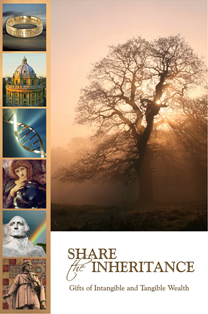
This wonderful book describes Britain's gifts to the world. Adults will refresh their understanding of profound events in British history, and young people will find inspiration. Warning: This book defies aggressive secularism and unthinking multiculturalism. Written by the co-editors of this website, Share the Inheritance is beautifully illustrated with 125 colour images and a timeline. Available at Amazon UK and at Amazon USA.
|
 |
||