In the dust, 'bell-like' tones
At the auction house, Ms. Goold was disheartened to find that the first lot was a large rectangular wooden box that had been gutted and converted into a chicken coop. Then she stumbled across a "dusty coffin" about six feet long. She was able to lift the lid a few inches, enough to catch sight of a small keyboard. She reached in and pressed a key. Nothing. Then another: "This time a muffled, sour little note came out. It was the oldest voice I had ever heard." It was also a coup de foudre, a love out of the blue that changed her life.As she recounts in "Mr. Langshaw's Square Piano," thanks to that dusty discovery Ms. Goold became a detective-resurrectionist, giving the silent keys new life.
She discovered a history that included John Broadwood, builder of square pianos and co-inventor of English action and the piano pedal; Swiss émigré harpsichord maker Burkat Shudi who worked with him; Mozart playing a square piano in London when he was a child; Beethoven, inspired to write the Hammerklavier sonata after he received a piano from Broadwood; and the hero of the book, John Langshaw, to name but a few.
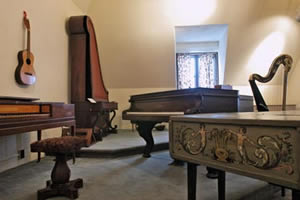
Broadwood square piano, 1796, visible below the guitar at the Vassar Music Library
"Square pianos work on a simple lever system: Depressing the key raises its other end, which strikes the underside of metal strings. The instruments, according to Ms Goold, have a 'light, bell-like tone.'"
| Permalink
|