Goathland - from neolithic cairns to the 'master of marvels' in the Yorkshire Moors
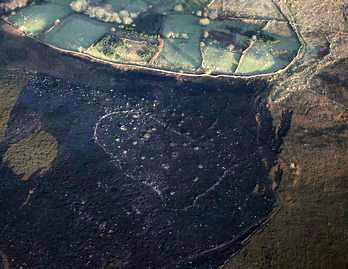
Goathland, North Yorkshire Moors National Park. Image: English Heritage
In October a wild fire swept across 62 acres in Yorkshire revealing a prehistoric stone enclosure and multiple stone cairns. . .No one knows why the walls and cairns were built. They could be 4,500 years old or older. English Heritage hopes to have a report later this year from archaeologists studying the site.
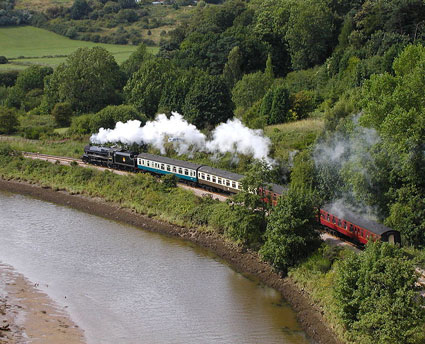
Travelling by train to Whitby. Image: Wikimedia Commons
After the devastating and unwarranted closures of rail lines in the 1960s, Brits rushed forward to save heritage lines. They created the North York Moors Historical Railway, a charitable trust with paid staff and many volunteers. Today trains travel across the moors from Pickering via Levisham, Newton Dale and Goathland to Grosmont, and now to Whitby, carrying upwards of 250,000 passengers every year between April and October. I'd like to go.
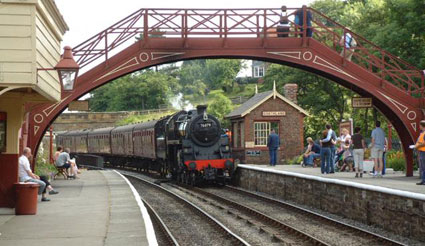
Goathland is a country station, almost unchanged since its construction in 1865. It appeared in the first Harry Potter film and in Heartbeat. Image: Wikimedia Commons
George Stephenson, "the master of marvels" engineered the 120-yard stone tunnel that made the rail station at Goathland possible.His uncle, also George, had no formal education. He never learned to write well. He worked in coal mines. But after the death of his young wife, he studied with his son, and he forced himself to dismantle and reassemble a colliery engine every Saturday. He wanted to make the best locomotive - a steam engine that pulled loads - possible. At the time they were not working very well.
George achieved this by "the simple expedient of increasing the diameter of the boiler flue and applying the power directly to the wheels by connecting rods, thus reducing the need for crudely manufactured gearing" (Oxford Dictionary of National Biography). By the way, don't you love that word 'simple'? I trust the writer of it is able to dismantle and reassemble his bike. George went on to improve track so it could bear the weight of his engines.
In 1825 George's locomotive pulled the first passengers – 450 of them – from Darlington to Stockton and into history.
Funded by entrepreneurs, his nephew built the long-span railroad bridges, soaring viaducts and tunnels that took trains across Britain.
I'm thinking about the early stones, the two Georges, the acceleration of 'progress' and the mysteries of discovery.
| Permalink
|