Blog Home | All Posts | Liberty Timeline | Faith in Freedom | Heroes | Science Timeline | Artists | Life | Sports | Calendar | Brits Worldwide | Imagine
|
|
Blog Home | All Posts | Liberty Timeline | Faith in Freedom | Heroes | Science Timeline | Artists | Life | Sports | Calendar | Brits Worldwide | Imagine |
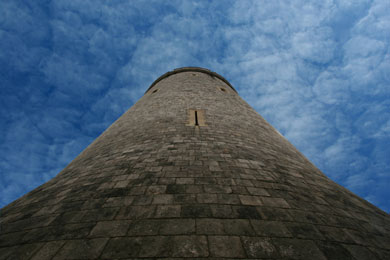
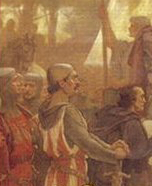
Windsor Castle Tower Photo: [email protected] The night that King John signs Magna Carta, he throws himself down on the floor of Windsor Castle, and howls with anger. His fury as Brits establish and protect basic freedoms will be felt by other princes as Brits take unprecedented steps toward checking royal power and establishing parliamentary democracy. BAD KINGS, 1206 -1213 KING JOHN To those who know him John is violent, arrogant, greedy, treacherous, lecherous, and hyper-active. He murders his nephew, crushes rebellions in Ireland and Wales and forces the ill Scottish King to support him or lose his throne. He demands heavy scutage (a form of tax) from his English barons, and uses the money to buy mercenaries, and raze his barons' castles. He is constantly demanding pay-offs, holds their children hostage, and assaults their wives and daughters. He is what you might call an equal-opportunity oppressor, and that is his big mistake. John is powerful. For years some of the barons benefit from his rule. As long as they can profit, they are willing to support him, but John's apparently irresistible urge to exploit and betray everyone he meets – his father, his brother, his first wife, and his barons takes a toll. The barons have sworn to obey him. They do not wish to break that oath. They cannot oppose him singly, because he will break them one by one. Unless they fight him together, they will never be able to force him to uphold his coronation oath to support the liberties and justice they believe is part of English law. Two barons, William Marshal and Robert Fitzwalter, are powerful enough to lead a rebellion, but Fitzwalter is still benefitting from his association with John. William Marshal, "the best knight in Christendom," defended Henry II from attack. He also owes allegiance to the French King for his land in Normandy. In 1205 he refuses point blank to help John retake his losses on the continent. John orders the barons to pass judgement on him, but William warns them, "Be on alert against the king: what he thinks to do with me, he will do to each and every one of you, or even more, if he gets the upper hand over you." William's son becomes a hostage to John, and William goes into exile in Ireland (1206-1213). John pays mercenaries to attack him, but William and his knights defeat them. In December 1206, Pope Innocent III presses the monks of Canterbury to elect Stephen Langton Archbishop. Originally from Lancashire, Langton has spent years in Paris teaching men to be priests. He is known for his energy, his clarity, his holiness and his belief in justice. He writes an open letter to the English people explaining why he accepted the position of Archbishop, saying that the first reason is that he loves them, and the second is that he was ordered to by the Pope. John refuses to allow him to enter England. The Pope and the King struggle over the selection for six years. England is placed under an interdict, which means no one can be baptised, married, or buried in church, and John is excommunicated. The money that would normally go to Rome goes to John. With the money he has raised in heavy taxes, brutally enforced on every person in England, John sets about rebuilding his army so he can retake the land he lost in continental Europe. At this moment the Welsh rebel. John hangs twenty-eight Welsh hostages, but he makes no further effort to suppress Wales and is terrified by a plot against his life by Robert Fitzwalter. John has finally made an enemy of Fitzwalter by seizing his estates, attacking his son-in-law, and trying to seduce his daughter. Fitzwalter's threatens to kill John before leaving for France. Everywhere John turns, he sees enemies, so he makes a deal with the Pope. He allows Stephen Langton to enter England as Archbishop, and surrenders England and Ireland to the Pope. In exchange he expects the Pope to protect him. Told by the Pope to keep the peace, Stephen becomes a mediator between barons and King and then a leader in the struggle to rescue freedom from tyranny. Stephen is inspired by three great previous archbishops who defied kings and established peace – Anselm, Theobald, and Thomas à Becket. At a council at St Paul's he is reported to have read aloud the text of the Charter of Liberties and to urge the council to demand it be renewed. John refuses to reaffirm it. 1214 - 1215 KNIGHTS AND TOWNSPEOPLE PRESS FOR LIBERTIES AND JUSTICE; KING JOHN AFFIRMS MAGNA CARTA, THE GREAT CHARTER OF LIBERTY John makes plans to recover his French lands, but the barons refuse to support him. He heads overseas with a small group of mercenaries. The French King defeats John's German allies at Bouvines on July 27, 1214. If John had won, he would have been hard to stop in England. He returns wild with anger and determined to make the barons pay for his defeat. Contemporary historians say that in November 1214 the barons, including Fitzwalter, but not William Marshal, swear on the high altar of the abbey of Bury St Edmunds to compel John to confirm the Charter of Liberties of Henry I. William has taken on the role of mediating between King and barons, while his eldest son, William, has joined the rebel barons. They refused to pay scutage, a fee substituted for military service, which John has set very high. In January 1215 they met the king in London, and they came armed. They agreed there should be another meeting on 26 April, when John would reply to their demands for reform and for confirmation of the coronation charter of Henry I. John brings mercenaries over from Poitou and Flanders, relying on ‘aliens’. He does not meet with the barons, and on 5 May barons all over the country renounce their fealty. Trying to gain support, on 9 May John grants the citizens of London the right to elect their mayor. They elect Serlo the mercer, and by 17 May he and the city opens wide its gates to the rebels. By now Stephen Langton realises that they must bind the King to specific promises. The Charter of Liberties is a good beginning, but it is not enough. So begins the drafting of Magna Carta – no doubt it gets bigger as everyone thinks of something – for widows, orphans, to protect the livelihood of free men, for merchants, and towns. But big as it gets, it contains real jewels. In our opinion these jewels of freedom and justice are there because Stephen Langton wanted them there. Magna Carta is written in Latin, a language which Langton knew, and it is very likely he wrote them. Led by Langton, Archbishop of Canterbury, William Marshal, Robert Fitzwalter, bishop, barons, abbots, and representatives from the self-governing towns, including Serlo the mercer, Mayor of London, gather in a meadow outdoors, armed and on horseback, in case the King decides to fight. The day is June 15, 1212. The meadow is Runnymede, close to Windsor, where King Alfred met in a Witan centuries earlier. Facing John, they compel him to agree to justice and liberty. The big document that will record their rights and freedoms is famously called Magna Carta (the big charter). Copies, written on vellum in black ink made from the galls on oak trees, are sent out across the kingdom to barons, sheriffs, and bishops. Archbishop Langton tries to keep peace between King and barons, but John launches war against the barons. His aim is to divide and conquer them.The Pope sends a letter excommunicating "all distubers of the king and kingdom," and orders Langton to publish the sentences or be suspended. Langton, who has already refused to surrender Rochester Castle to John, refuses to excommunicate the rebels. He is suspended as Archbishop, and makes the long journey to Rome. In October, Fitzwalter, named "Marshal of the Army of God and Holy Church" holds the bridge at Rochester and the London–Dover road against John's initial assaults, but when the king's army finally destroyed the bridge, cutting off the rebels in the castle" (DNB), Fitzwalter is forced to withdraw to London. He tries to go to William d'Aubigny's relief with a force of 700 knights, but again retreats before John, to safeguard London. "By early 1216 the rebels' position had become so desperate that Fitzwalter, with Saer de Quincy, went to France to renew the offer of the throne to Philip Augustus's son Louis. . ." (DNB). It is a little-noted fact that Louis's arrival in May with a powerful force saves the cause. Exhausted by his campaigns, depressed by the loss of his baggage train and his crown jewels in a freak tide in the Wash, John dies in October 1216, purportedly after devouring “a surfeit of peaches.” Led by William Marshal the barons force the French Dauphin back to France, and face a major question. Will they uphold Magna Carta? Would its promises extend, as written, "to all the free men of our kingdom, for Us and Our heirs forever, all the liberties underwritten. . ."? THE RIGHTS AT STAKE IN MAGNA CARTA A number of modern writers, perhaps bored at having to repeat the same stirring story, have debunked Magna Carta and the Brits behind it. They have maligned Stephen Langton, and called the Carta “a ragbag” of miscellaneous clauses. Decide for yourself. MAGNA CARTA LAYS THE GROUND FOR:
In succeeding centuries Magna Carta will become a cradle for liberty, and inspire revolutionary Brits in America. Photo: [email protected] 1217, 1225 MAGNA CARTA REDUX In 1217 knights carry Henry, a boy of nine, to his coronation as King Henry III. In the name of the boy king, his regent, William Marshal, reissues a charter of liberties based on the 1215 Magna Carta and "a charter of the forest", and promises the young King will obey them. Significantly, and perhaps ominously, Clause 61, which allows 25 barons to overrule the King, is omitted. In 1225, when Henry III becomes a man, he freely reissues both charters. They are read aloud four times a year: At the feast of St Michael, at Christmas, at Easter, and at the feast of St John. Gradually, despite being endangered by John, Henry and his son Edward I, Magna Carta becomes, as the great Blackstone writes, "fixed upon an eternal basis". (In 1297 Edward I, Henry's son, will reissue the charters with Parliament.) 1240s-50s RESISTING POPE AND KING The iniquities of the Church are deservedly remarked; the contributions of Christians to freedom are frequently overlooked. Robert Grosseteste is a poor boy who receives an education when his intelligence brings him to the attention of the Church. He's exhilarated by ideas. He studies the Classics, mathematics, and the properties of light, and becomes a bishop. He spends much of his adult life resisting the corruption of the Papacy and the encroachments of the King. Both New Testament and Classical texts on freedom inspire Grosseteste. Classical knowledge was spreading, and the young scholar, like thousands of Brits for centuries to come, read about those Greeks who had gladly died for freedom. They had shouted the word freedom when they charged the invading Persians at Salamis, vowing their country, their children, and the sanctuaries of their gods would be free or they would die. (Aeschylus, The Persians, 402) Urging reformers who have a cause to stand together, Robert Grosseteste famously writes, “United we stand, divided we fall.” His essay on the difference between monarchy and tyranny influences Simon de Montfort and the next great battle for freedom. Prince William is said to be descended on his mother's side from the reformers who fight for just government in the 13th century. 1258-1260 MONTFORTS STRUGGLE FOR JUSTICE Peter de Montfort is a good horseman, an excellent swordsman, and a cool and skilled mediator in the hectic campaigns of the 13th century. He represents Henry III on foreign business. In England he owns and manages the Castle of Beaudesert and raises his sons. He has no time for the growing cause of reform even when Simon de Montfort (no relation but his neighbour and former comrade-at-arms) becomes involved. The deciding factor for Peter, the real impetus, occurs when his eldest son Piers joins the reformers. A thunderbolt of energy, Simon de Montfort is a cosmopolitan man who is religious, a soldier who is well-educated - he discusses the mathematical basis of the world with Bishop Grosseteste, and a family man who adores his wife and his sons. Half-French, half-English, he enters the fray for personal reasons. After he eloped with the king’s sister, he became incensed when his brother-in-law the king refused to pay him what he owed him. Montfort gradually realizes that the problem is greater than his personal quarrel.Men in England dislike paying for Henry III’s misguided foreign adventures, and they are incensed at the corruption of Henry’s sheriffs who are extorting funds and obstructing justice. Henry ignores them and repeatedly refuses to support the justice and liberties established in Magna Carta. 1258-1259 MONTFORT, BARONS, KNIGHTS, MERCHANTS, AND CLERGY END ABSOLUTE MONARCHY AND ESTABLISH PARLIAMENT WITH PROVISIONS OF OXFORD AND WESTMINSTER The Montforts and their allies among barons, knights, merchants, and clergy stop Henry III's advance toward power by balancing it with incorruptible sheriffs and a powerful council to advise the King. They compel Henry to sign the Provisions of Oxford (1258) which call for:
The implications for representative government are momentous. In 1259 they approve the Provisions of Westminster, which reinforce the Provisions of Oxford, and stipulate inheritance and taxation reforms. Henry III gnaws and tunnels “like a rat,” trying to undermine the Provisions. Prince Edward, his son and heir, uses bribes and gifts to seduce reformers. The King dissolves the Council, tears up the Provisions and fields an army. Simon and the young bachelor knights rush to protect the reforms. Peter de Montfort is captured in Northampton, but Simon de Montfort meets the King and Prince at the Battle of Lewes. Hampered by a broken leg, Montfort fights brilliantly, and captures the King and Prince Edward. 1264-1265 SIMON DE MONTFORT DARES TO OPEN UP PARLIAMENT; FIRST COUNTRY-WIDE PARLIAMENTARY ELECTIONS HELD Winning is one thing. Building on that victory is another. Simon de Montfort is not a perfect man. He has a hot temper. He despises men who will not keep their word, yet his integrity is shadowed by his willingness to keep captured land and castles as a payment for the money that the king owes him, rather than allow a settlement according to law. However, Montfort never hurts Henry III or Prince Edward while he has them captive. They refuse to affirm the principles of liberty and justice embodied in Magna Carta, so Montfort daringly calls a parliament and invites the people to attend. He sends messengers to every county and many cities and towns, asking them to send two elected representatives to Parliament in December, 1264. For the first time, men across England vote in parliamentary elections. (In the counties they have to meet a 40-shilling property qualification. In the towns there are different voting requirements.) Representatives of the yeomen of the shires and the people of the big towns join archbishops, bishops, earls and barons on January 20, 1265, in Parliament. Nothing like it has been seen since Rome was a republic thirteen hundred years earlier. They confirm the reforms. 1265 MONTFORTS AND BACHELOR KNIGHTS VOW TO DEFEND REFORMS Prince Edward escapes, and breaks his sworn word to support the reforms. He gathers an army to destroy the reformers. Ransomed from prison, Peter de Montfort rides to the side of Simon de Montfort. Simon and a group of young bachelor knights vow to defend them. Among the young knights are Simon de Montfort’s sons and Peter’s son Piers. The Vale of Evesham Photo: [email protected] 1265 OUT OF DEFEAT. . . In August the Montforts and the bachelor knights camp in the Vale of Evesham, close to Evesham Abbey. They are on their way to London, where support for reform remains strong. Travelling with them is Henry III. They treat him with exquisite courtesy while he remains their prisoner. On 4 August 1265, Prince Edward and his army surprise and surround them. Simon de Montfort refuses either to exploit the captive King as a pawn or to use the abbey for military purposes. He urges the young bachelor knights to escape and support the reforms at another time and place. They refuse to desert him. The day darkens as a storm moves in. Montfort saddles up, and faces the army moving in to crush the reformers. "They have our bodies," he says calmly. "God has our souls." He spurs his horse into battle. Simon, Peter and the bachelor knights fight valiantly against the overwhelming force of Edward's army. Simon and Peter are killed, and Simon's sons. At Prince Edward's orders, Simon de Montfort is hacked into pieces, and parts of his body are buried in different parts of the kingdom, to avoid founding a martyr's grave and pilgrim site. We may wonder why the Montforts did not surrender, but chose to die defending the cause of reform. They had little choice. They knew that Edward would hang them if they surrendered. They may have hoped that if they died to defend them, the British would never forget the reforms. To almost everyone's surprise, Parliament and the cause of freedom survived. Peter's son Piers, who survived the battle, becomes one of the Disinherited. Eventually he recovered his land and helped his friend Walter de Merton to endow Oxford University. See INGENIOUS TIMELINE and Oxford University » 1267 STATUTE OF MARLBOROUGH REAFFIRMS PROVISIONS OF WESTMINSTER In November, at Marlborough, where Parliament is meeting, Henry III agrees to the Statute of Marlborough, which affirms the Provisions of Westminster. The Statute also specifies that redress for property damages will be obtained through the courts.
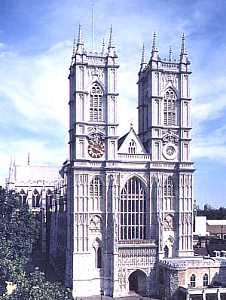
At Westminster, where Henry III has built Westminster Abbey, Henry's son, Edward I, agrees to the Statute of Westminster, one of the more extraordinary advances in the history of liberty in the world. 1275 STATUTE OF WESTMINSTER AFFIRMS INDIVIDUAL RIGHTS, CODIFIES LAW AND AFFIRMS FREE ELECTIONS The knights of England have brought the King of England to a standstill. Unless Edward I agrees to their claims of right for themselves and all freemen, he will not have peace. In 1275 Parliament passes the Statute of Westminster - "This act is almost a code by itself; it contains fifty-one clauses, and covers the whole ground of legislation. Its language now recalls that of Canute or Alfred, now anticipates that of our own day; on the one hand common right is to be done to all, as well poor as rich, without respect of persons; on the other, elections are to be free, and no man is by force, malice or menace, to disturb them" (William Stubbs The Constitutional History of England in its Origin and Development).
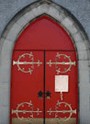
Brits will have to defend Magna Carta and their rights Photo montage: Linda Wettengel 1279 ARCHBISHOP PROTECTS MAGNA CARTA The Archbishop of Canterbury John Pecham is determined that all of England will remember the liberties guaranteed in Magna Carta. The Archbishop orders every cathedral and collegiate church to post Magna Carta on its doors. Edward I resists the order, but in subsequent centuries Magna Carta is frequently recalled, quoted, and established as a foundation of the British Constitution and British liberties.
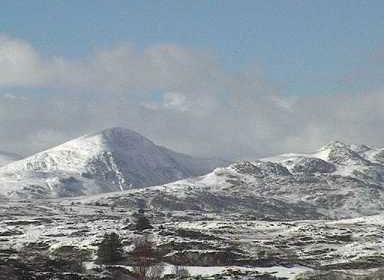
In 1284, after a series of bitter winter campaigns, Image: ©Bernard Wellings, Wales Directory 1290 STATUTE OF QUIA EMPTORES ENDS FEUDAL TENURE AND FREES PEOPLE TO OWN THEIR OWN PROPERTY In England barons held their lands by tenure. The new statute Quia Emptores prohibits land from being the subject of a feudal grant, and allows it to be transferred without the feudal overlord's permission. This is a huge advance for the property rights of the people. 1295 "MODEL PARLIAMENT" ESTABLISHES EARLY RULES OF REPRESENTATION Edward I calls Parliament into session because he needs money. In this Parliament, each county sends two knights of the shire to represent it, and each borough sends two burgesses. Sending two representatives become settled practice, which is why the Parliament becomes known as the "Model". Parliament reluctantly agrees to Edward I's request for heavy taxes for his French campaign, but the King and his earls and barons are about to clash. 1298 PARLIAMENT ENDS KING'S CONTROL OF FEUDAL LEVY; INSISTS ON POWER OF TAXATION Edward I orders his barons and earls to bring their men and fight for him in France. They boldly refuse to sail. Instead they ride into London, demanding that the King respect Magna Carta, recognise the liberties of clergy and people, and lower taxes. Edward returns, and agrees at the Parliament held in Lincoln to two principles which have far-reaching consequences:
When you contribute to this website,
|
BRITISH HISTORY THE STORY of
LIBERTY! THE TIMELINE Freedom & justice go hand in hand
A fast messenger takes 30 days to cover the distance between England and Rome, but events in England are moving so fast that letters and orders are often out of date.
THE KNIGHTS Not a dull moment on the road to Runnymede
Contemplatives, and readers interested in justice, may be interested to learn that Stephen Langton is believed to be the author of Veni Sancte Spiritus, or The Golden Sequence
Katherine Fischer Drew describes the philosophical history that leads to Magna Carta; shows Magna Carta's pivotal role in the development of Common Law and freedom; and offers thematic biographical studies of the key Brits who created it. For UK orders: For US orders:
This book appears limited in its understanding of Magna Carta, but it hums with details about life lived in England in 1215. For UK orders: For US orders:
Holt's book connects individual freedoms with their Magna Carta roots. Big and thorough, it has been called definitive. For UK orders:
For US orders:
Simon and Peter de Montfort were older men when they fought for freedom, but their sons, who fought with them, were William's age. Go back far enough, and we all share a dash of blood with heroes. But is courage born or made? There never has been and never will be freedom without courage. For UK orders: For US orders:
R.W. Southern of Oxford University reveals the astonishing intellectual ideas of a humble, brave, and brilliant man. For UK orders: For US orders:
The U.S. House of Representatives exhibits a sculpture relief of Simon de Montfort. This is a superb account of the complex and passionate man he was. For UK orders:
For US orders:
"...gnawed and tunneled like a rat." The phrase comes from Edith Pargeter's Brothers Gwynydd, mysterious and gleaming 4-volume historical fiction about the Welsh prince Llewelyn and Simon de Montfort. It describes Henry III, who built Westminster Abbey. For UK orders:
For US orders:
The Welsh deserve a good account of their history and accomplishments. For UK orders:
For US orders:
|
This wonderful book describes Britain's gifts to the world. Adults will refresh their understanding of profound events in British history, and young people will find inspiration. Warning: This book defies aggressive secularism and unthinking multiculturalism. Written by the co-editors of this website, Share the Inheritance is beautifully illustrated with 125 colour images and a timeline. Available at Amazon UK and at Amazon USA.
|
 |
||