Consider England
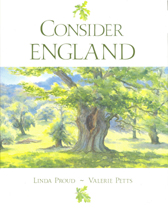
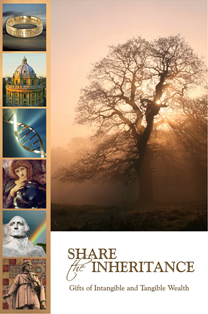
Consider England, Essays on England and Englishness with over 90 watercolours by Linda Proud and Valerie Petts looks worth exploring.
 |
|
« November 2008 | Main | January 2009 » December 31, 2008Consider England
Consider England, Essays on England and Englishness with over 90 watercolours by Linda Proud and Valerie Petts looks worth exploring. Auld Lang SyneSearching on YouTube, we found many versions of Auld Lang Syne, the popular New Year's Eve song first published in 1711 by James Watson and "collected" and added to by Robert Burns. But none of them seemed quite right - we like to hear it sung by a crowd. Then we remembered It's a Wonderful Life. In the 1940s Capra film, bank manager George Bailey was about to commit suicide because a large sum of money had gone missing and all he has sacrificed for family and friends is about to be lost. The run on the Building & Loan, which is part of the story, is reminiscent of events in 2008, but the small and solvent homeowners who rush to save their bank manager come from a different way of life. With the help of a second-tier angel trying to win his wings, George Bailey discovered what his town would have been like if he had never existed, and the film ends with one of our favorite versions of Auld Lang Syne - A very happy New Year to you and yours. Ring out, wild bells, to the wild skyRing out, wild bells, to the wild sky, From "In Memoriam AHH" by Tennyson Thanks to Todd Willmarth for sending us Canto CVI on New Year's Eve. With the elimination of the stanza breaks we read the poem in a new way. December 30, 2008The promise of Putney
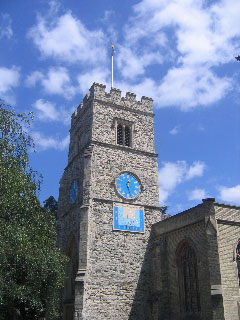
Putney Tower
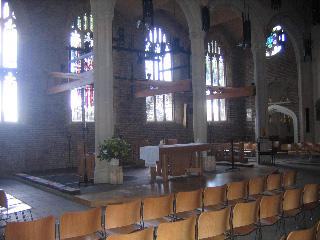
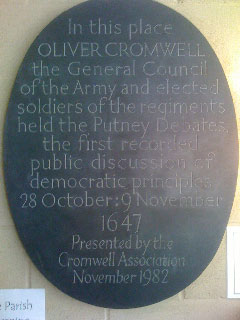
Putney Church. "It's been made over pretty completely from 1647. But sitting there and knowing that this is the birthplace of America is a pretty amazing experience." - James Holloway Last week, reader James Holloway pointed out that we had not included the events at Putney in the post called Organizing Principles. James sent us the images we've used here and wrote - The grand thing about English, and by extension, American history, is the organic nature by which the institutions/laws/traditions have evolved; it's what's saved us from the bloodbaths of the French or, God forbid, the Russian or Chinese or Cuban or any other led by radical utopians. Putney was the all-important first step toward universal suffrage, and for that reason should be honored, I believe, as the foundational debate of the principles of liberty that would be realized in 1688 and then in 1776, and that in the 20th century were so brilliantly described by Hayek and Friedman.
We stand corrected. Thank you, James. One of the heroes of Putney was Thomas Rainborowe, who makes a dashing appearance in the Liberty Timeline. At Putney he declared that even "the poorest he in England" should be able to vote. (Unlike most other British heroes Rainborowe's name is spelled in a number of different ways.) Holloway's whole letter appears with the post. Interestingly, he agrees with the great scholar Samuel Huntington, who is quoted below. We are still mulling Holloway's point that utopianism is not organic to English tradition, which tended to have its feet firmly rooted in the soil of common sense. Surely our current, ideological politicians could benefit from the soil of common sense. Huntington's hopeSamuel Phillips Huntington, who has just died, was a professor at Harvard and the author of hundreds of articles and a number of controversial books, including The Soldier and the State, The Crisis of Democracy and The Clash of Civilizations. Huntington coined the phrase "Davos Man" to describe the global elites who cared nothing for country or culture but only for manipulating their global operations. Writing in the Wall Street Journal today, Fouad Ajami observes that In his last book, Who Are We? Huntington described America's key elements. These will not surprise our readers. They were - "the English language, Christianity, religious commitment, English concepts of the rule of law, the responsibility of rulers, and the rights of individuals". These were derived from the "distinct Anglo-Protestant culture of the founding settlers of America in the seventeenth and eighteenth centuries." Those key elements were also derived from the struggles for freedom, justice and representation that began long before the Protestant Christian culture in the Catholic Christian culture. And, since both Christian cultures were rooted in the Old Testament as well as the New, in Jewish culture. Many Americans and many Brits are disappointed in their countries. But not Huntington. In remarks that we think apply to Britain as well as to America he wrote- "Critics say that America is a lie because its reality falls so far short of its ideals. They are wrong. America is not a lie; it is a disappointment. But it can be a disappointment only because it is also a hope." December 29, 2008Lieutenant-Colonel Eric Wilson, VCDuring World War II a tall, "timid" young man who wore spectacles held off thousands of Axis troops, making a last stand in a pass in the Golis hills in British Somaliland with his terrier and Somali gunners. Severely wounded in the right shoulder and left eye, Eric Wilson was believed dead and was awarded the Victoria Cross posthumously. He was later discovered alive in a prisoner-of-war camp, fragments of shell and spectacles forever after lodged under his skin, and went on to serve with the Long Range Desert Group behind German lines and in Burma. He received his VC from King George VI, accepting it on behalf of the men who had fought with him at Tug Argan Gap. Wilson remained "greatly attached to the Somali people". He helped to fight famine in Somalia in 1975, and was warden of London House, the foreign students' residence. He died on December 23 aged 96. Ave atque vale. In 1991 his son Hamish Wilson helped Somalis in the former British Somaliland to create a separate nation of Somaliland, which, unlike the failed state of Somalia, is succeeding, entirely unsupported and unrecognized by the rest of the world. December 28, 2008Westminster Abbey and the deep foundations of freedom
Image: Westminster Abbey Consecrated on 28 December 1065, Westminster Abbey is closely connected with the deep foundations of freedom, but those connections are not immediately apparent in the 21st century. In AD 960 St Dunstan’s monks cleared Thorney Island of brambles, ploughed the fields and built a monastery. The riverine island, formed by rivulets of the River Tyburn as it ran into the Thames, lay just west of London. It caught the eye of Edward the Confessor, the last Anglo-Saxon king, sometime around 1040, when he was looking for a site for his palace. Edward enlarged the monastery on Thorney Island, and built a large stone church in honour of St Peter the Apostle. This church would become known as the “west minster” and later as Westminster Abbey. It was consecrated on 28 December 1065, while Edward lay dying in his palace, Since then the level of the land has risen, the rivulets have been built over, and Thorney Island has disappeared. Westminster Abbey’s connections with the deep foundations of liberty have been built over, too, so that it is difficult to see them. St Dunstan who founded the original monastery on the island, was the author of the Coronation Oath, which binds the Sovereign to a covenant of justice with the British people. The Coronation Oath has been sworn in Westminster Abbey for a thousand years, and the history of Britain is evidence that when a King or Queen forgets his or her covenant, the people, though slow to anger, will make every effort to depose that king or queen. The first Coronation Oath promised - “First, that the church of God and the whole Christian people shall have true peace at all time by our judgment; second, that I will forbid extortion and all kinds of wrong-doing to all orders of men; third, that I will enjoin equity and mercy in all judgments.” To be the guarantor of justice is also to be the guardian of freedom, for freedom is not possible without just laws justly administered. The constitutional role of the King (or Queen) in guaranteeing justice and freedom remains vital today, though government ministers have tried to bury this truth. In 1102, Anselm, the Archbishop of Canterbury, called all his bishops and abbots to Westminster. There they ended slavery in Britain. In the 13th century Henry III, the son of John, decided to rebuild Westminster Abbey. Henry’s inspiring architectural vision gave rise to the Gothic Westminster Abbey we know. In contrast, his refusal to keep his promise to uphold his Coronation Oath inspired a rebellion that gave rise to the reforms of Oxford and Westminster and Britain’s first national parliament. British reformers were inspired by Christ's teachings. Their free and personal interpretation of Scripture placed particular emphasis on the covenant of justice between king and people and on a principle whose political contribution has, curiously, been overlooked – Christ asks his followers to love their neighbours as they love themselves. When they followed this teaching, and cherished their neighbours, and united with them, British reformers were able to make unprecedented gains in justice and freedom. David described historian Paul Johnson’s description of leadership qualities in a previous post. It is noteworthy, we guess, that the list does not include any mention of faith in Jesus Christ. Christian faith would have been part of a list of British leadership qualities until the 20th century. Some people will call its omission progress. May we offer a different idea? Those men and women who over a thousand years haltingly, painfully, and at the cost of their own safety, comfort, and lives established just law, freedom, and representative government were Christians. It is impossible to ignore their faith. Just as faith was the ground on which Westminster Abbey was built, faith was the ground on which they stood. The Coronation Oath and Judaeo-Christian teachings connect Westminster Abbey with the deepest foundations of freedom in Britain. This post was first published on 28 December 2006. It has been rewritten. The practicality of religious libertyYesterday was the 351st anniversary of the Flushing Remonstrance, an appeal for religious liberty made by Englishmen in the New World on 27 December 1657. It was an important step toward protecting freedom of conscience in the US Constitution. I have always liked the fact that people can be both principled and practical at the same time. A few years later, one of the Englishmen took the case for religious freedom to the Dutch West India Company, where he made the undeniably persuasive argument that tolerance was more profitable than intolerance. December 27, 2008GK Chesterton and his diverse admirersThe writers Kafka and Shaw, Irish patriot Michael Collins, Willliam F. Buckley and President-elect Obama are said to be admirers of GK Chesterton, the apostle of democracy, small government and Christianity. Allen Barra makes these and other interesting points in his review of Chesterton, whose first two books were published 100 years ago, and are still in print. Australia's sailorsAre out, racing in the great, 630-mile Sydney to Hobart race, which began on Boxing Day. (I love the Australian's pictures.) Both Wild Oats XI and Skandia "were on track to go under the race record time as they sailed down the eastern coastline of Tasmania ahead of the run up the Derwent River to the Hobart finish line". Wild Oats is trying to beat Skandia and its own record. One of the top three offshore yacht races in the world, Sydney to Hobart began in 1945, the creation of Australian Peter Luke and British Royal Navy Officer, Captain John Illingworth. It is not for the faint of heart. Country triumphThe same people who would defend the right of native peoples in other parts of the world to hunt in their traditional fashion tried to ban traditional hunts on horseback with dogs in Britain. But this Boxing Day, "the most important day of the year for hunting, more than 300 hunts were out across the country. For good reason the poorly written law, which is difficult to enforce, is failing. December 26, 2008Christian palavers in AfricaIn a piece that is pretty certain to excite controversy, Matthew Parris, a self-described atheist, writes about Christianity. He thinks that Christianity changes people in Africa for the better - In the city we had working for us Africans who had converted and were strong believers. The Christians were always different. Far from having cowed or confined its converts, their faith appeared to have liberated and relaxed them. There was a liveliness, a curiosity, an engagement with the world - a directness in their dealings with others - that seemed to be missing in traditional African life. They stood tall. . .
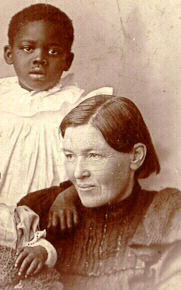
Mary 'Ma' Slessor was one of the British missionaries in 19th century Nigeria who established schools, healed the ill, stopped battles, promoted trade and fearlessly persuaded cannibals - in dawn palavers - that there was a better way to live. December 24, 2008Merry Christmas!Hark! the Herald Angels Sing, words by Charles Wesley, 1739, music by Felix Mendelssohn, 1840, sung by the Choir of St Paul's Cathedral. One of the strongest themes in the Old Testament and the New is do not fear. To all of our readers and commentators and supporters, we say thank you, and have a very Merry Christmas. December 23, 2008With trembling handsThis is one of my favorite true stories, about an American who was British by descent, and, until the American Revolution, British by law. The American political scene described by Thomas Fleming in “Washington’s Gift” (WSJ, 24 Dec 2007) was appalling. The Revolutionary War had been won, but for eight long months Congress had refused to pay America’s soldiers. They had not received their back pay, or even any thanks from their country. There was no confidence in the new Congress, and sales in the American loan arranged in Amsterdam by John Adams were plummeting. George Washington was in agony because his soldiers had not been paid, and his country seemed to be self-destructing under the incompetent rule of Congress. Many people urged him to dismiss Congress, become King and straighten things out. Addison's play Cato, which Washington knew by heart and which he had had performed at Valley Forge for his soldiers, may have been on his mind. In the life of Cato and in the play the struggle between liberty and tyranny is etched in knife-sharp detail. Washington may also have recalled General Monck's example a hundred years earlier in Britain. In Fleming’s account - At noon on Dec. 23, Washington and two aides walked from their hotel to the Annapolis State House, where Congress was sitting. Barely 20 delegates had bothered to show up.” Lessons and Carols from Cambridge"First broadcast in 1928 and now broadcast to millions of people around the world", Lessons and Carols from Cambridge can be heard on my local classical music station, KBPS, on Christmas Eve at 7 am and at 5 pm (Pacific Coast Time). If you'd like to listen, KPBS can be heard online anywhere in the world here. Even as I write, the station's four-day festival of carols is bringing me the choir of Westminster Abbey.
He wept and laughed and wept againWhen the story of A Christmas Carol came to Charles Dickens, “he wept over it, laughed, and then wept again". Rich Lowry describes how Dickens wrote and published A Christmas Carol and its worldwide influence in A Dickensian Christmas. December 22, 2008Not complaining
Antarctica Here in Portland, Oregon, the snowfall has been terrific. The white roads are perfect for horse and sleigh. Since we had lost electricity, I walked out to stock up on candles, chocolate and batteries for the radio. The grocery was running on a generator - the aisles were dim - but the check-out was working. I loaded up my backpack, and walked the hill back home. Pushing through the crust of ice through the snow and panting, I thought about the incredible journeys that Brits had taken in the Antarctic. Dying in blizzards, they kept putting one foot ahead of another, hauling sledges loaded with fossils that showed ferns had once grown in a continent now shrouded in snow, pulling themselves out of crevasses, and in Mawson's case, reattaching the soles of his feet when they fell off due to the cold. When we first put the Extreme Journeys file together, I was surprised by the inspiring stories I had not heard before. It's a good read on a snowy day. Brits will riseRegarding the Iraq war and the terrorism of violent Islamists, Mark Steyn writes -
In response – Yes, the war was Blair’s. In contrast, in the Falklands, Brits were defending other Brits and British values and freedoms. December 20, 2008Organizing principles
We have been thinking about something we wrote about last year in a new way. It's obvious that nature has organizing principles. In Britain, Christians adopted the organizing principles of Christ's radical teachings and created ideas and institutions that still bless us. They did this despite being opposed at every turn by ruthless men who did not believe in those principles and tried to suppress them. “You know that the leaders of nations dominate their people and exercise tyrannical rule over them,” Jesus said. “That's how it is in the world. But that isn't how it must be with you. Whoever would be great among you, let that person serve you; and whoever would be your leader, let that person minister to your needs." (Mark 10:42-44) The result of this organizing principle, and several others, can be clearly seen - St Dunstan believed passionately in Christ's idea of the servant king. In AD 973 he wrote the Coronation Oath as a great covenant between the people and the sovereign, who promised to defend justice and mercy for the people. British Christians believed in the organizing principle that God gave each of us dignity and freedom. As a result they made momentous advances in establishing freedom. Jesus was extremely practical - it is one of his overlooked virtues - and his parables accept property rights that are clearly understood and protected under the law. He depended on the men and women growing wheat and grapes and raising sheep on their land to feed him and his disciples and the poor. If the government took it all or most of it, they would have nothing to give. Jesus did not advocate government solutions. He asked his followers to make a free and individual choice to love and cherish others. Following in his footsteps, the community of Christians in Britain were passionate about property rights as a shield against tyranny, and equally passionate about helping others. They founded thousands of charities, trusts, friendly societies and unions. We can complain about how long it took Christian Brits to get things right, as long as we don't forget how long it takes us to right a wrong. What organizing principles do we follow today? An honest and courteous businessman
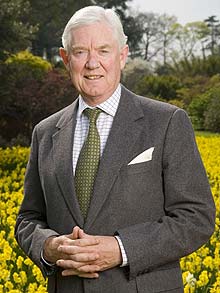
Peter Buckley at the RHS Wisley garden, Woking, Surrey in April 2007 We've heard quite a bit about thieves lately. Here is the story of Peter Buckley, born to wealth, who studied, learned how to manage companies and invest, and was known for his business acumen and integrity, which was an indispensable part of his success. He had a beautiful garden in Dumfriesshire, and was president of the Royal Horticultural Society. December 19, 2008Off in the snow
I'm heading off on errands, and thinking about those people who established twelve days for Christmas with Christmastide ending on the Feast of Epiphany. My current illumination is that the Christmas season is always tense - pulled between starry meditations and wondering whether I forgot to send a Christmas card and exactly when I am going to purchase and mail a gift. This being so, I might as well relax and enjoy it. We've reedited A British Christmas, and hope you can take a moment to savour it. If you are as behind as I am, you can find a link there to email beautiful cards from the British Library. All the best! December 18, 2008Playing by the rulesSome months ago Nigel Farage (UKIP MEP) and Daniel Hannan (Conservative MEP) spoke eloquently in the EU 'parliament' about adhering to the rules, and they condemned the arbitrary powers that were being proposed. I have urged Farage, who is also UKIP leader, to keep to UKIP's own fair rules and procedures. Anyone listening to these brief speeches will be impressed by the speakers' passionate defence of playing by the rules. The right to marry is not the right to a spouse
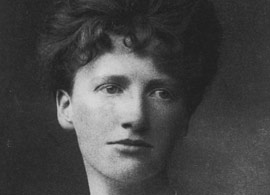
We posted the other day on the US Bill of Rights and the contributions made to establishing those rights by Brits. They didn't theorize about freedom. They knew how terrible it was to live without their rights and they fought to win them. (They fought because conversations with authorities who do not believe in free speech or free association or freedom or religion are so often futile.) Recently Paul Moreno made an interesting comparison between natural rights and the "entitlements" established by government. By the end of the 18th century, Brits and Americans understood that government's purpose was to secure pre-existing natural rights such as life, liberty, property and association. Moreno writes - "Everyone can exercise such rights simultaneously; nobody's exercise of his own rights limits anyone else's similar exercise. Your right to life or to work or to vote does not take anything away from anyone else. We can all pursue happiness at once." Entitlements require someone else to provide me with a house, food, education, health care and a job - and if I don't have a job, to pay me anyway. If I have a job, I will be paying for the entitlements of others. If I don't have a job and you do, you will be paying for mine. Rights also have the great advantage of encouraging independence and teamwork and generosity. Rights create prosperity, while universal entitlements are economically unsustainable. To put Moreno's comparison of rights and entitlements in a nutshell - "The right to free speech does not entitle me to an audience"; "the right to marry does not entitle me to a spouse". Thanks to Instapundit and Reason for the link. December 17, 2008The usual culpritEU regulation has been hurting Brits for a long time, but often we don't realize where the legislation that causes the pain originates. London Mayor Boris Johnson has just received a report (Wall Street Journal, 15 December) which states that London is losing business because of "UK treasury taxes" and "too much UK and European Union regulation". This loss is already hurting people, many of them not in the financial sector. At Bloggers 4 UKIP, a Brit working for an IT organisation describes "the brown stuff" into which he is being dropped because of the Working Time Directive. The loss of the WTD opt-out will cost every British household over £2,000. The litany of EU-inflicted pain is well-nigh endless. Becoming the person she longed to beWe've written about Eglantyne Jebb before. She is one of our favourite Brits. She never had children of her own, but she did more to save children from hunger than anyone we know. Along the way, she became the person she longed to be.
December 16, 2008Out-of-doors political activity anniversary
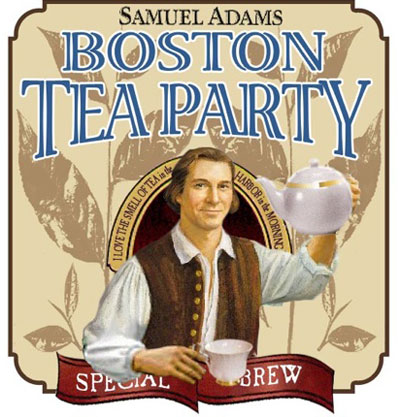
"I love the smell of tea in the harbor in the morning." Image Outrage In the 1760s, many Brits in America were enraged when Parliament levied taxes on the sale of sugar, coffee and wine, and allowed them no voice in the matter. Some MPs had qualms, but others, supported by George III, insisted that Parliament could tax every British subject wherever he was and despite his lack of representation. This was contrary to the rights gained by the Brits since the 13th century, and William Pitt the Elder passionately urged Parliament to allow Brits in America to be represented in Parliament. Why the fuss over taxes? You might wonder why Brits in America were so concerned about taxes. There were several reasons. Like EU functionaries today, British governors in America lived lavishly. The hard-working citizen could see his tax money being wasted, and was infuriated. In addition to their natural compulsion to keep what they earned for their families, Brits realized that some taxes were counter-productive because they would depress the economy, and destroy everyone's well-being. Because they lived several hundred years ago, we might imagine they knew less about politics or economics than we do. But reading their letters, newspapers and thousands of political pamphlets it becomes obvious that they understood at least as much as we do. Those of us who are dependent on a few mainstream newspapers and the BBC are probably less informed. Like a teabag we are well steeped in the prevailing propaganda, but know little else. The tea party In 1773, Parliament gave the East India Company preferential treatment so it could undersell American tea merchants (and smugglers), and in November, three East India ships loaded with tea sailed into Boston Harbor. Resentful Bostonians decided to send the ships back to London, but the governor refused to allow the ships to leave until import duties were paid. Eight thousand Bostonians protested, to no avail. On the night of 16 December, 150 activists disguised as American Indians boarded the ships, and dumped over 200 tons of tea into the drink. Samuel Adams, who would become governor of Massachusetts years later, was said to be leading them. Conclusion This is what the historian Gordon Wood called "out-of-doors political activity". It has a long and noble tradition in Britain and America. Jane liked men
Another visit to the doctor (good marks expected) on this beautiful, icy day so posting will be light this morning. I think all of her readers know that Jane Austen who was born on this day liked men. Of course she loathed cads, but she loved men who loved women with spirit and men who were true. That there might be a reason for this, that Jane might even have been a tomboy is less well known. December 15, 2008British and American RightsIn his Commentaries on the Laws of England, William Blackstone said that individuals had absolute rights “inherent in us by birth. . .the gifts of God to man at his creation. . .” They were 1) “the right of personal security In Britain, centuries of struggle had occurred in the defence of these rights, and they were affirmed in the British Constitution, which includes Common Law, Magna Carta and the Bill of Rights. Brits in America were tremendously impressed by Blackstone's Commentaries, which continue to be quoted in Supreme Court decisions today. In 1791, after winning their independence from Britain and establishing their constitution and new government, Americans decided it was essential to spell out their God-given rights of personal security, personal liberty, and private property in amendments to the U.S. Constitution since their elected representatives were proving remarkably forgetful of them. They chose to use the same name - Bill of Rights - that the English used in 1689. We have never seen a comparison of the rights articulated and protected by the British Constitution between the 9th and 18th centuries with those protected by the US Bill of Rights, the first 10 amendments to the US Constitution, so we created one. It’s quite fascinating. Below we reprint the US Bill of Rights. The rights protected by the British Constitution are shown in red. The U.S. Bill of Rights: The wary genius of the drafters is evident in the 9th and 10th amendments. To articulate and protect these rights over the centuries in Britain and in America required imagination and courage. It was never enough to have these rights in writing. Men and women had to defend them, and that task continues today. Since we first wrote on this subject last year, the US Supreme Court has affirmed that the right to bear arms is an individual right. The justices based their thinking on British and American history. The individual right to bear arms corresponds to the individual's absolute right to personal security and, consequently, to her right to defend herself with arms if necessary. Bill of Rights Day in America is celebrated today. Thanks to Instapundit for the reminder. Global warming and Cock-a-Leekie soup
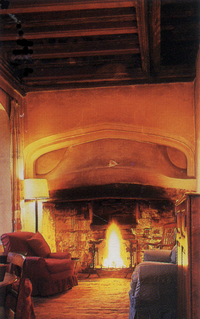
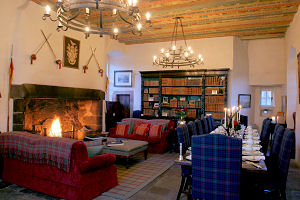
Forter Castle, restored by Robert Pooley The Arctic is back to its ice-building ways, and cold Arctic air has flowed south over Oregon, so it seemed a good time to cook Cock-a-Leekie soup. I put my free-range chicken with water in a pot, brought it to a boil, skimmed the surface clean, added peppercorns (not too many) and salt and simmered for an hour; added clean and chopped leeks for another half hour and prunes for the last 15 minutes. (I was a bit vague about all these times.) I took the meat off the bone - it was so tender it fell off - and put the meat back in the broth. Since I wanted the soup to sparkle I added a little white wine. Parsley is supposed to be the garnish, but yogurt had to substitute. Very nice on a snowy, frosty night, and a good stand-by for lunch on an icy day. FraudThe HSBC joins victims of Madoff’s alleged fraud. This is the latest story in a series of economic debacles that make me incandescent with anger. I detest fraud. I detest government failing in its role as sheriff, and instead helping to create a crisis because politicians want to buy votes. In his latest book Money, Niall Ferguson pointed out the destructive role of the US government which forced banks to make housing loans to people who lacked a down payment or even a job to repay them. The banks then bundled the loans and sold them. This is NOT what Adam Smith meant by a free economy. If people are not honest - if we can't trust them and if they can't trust us - the free economy, which has lifted billions of people out of poverty, will not survive. Simon de MontfortA reader wrote us that he disliked Simon de Montfort's involvement in the repression of the Albigensians. We found that odious, too, but that was not Simon, who was only one year old when the attacks began, but his father, also named Simon. Simon de Montfort's fiery contributions to the creation of Parliament are here. The Queen's thread continuesInteresting developments at the thread of comments under The Queen's ministers lose the plot. Scroll down to read or add your ideas. An online glitchWe seem to have experienced a few server troubles. If in future you can't reach us, please try again. December 13, 2008Dr Johnson's feast day
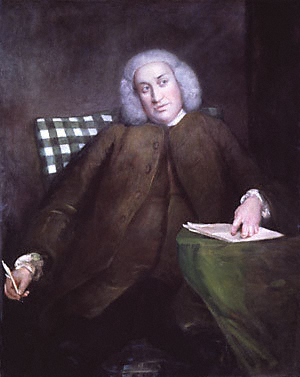
Six-feet tall and clumsy, Dr Johnson defied poverty and disfigurement, became a sensation as a wit and man of letters, cared for a family of homeless men and women and ended up with his own feast day. His life "was a tale of triumph over every kind of obstacle". Portrait by Joshua Reynolds National Portrait Gallery Samuel Johnson grew up destitute and had terrible health. He was a frail baby who barely survived tuberculosis of the lymph nodes. When he was a boy he barely survived smallpox, and was disfigured with scars. When he became a man he suffered from convulsions that may have been Tourette's syndrome. Depression and unemployment But Johnson was precocious, and he studied at the ancient grammar school of Lichfield and at Oxford. Ill, poor, socially immature and rebellious, Johnson loved Oxford, but he could not stay. His father could not pay fo him. For the next three years Johnson lived at home and suffered what appears to be clinical depression. Unemployed, he used to walk 30 miles a day to try to reduce his anxiety.A love-match and London The writings of William Law, a Christian mystic whose kindness and good sense were legendary, inspired Johnson, but he lacked fire. To make money he took a job translating a 400-page account of a journey to Abyssinia into English. Unwell, he finished the work in bed. It was love, perhaps, that roused him. Johnson called his marriage to a lady 20 years his senior a love match, and Elizabeth must have provided inspiration. After failing to be hired as a teacher or to attract students when he set up a school, Johnson decided to make his fortune as a writer in London. He left Lichfield with young David Garrick, the future actor and theatre producer. They were so poor they had to share a horse - the one riding ahead, the other walking, Johnson or Garrick tying up the horse and walking ahead while his companion caught up on horseback.
The senate of Lilliput In London Johnson began working at fiendish speed to earn enough money so Elizabeth could join him. He found a publisher in Edward Cave, the editor of Gentleman's Magazine, and located a rich vein of satire in the House of Commons, where it has long resided. The House had made it illegal to publish its debates, but Johnson altered the names of MPs and wrote immensely popular pieces about the "senate of Lilliput". Meanwhile, he was also producing plays, poetry and short biographies. His wrote satire and fierce invective in terse epigrammatic phrases - This mournful truth is everywhere confessed, Many nights Johnson walked the streets of London and talked with a friend, the poet Richard Savage, because neither of them had enough money to sit down and buy a beer. When Savage died, Johnson wrote one of his most admired works, ";a pioneering exercise in psychological biography" and "a graphic sociological study of Grub Street". It was also a testament to friendship. Johnson gives a vivid account of Savage's struggle to establish his parenthood, and a fair-minded narrative of the poet's trial for murder. (Oxford DNB).
An unexpected project Money troubles continued to plague Johnson, so he was eager to begin work on a project that must have struck some as preposterous - What was envisaged was something quite different, a commercial venture financed by a consortium of leading figures in the trade, and one which would be compiled essentially by a single hand—that of a poverty-stricken journalist and pamphleteer, who had dropped out of university and who had never left England. Johnson prepared a short prospectus for the undertaking, and then signed a contract on 18 June 1746. The compiler was to be paid 1500 guineas, out of which he had to defray the cost of his copyists, and delivery was due in three years. It seems miraculous today that the job took as few as nine years to complete. The project was his great English Dictionary. The DNB looks at how he worked - For this task, the Johnsons took a substantial house in Gough Square, which survives today off the north side of Fleet Street as a Johnson museum. The garret was fitted out as workroom for the staff, which amounted to five or six assistants, most of them Scots. Johnson used an interleaved copy of Bailey's dictionary in its 1736 edition; he also consulted a wide range of technical and specialist manuals to expand the range of vocabulary. He sought out illustrative quotations in a huge collection of books, from which his amanuenses transcribed marked extracts.Johnson had read hundreds of English writers, and his dictionary reflects his knowledge. Among its 40,000 entries, his entry for the verb take runs to more than 133 numbered uses.
A champion of women writers with an eccentric household Johnson worked stupendously hard - defying both depression and debtor's prison. His moral outlook gave his essays on social, religious, political and literary themes tremendous depth. His wife, whose devotion, patience and kindness had sustained him, died at the age of sixty-three. Rather than remarry, Johnson took on waifs and derelicts, including a former slave. He looked after his castaways with long-suffering kindness, and helped one of them, Anna Williams, to bring out a book of poems. Meanwhile his career was expanding.
Dr Johnson Oxford awarded him the degree of master of arts, and he began editing a new journal called the Literary Magazine. His writing for the magazine was forceful and varied - everything from defending tea-drinking to warning of conflict between the French and English in the Ohio Valley to examining "the delusive nature of most quests for human happiness".
Dr Johnson's circle Johnson's glittering circle of friends and colleagues numbered Oliver Goldsmith, Edmund Burke, Joshua Reynolds, Edward Gibbon, David Garrick, Richard Brinsley Sheridan and Henry and Hester Thrale. (The relationship with Hester attracted unsupported claims after Johnson's death - and are not worth contemplating here.) Johnson's immense range of knowledge, his speed of thought and his eloquence left even Burke, Fox and Garrick speechless. In May 1763 James Boswell burst on the scene, and Johnson welcomed him. It was almost as if the older man saw his younger self - or the son he had never had. Boswell shadowed Dr. Johnson, and famously recorded his conversations. They made a strenuous journey to Scotland, hiking over desolate mountain regions. The book Johnson wrote as a result, A Journey to the Western Islands of Scotland (1775), "stands as one of its author's most eloquent and challenging works, a great document of cultural studies before the topic was invented" (DNB).
Johnson's sound bites, as recorded by Boswell have become famous -
"Depend upon it, sir, when a man knows he is to be hanged in a fortnight, it concentrates his mind wonderfully." On second marriages: "The triumph of hope over experience." On Americans, whose support of slavery he detested: "No people can be great who have ceased to be virtuous." Johnson is hard to pin down, though hundreds of biographers have tried. A man with an appetite for controversy and a realist about people, he was also kind. Throughout the last decades of his life he revised his dictionary, dined with friends at the Literary Club and made tours of England and Wales. When he was in his seventies and growing frail, he published a series of prefaces to a new collection, known today as The Lives of the Poets. He continued to give generously to the poor and was tender to animals and children. His business sense helped to rescue a friend's brewery. He left behind books of criticism, poetry, biographies, political pamphlets, prayers, a moving diary, his dictionary and bequests for his friends and the poor. He would be shyly astonished to learn that he has been given a feast day in the Anglican Communion of Saints. We end with our favourite Dr Johnson quote - "Patriotism is the last refuge of a scoundrel." Metric Martyrs score victory - preemptive jury nullification
Metric Martyrs have declared another victory for 'metric martyrs' everywhere after further charges against Janet Devers, a Hackney market trader who sold her produce pounds and ounces were dropped. (We first covered the story here.) Those charges would have brought Janet before a jury, but Hackney Council have just announced that it was withdrawing from the case in the wake of overwhelming public pressure. That is a form of preemptive jury nullification, of which William Penn, William Meade, Edward Bushell and more recently Sarah Palin have been the heroes. Jury nullification, the great, largely unknown right of jurors, is to declare a defendant innocent because they believe the law is unjust or unlawful. This petty and ridiculous law is unconstitutional, but Janet has already suffered harassment, arrest, a £5,000 fine and a criminal record in a trial before Magistrates. She is appealing that conviction. Her money should be restored to her and her criminal record erased. Thanks to the Magna Carta Society for the news. December 12, 2008ZimbabweAt one time, farmers of British descent and Africans had made Zimbabwe the bread basket of Africa. Letter from ZimbabweI reckon that these are the last days of TKM and ZPF. The darkest hour is always before dawn. We are all terrified at what they are going to destroy next. . .I mean they are actually ploughing down brick and mortar houses and one family with twin boys of 10 had no chance of salvaging anything when 100 riot police came in with AK47's and bulldozers and demolished their beautiful house - 5 bedrooms and pine ceilings - because it was 'too close to the airport', so we are feeling extremely insecure right now. You know - I am aware that this does not help you sleep at night, but if you do not know - how can you help? Even if you put us in your own mental ring of light and send your guardian angels to be with us - that is a help -but I feel so cut off from you all knowing I cannot tell you what's going on here simply because you will feel uncomfortable. There is no way we can leave here so that is not an option. I ask that you all pray for us in the way that you know how, and let me know that you are thinking of us and sending out positive vibes. . .that's all. You can't just be in denial and pretend/believe it's not going on. To be frank with you, it's genocide in the making and if you do not believe me, read the Genocide Report by Amnesty International which says we are - in a level 7 - (level 8 is after it's happened . . .). If you don't want me to tell you these things - how bad it is - then it means you have not dealt with your own fear, but it does not help me to think you are turning your back on our situation. We need you, please, to get the news OUT that we are all in a fearfully dangerous situation here. Too many people turn their backs and say - oh well, that's what happens in Africa This Government has GONE MAD and you need to help us publicize our plight - or how can we be rescued? It's a reality! The petrol queues are a reality, the pall of smoke all around our city is a reality, the thousands of homeless people sleeping outside in 0 Celsius with no food, water, shelter and bedding are a reality. Today a family approached me, brother of the gardener's wife with two small children. Their home was trashed and they will have to sleep outside. We already support 8 adult people and a child on this property, and electricity is going up next month by 250% as is water. I am not asking you for money or a ticket out of here - I am asking you to FACE the fact that we are in deep and terrible danger and want you please to pass on our news and pictures. So PLEASE don't just press the delete button! Help best in the way that you know how. Do face the reality of what is going on here and help us SEND OUT THE WORD. The more people who know about it, the more chance we have of the United Nations coming to our aid. Please don't ignore or deny what's happening. Some would like to be protected from the truth BUT then, if we are eliminated, how would you feel? 'If only we knew how bad it really was we could have helped in some way'. [I know we chose to stay here and that some feel we deserve what's coming to us.] For now, we ourselves have food, shelter, a little fuel and a bit of money for the next meal - but what is going to happen next? Will they start on our houses? All property is going to belong to the State now. I want to send out my Title Deeds to one of you because if they get a hold of those, I can't fight for my rights. Censorship! We no longer have SW radio [which told us everything that was happening] because the Government jammed it out of existence - we don't have any reporters, and no one is allowed to photograph. If we had reporters here, they would have an absolute field day. Even the pro-Government Herald has written that people are shocked, stunned, bewildered and blown mindless by the wanton destruction of many folks homes, which are supposed to be 'illegal' but for which a huge percentage actually do have licenses. Please! - do have some compassion and HELP by sending out the articles and personal reports so that something can/may be done. 'I am one. I cannot do everything, but I can do something; and because I cannot do everything, I will not refuse to do the something that I can do. What I can do, I should do. And what I should do, by the grace of God, I will do.' (Edward Everett Hale) The writer of the letter is, by necessity, anonymous. Veritasse and CS Lewis
In September we posted about Veritasse, a vibrant community of visual artists and musicians who express their Christian faith in their work. They have been forging links with publishers and galleries. Sue Newham has just written us to say that they have opened a new gallery in Maidenhead in partnership with St Andrew's Bookshop. CS Lewis was a literary artist and evangelist. His delicious and rather frightening satire, The Screwtape Letters, is currently playing to soldout houses at the Mercury Theater in Chicago. Betsy Hart interviews the star, Max McLean. Kate Winslet - growing up
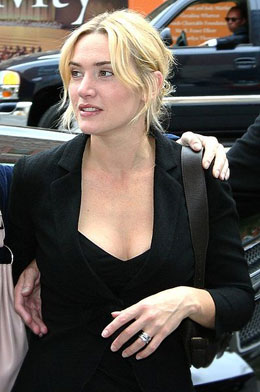
Kate Winslet at the Toronot Film Festival, 2006 A rich interview about acting and growing up. Kate has lovely childhood memories - The Winslets lived in a three-bedroom house where there was never any money, but lots of noise, fun, food and sharing: 'Very much a working-class upbringing. I’m from a gaggle of people who do turns at the open mike, or sing along with pub pianists.’ Theatre, then, but in the people’s tradition. She has memories of sitting at the kitchen table testing her father on his lines for a part in Casualty, and the little sisters testing each other on parts for productions at school or the local youth theatre, Foundations. From a young age, Kate and her sisters, Anna and Beth, lived for shows: acting in them, going to London to see them (their favourite: Starlight Express – they saw it five times), getting Sally [her mother] to make costumes, obsessing over Minipops on television, just enjoying the smell of make-up and the hysteria of the dressing-room. At the age of 22, Winslet broke the record for the youngest person to receive two Oscar nominations. I thought she was wonderful in Sense and Sensibility and The Titanic. She is a contender for two Oscars this year, following Golden Globe nominations for her work in Revolutionary Road and The Reader. Graham Wood writes Mr SturdyMr Sturdy is the prospective Conservative candidate for the Vale of York. In response to the current financial crisis, his party has declared that the government should never again spend more than the country can afford. Interested by this stirring avowal of a principle long missing-in-action, Graham wrote to Mr Sturdy to ask a pertinent question. First he reviews a few facts, familiar to readers of this blog - Britain's net contribution to the EU after the 'rebate' is an astonishing £10.2 billion every year. Graham asks, "In the light of such figures, which to my knowledge no MP or party is able to dispute, the urgent question arises - by what ethical or moral principle are such payments to the European Union now justified?" December 11, 2008Boris saves ChristmasAt London's City Hall. The controversies over the City Hall Christmas tree and the Southwark Cathedral carol service have been resolved. Iain Dale explains. Thanks to National Review for the tip. A Christmas tree story
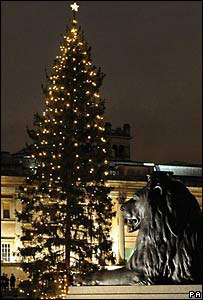
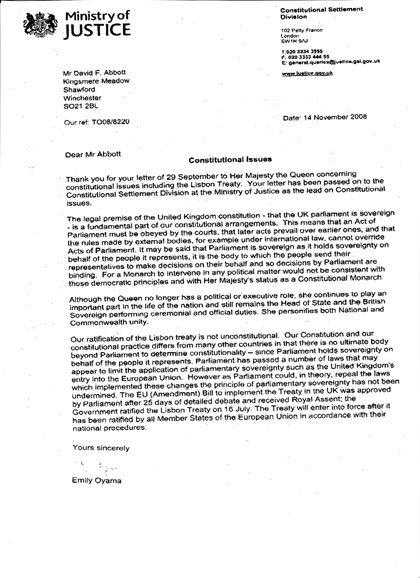
Image: BBC Every year since the end of WWII the people of Norway have sent a fir tree to Trafalgar Square at Christmas, to thank the British people for freeing them from the Nazis. Is The Queen still sovereign?We've received a number of interesting comments to The Queen's Ministers lose the plot. (Scroll down to read comments. Click on the Comments link to leave a comment. You will have to scroll down a bit to reach the comments box.) The crucial question - Is the Queen still Sovereign Monarch as she was on the day of her coronation in 1953? A correspondent writes that Magna Carta Society "has never received a reply to this question. Here it seems is the answer" - in the letter sent to David by the Ministry of Justice. The British Constitution Group is tackling this and other constitutional issues, and have an important meeting scheduled for 24 January. December 10, 2008A door into life
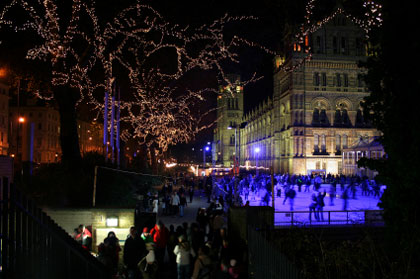
The Natural History Museum and ice skaters on the museum's skating rink. In A Short History of Nearly Everything, Bill Bryson writes - Here and there in the Natural History Museum in London, built into recesses along the underlit corrdors or standing between glass cases of minerals and ostrich eggs and a centruy or so of other productive clutter, are secret doors - at least secret in the sense that there is nothing about them to attract the visitor's notice. Occasionally you might see someone with the distracted manner and interestingly wilful hair that mark the scholar emerge from one of the doors and hasten down a corridor, probably to disappear through another door a little further on, but this is a relatively rare event. For the most part the doors stay shut, giving no hint that beyond them exists another - a parallel - Natural History Museum as vast as, and in many ways more wonderful than, the one the public knows and adores. There are billions of species - and not just microbial types - that have yet to be discovered. Bryson reports that "In 1995 a team of French and British scientists in Tibet, who were lost in a snowstorm in a remote valley, came across a breed of horse, called the Riwoche, that had previously been known only from prehistoric cave drawings." There are only 10,000 taxonomists in the world, a number of them working at the Natural History Museum, behind those "secret" doors or out in the field, trying to log the new discoveries. Visiting the Natural History Museum and its new Darwin Centre is free of charge. (There is a charge for temporary exhibits.) Whenever we open Bryson's book, we find another fascinating story - Christmas giving
Ross Kemp (left) arrives at HMS President in a military boat to support Christmas Boxes for the Armed Forces. The idea began with the 1914 gesture of 17-year-old Princess Mary, who had the idea of presenting a gift from the nation for everyone wearing the King's uniform and serving overseas on Christmas Day. Image: Terry Seward Last week, Ross Kemp, the star of ITV's hit SAS drama Ultimate Force, helped to launch the Christmas Box campaign. He spoke about the insights he had received when filming a documentary in Afghanistan - "The well-meaning things that are sent out to these guys make a massive difference. Kemp wants to make sure that every Service member, whether in the Falklands or in Afghanistan or Iraq, receives a Christmas Box and the message of support and thanks from the British people that comes with it. That means 24,500 present-packed boxes. The Forces affectionately refer to the boxes as their "square stockings". Donations to the cause can be made to uk4u-Thanks! This Christmas the number of charitable appeals and the generosity of givers is breathtaking. We'll post more about them. Paradise Lost againJohn Derbyshire's view of current American events from the perspective of Paradise Lost. December 09, 2008John Milton's 400th
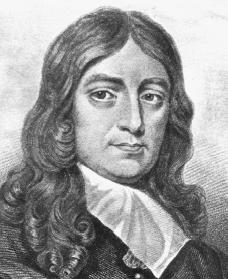
Before he died in 1674, John Milton had survived the plague, the death of children and two wives, civil war, blindness, imprisonment in the Tower of London, the loss of all his money in a financial disaster and the Great Fire of London. Despite all these travails, he wrote some of the greatest English poetry and a great defence of freedom. Milton was born on Friday 9 December 1608 in the house at the sign of the Spread Eagle, Bread Street, London. His father was a scrivener and composer, and hired a tutor for him. He must have been a brilliant boy. He became fluent in Greek, Hebrew, French, and Italian and wrote poems in Latin when he was still a teenager. Death and poetry He studied at Cambridge, between bouts of the plague, and wrote a number of poems as memorials to men who had died, including the scholar and divine Lancelot Andrewes and the octogenarian coachman, Thomas Hobson, who had driven students between London and Cambridge at high speeds - Here lieth one who did most truly prove, / That he could never die while he could move. . .(The University Carrier) After Milton left Cambridge he lived with his parents and started his own course of study, recording ideas and lines of reading in a commonplace book. (It's now in the British Library). It is difficult to imagine he was very happy. He was deeply shocked by the death of Edward King, a fellow of Christ's College who drowned off the coast of Anglesey. Milton struggled to put into words his feelings. The result was ‘Lycidas’, a poem weighted with classical freight, but a consolation to many who have struggled to articulate - and thus to bear - their grief at the death of a friend. To Italy ‘Lycidas’ concludes by affirming that when grieving has finished, life must go on - ‘Tomorrow to fresh woods and pastures new’. Milton took his own advice and headed to Italy. Visiting the Italian scientist Galileo and Italian poets, he was gone for fifteen months. He returned to England because, "I thought it base that I should travel abroad at my ease for the cultivation of my mind while my fellow citizens at home were fighting for liberty". The English Civil War had begun and Milton felt passionately about the issues at stake. However, it has to be admitted, he did not rush home. Rebel and pamphleteer But once he had arrived, he plunged into writing and publishing fire and brimstone attacks on bishops of the English church. Milton believed that bishops were too ready to feather their own nests. He preferred "independent congregationalism, which had taken root in the puritan colonies of America and had been re-exported to England" (Oxford DNB). It was a courageous stand. At the time the Star Chamber was sentencing anti-episcopal thinkers to torture and mutilation on the scaffold. Milton also became a vocal supporter of more liberal divorce laws, possibly because his marriage in 1642 to a seventeen-year-old had experienced a bumpy start. A few months after their wedding, his wife left him and went back home. In 1643 Milton published a pamphlet arguing that the traditional grounds for divorce were insufficient, and that a man should be able to divorce his wife if their marriage had become spiritually and emotionally barren. In an interesting twist, partly because they were not allowed to divorce, the Miltons reconciled and overcame their emotional divisions. But his pamphlet excited the authorities. Parliament decided to stamp out unregistered books, including Milton's. This attempt to stifle Milton inspired Areopagitica (1644), a great and eloquent defence of the right to publish. It will help to inspire Americans to establish freedom of speech in the U.S. Bill of Rights a century later. The English Civil War had a long lead time. The quarrel between King and Parliament began in the 1620s. Pitched battles began in 1642 and did not end until 1651. One might have thought that everyone would be preoccupied with the news - the retreats, advances, defeats - but perhaps luckily for those living at the time, the BBC and Fox News were not broadcasting round the clock. In the middle of the Civil War, the Miltons were raising two daughters and Milton was working on a history of Britain, publishing his early poems and, as noted, defending freedom. Milton wasn't indifferent to the war. He wrote poetry about it and he entered the service of the new English republic as a writer and translator. In 1649, he argued that the people have a right to call kings to account and, if a sovereign refused to give justice to his people and defend their liberties, to depose him. Blindness and vision Milton had lost the sight of his left eye a few years earlier. In 1652 he became permanently blind in both eyes and his wife Mary died after giving birth to their daughter Deborah. "Milton was left, alone and blind, to care for four young children; six weeks later, his only son, John, died" (Oxford DNB). It was now, widowed and blind, that Milton returned to writing poetry. On His Blindness Milton remarried, but within a year his second wife and infant daughter died. Shortly afterwards, in 1658, Milton began to dictate Paradise Lost, an epic poem in 12 books which tells the story of Adam and Eve, who enjoy free will but make terrible mistakes, partly because of their inability to truly love each other. Lucifer, the self-tormented, blindly willful angel, rebels against God, and leads Adam and Eve to their separation from God until Christ brings redemptive love. There are a host of angels and spirits as well - all of them speaking in blank verse - lines with rhythm but without rhyme. It is a colossal creation, which affected generations. Some today find it remote. Dr Johnson remarked, 'None ever wished it longer than it is.' Still others are excited by its science fiction. And yet it is beautiful - Now came still Evening on, and Twilight gray Paradise Lost is full of jewels. After all his polemics, some of them quite negative about people of other faiths, Milton published a treatise that is the result of his thinking about free will. In 1659, he defended freedom of conscience, declaring that it is not lawful for any power on earth to compel men and women in matters of religion. His stand helped to create freedom of religion in Britain and America, Canada, Australia and New Zealand. That is something to be thankful for on this, the 400th anniversary of his birth. December 08, 2008Edwardian London was prepared to handle terrorRichard Munday writes in the Times - The Mumbai massacre could happen in London tomorrow; but probably it could not have happened to Londoners 100 years ago. At the time London was filled with people who could carry guns responsibly. Lives lost to gun violence in the 1890s amounted to a handful during the entire decade. Munday mentions William Blackstone, who is featured in our Liberty Timeline because he believed that the right to self-defence was the foundation of every other freedom. Thanks to Instapundit for the news. A frosty morning at St Cross
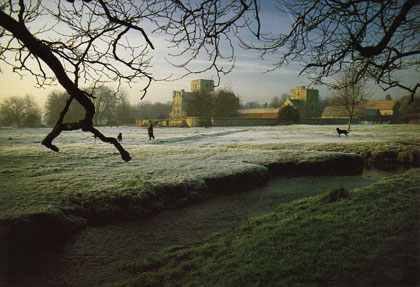
Anyone interested in writing their Christmas cards might consider rupturing their quads, as David has done, for he stoically points out that immobility is helpful when tackling a Christmas card list. Here is a card he is sending out. The image is by Adrian Harvey. The card is sold to help maintain the fabric of The Hospital of St Cross and Almshouse of Noble Poverty, just south of Winchester and an easy jog up the tow path from David's house at Shawford. The oldest and the largest medieval almshouse in Britain, the Hospital of St Cross was founded in the 1130s by Bishop Henry of Blois for 'thirteen poor men, feeble and so reduced in strength that they can scarcely or not at all support themselves without other aid'. For over 850 years St Cross has provided shelter and food to people in need. The Queen's ministers lose the plotThis letter needs no introduction except to say that most of British history has been a long and successful attempt to check the power of the Sovereign. Today, power resides in Parliament and in the EU, and requires the Sovereign, supported by her people, to curb it.
8 December 2008 Her Majesty The Queen Madam, The response of the Ministry of Justice to the questions forwarded by Mrs Bonici on Your Majesty's behalf has raised radical concerns about Your Majesty's constitutional role as Sovereign. As Your Majesty will recall, Mrs Bonici replied to my 29 September letter on 24 October 2008 by stating that Your Majesty had "taken careful note of the views you express regarding Her Majesty's action in recently granting her Royal Assent to the Treaty of Lisbon. With regard to your comments on constitutional issues, I have been instructed to send your letter to the Right Honourable Jack Straw, MP, Secretary of State for the Ministry of Justice and Lord Chancellor, so that he may be aware of your approach to The Queen on these matters and may consider the points you raise." The reply, which I recently received from Ms Emily Oyama, Ministry of Justice, Constitutional Settlement Division, suggests that the Ministry of Justice has a very peculiar and startling view of the British Constitution and Your Majesty's constitutional role. Flatly contradicting the sovereignty of Your Majesty, the Ministry declares that "it may be said that Parliament is sovereign as it holds sovereignty on behalf of the people it represents. . . .The Queen no longer has a political or executive role. . ." This view is false. It is contradicted by last week’s events in Canada where, according to the Wall Street Journal of 5 December, Your Majesty’s Prime Minister, Stephen Harper, won “the right to suspend the Parliament in a private meeting with a representative of Britain’s Queen Elizabeth II, the official head of state". It appears that Your Majesty exerts political and constitutional executive power in Canada but not in the United Kingdom. The Justice Ministry’s phrase “the Queen no longer has a political or executive role. . ." shocks us. Pray, may we ask when this new constitutional settlement occurred? Exactly when did Your Majesty lose her Sovereignty in Parliament? The British people chose to enter into a covenant with Your Majesty on 2 June 1953, when you promised to rule according to our laws and customs. Pray, may we ask how Your Majesty’s ministers presume to reject or ignore this covenant? The same people who say that Your Majesty "no longer has a political or executive role" have also said that there is no written British Constitution. This is nonsense. Your Majesty will recall that John Adams, the second President of the United States, whose ideas contributed to the American Constitution, called the British Constitution "the most stupendous fabric of human invention" in history. It is true that just as a family's Christmas traditions are unwritten, some parts of the British Constitution are also unwritten. However, many crucial parts of our Constitution are written down and have been for centuries. They are: 1) Common Law Your Majesty will be acquainted with the fundamental aspects of these magnificent documents. It may interest Your Majesty that the oak tree, which is the national tree of England, Wales and the United States, presents in its structure a visual sketch of the organizing principles of the British and American Constitutions. Both these constitutions have three great branches - 1) the Sovereign (in America, the executive branch), 2) the two houses of Parliament (the legislature in America) and 3) the courts. These three branches are meant to balance each other, just as the three main branches of the oak tree balance each other. If one branch becomes too large, it will topple the tree, especially if another branch withers away. On the 8th February 1952 when Your Majesty made Your Declaration of Sovereignty, you declared, "By the sudden death of my dear Father, I am called to assume the duties and responsibilities of Sovereignty. . .to uphold constitutional government". The assumption of sovereignty with its clear charge to uphold constitutional government requires the Sovereign to balance and check the powers of Parliament. If the Sovereign does not provide a check and balance, the legislature, as John Adams warned, will become tyrannical. One of the Sovereign's checks is the Royal Assent. Those who willfully flout the British Constitution assert that the Royal Assent must be automatically given. This is another effort by Parliament to usurp the constitutional duties of the Sovereign by summoning a fictional automatic Royal Assent like a spirit from the vasty deep. We fear that Your Majesty's ministers have grossly misstated Your Majesty's constitutional role. To assert that intervening in a political matter "would not be consistent with Your Majesty's status as a constitutional monarch" is an oxymoron and suggests that the Justice Ministry holds an absurd and treasonous view of Your Majesty as an extra-constitutional ceremonial appendage. Many friends and colleagues fear that Your Majesty shares the views of your ministers. Your Majesty, will you please tell us that you do not share your ministers' views and that you will act as the constitutional monarch with whom your people entered into covenant? Yours sincerely, David F. Abbott Copies HRH The Prince of Wales, HRH The Princess Royal, HRH Prince William, HRH Prince Henry The letter from the Ministry of Justice is attached. December 06, 2008Advent
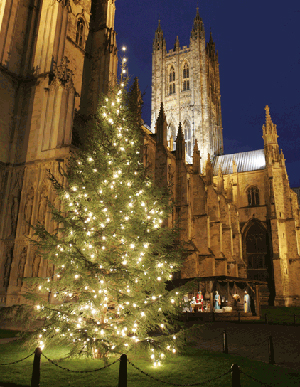
A Christian community has been observing the Season of Advent at Canterbury since before St Augustine’s arrival in Britain in AD 597. Those early communities connected celebrations of the birth of Jesus Christ, God's son, with the winter solstice and what appeared to be the rebirth of God's sun. The nexus struck early Brits as perfectly poetic. And poet is a fair description of Jesus Christ, as ancient Greeks and Jesus understood the word poet - a creator who transforms non-being into being. At one of the bleakest moments in his life Oscar Wilde wrote - Out of the Carpenter’s shop at Nazareth had come a personality infinitely greater than any made by myth and legend, and one, strangely enough, destined to reveal to the world the mystical meaning of wine and the real beauties of the lilies of the field as none, either on Cithaeron or at Enna, had ever done. (De Profundis) Here in Portland, Oregon, snow whitened the mountains to the east as the sexton climbed a ladder in the middle of the nave of the episcopal cathedral, and lit the first of Advent’s four candles in the big green wreath suspended from the rafters. Daylight is dwindling. The nights are growing longer. A new liturgical year has begun. We are waiting. Christians are waiting for Jesus, whose advent doth his people free (Winchester New). In the poem of his life, Jesus is waiting for us. We are about to cross a threshold.
Choir of King's College, Cambridge The Calendar lists a host of carol services to celebrate the Season of Advent and Christmastide. Bad behaviourHave you noticed this? . . .it is only for our bad behaviour that we find all these explanations. It is only our bad temper that we put down to being tired or worried or hungry; we put our good temper down to ourselves. CS Lewis makes the observation in Mere Christianity. Abolishing suttee
I have spent several interesting evenings talking with Parmar, a Sikh who owns a restaurant in Canada's frozen north. He grew up in the Punjab and Hong Kong, and has very definite opinions about the British Raj. Sitting down with a Johnny Walker Black Label, he did not hesitate to make his opinions known to me. In his estimation, one of the great contributions of Brits in India was the outlawing of sati (suttee), the burning alive of widows on their husbands' funeral pyres. The author of the reform was Lord William Henry Cavendish-Bentinck (1774–1839), a man who was never afraid to make himself unpopular and was keenly aware that if he failed in any of his military or political missions he would be disgraced, while if he succeeded it would never be as a result of support from his own government. Bentinck became governor-general in India from 1828 to 1835. He abolished sati on 4 December 1829. Indeed some say that his sweeping social, economic, and political reforms laid the foundations for modern India. Enforcing his law was Sir Charles James Napier, a fierce, uninhibited man who hated oppression whether he found it in Britain or India - and made no bones about condemning it. He was famously reported to have said - You say that it is your custom to burn widows. Very well. We also have a custom: when men burn a woman alive, we tie a rope around their necks and hang them. Build your funeral pyre; beside it, my carpenters will build a gallows. You may follow your custom. We will follow ours. Resourceful doctorsYou may have seen this wonderful story - an account by British surgeon David Nott who saved a young boy's life in the Congo using operating instructions sent as a text message by Professor Meirion Thomas in London. The difficult forequarter amputation showed tremendous resourcefulness and compassion, but I do have a challenging question. It seems strange that we have many "third-world" doctors practicing in Britain while many native British doctors can't get jobs in their home country. I know this is not the reason that Dr Nott is working for Medecins Sans Frontieres (MSF), but I can't help wondering whether Africans wouldn't benefit from being treated by their compatriots who are working in Britain's NHS. HomeThe hospital was clean, quiet and efficient, the nurses were caring and helpful, the surgeon hopefully is a dab hand at reweaving quad muscles and David is recuperating, so all in all there is much to be grateful for, and we are glad to be posting again. December 03, 2008Sorry!We've both made unexpected visits to the hospital over the last few days - we're alright, but posting has been lighter than usual and may be light for another day or two. The Speaker takes one end of the stickThe row over the arrest of Conservative MP Damian Green took an explosive turn when Michael Martin, the Speaker of the House of Commons, accused the police of searching a Commons office without a warrant. Well, this may have been one thing wrong with the police action. Janet Daley explains the others. We mentioned a few a few days ago. All the ministers who are responsible claim that they had nothing to do with ordering the police in. Does anyone truly think that Henry II had nothing to do with the murder of his archbishop? What does the Speaker think will happen when the EU gendarmerie march into Parliament? December 02, 2008Persevering
The internal domes, the whispering gallery, John Evelyn's candlelit discovery of the man who would carve several tons of wood for St Paul's, architect Christopher Wren being hoisted aloft in a basket to inspect progress and the American memorial are all part of the story of St Paul's . Thirty-two years after the Great Fire of London had burned down the old St Paul's cathedral, the new cathedral of St Paul's opened on 2 December 1697. Wren was 76 years old. He had been working for the last three decades to build more than 50 London churches and to get St Paul's right. December 01, 2008Character in BombayHere. DecemberThe British character?Supposing it is possible to speak about national character, British doctor Theodore Dalrymple asks what, exactly, were the qualities of the British that so many people admired? He replies - The British seemed. . .self-contained, self-controlled, law-abiding yet tolerant of others no matter how eccentric, and with a deeply ironic view of life that encouraged them to laugh at themselves and to appreciate their own unimportance in the scheme of things. If Horace Walpole was right—that the world is a comedy to those who think and a tragedy to those who feel—the English were the most thoughtful people in the world. They were polite and considerate, not pushy or boastful; the self-confident took care not to humiliate the shy or timid; and even the most accomplished was aware that his achievements were a drop in the ocean of possibility, and might have been much greater if he had tried harder or been more talented. Dalrymple, whose mother arrived in Britain during World War II as a refugee, deeply admires stoicism and consideration, the belief that "A man has to think of others, even when he is dying". He saw those in the British he met. Oddly, he does not directly mention courage when describing British character, though that was on vivid display during World War II.
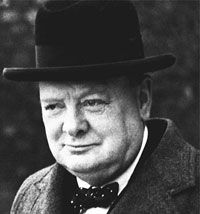
Perhaps Dalrymple's idea of a national character is a little far-fetched. I can't see Winston Churchill, born yesterday in 1874, meeting his character criteria. For one thing, he's too ebullient - and so were many other Brits, though not, perhaps, when Dalrymple first met them, in the decade after the war. Note: I've rewritten this post - not very happy with my first attempt - and think Dalrymple might want to reconsider his essay, too! Winston Churchill on characterThe only guide to a man is his conscience; the only shield to his memory is the rectitude and sincerity of his actions. It is very imprudent to walk through life without this shield, because we are so often mocked by the failure of our hopes and the upsetting of our calculations; but with this shield, however the fates may play, we march always in the ranks of honour. Winston Churchill, 12 November 1940, House of Commons Letters regarding the arrest of Damian Green MPA number of excellent letters appeared in the Times, among them - Sir - Parliament should impeach the permanent secretary at the Home Office, Sir David Normington, and any other senior public officials who initiated the police investigation into Home Office leaks that led to the arrest of Damian Green. We note that impeachment as a tool for rooting out corrupt and incompetent members of government was invented in Britain in 1376. Sir - The present Government is probably the most oppressive this country has suffered since the mid-17th century. But at least in the 17th century, the Speaker of the House of Commons, William Lenthall, made a stand against an attempt by the state to arrest five Members of Parliament. We do not look for a rescue from the House. The House has spent the last forty years ignoring the British Constitution. Sir - Parliamentary privilege was created by our ancestors with much bravery. Its purpose is to protect members from the state in the discharge of their duties. The present case demonstrates forcefully why it is necessary. Sir - Mr Green was arrested on suspicion of "aiding and abetting misconduct in public office", for which, I understand, the maximum punishment is life imprisonment. If true, it is scandalous that there exists such a wide-ranging, ambiguous, over-the-top law capable of abuse by the authorities as in this case. Sir - Why do many MPs seem so shocked by Mr Green's arrest? It is merely the logical progression from the gradual dismantling of our historic protections. Thanks to Idris Francis for pointing out the letters. |
A good start. Image: Wikimedia Commons
LIFEBritish gardens, sports cars, celebrations, fashion.
Exciting, profound, joyful, local and global: British writers, artists and musicians
They brought honesty and common sense, fair play and compassion, bravery, daring, and self-discipline, and a passionate love of liberty to a 2000-year-long struggle to achieve freedom.
Brits gave us the modern world. We love it, loathe it, can't live without it.
They were a fellowship of men and women, slave and free who changed the world.
BRITAIN’S CONSTITUTIONAllegedly unwritten, but called "the most stupendous fabric of human invention" in the world, and extremely important to your well-being, no matter where you dwell.FRIENDS & SUPPORTERS Our gratitude to ADAM HILEY of Essex for his contribution to the website. Our happy thanks to BARRY AND VIVIENNE HOOPER of Australia, who purchased a book and made a donation to the website. They wrote, We thank you both for your wonderful website which you share with many.Our warm thanks to STEWLAC for buying copies of the book, making a donation to the website, and sharing our hopes.Thanks to JASON BARNES for contributing to Brits at their Best and buying a copy of the book. Hope he likes it.In appreciation of the file on abolishing slavery, TOBY ROWE has supported Brits at their Best with a contribution.
|
The people of Britain and the Anglosphere defied a world of cruelty and superstition to create life-changing gifts. This is your inheritance. Glorious. Hardcover, 140 pages, 125 colour illustrations. Available at PG Wells Bookshop, Winchester, 01962 852 016. The cost is £4.99 (plus £3 shipping) in the UK, $9 (plus $8 shipping) in the USA. Please contact us at [email protected] if you would like a copy. The authors — Dr David Abbott and Catherine Glass Abbott — are the publishers of this website. DAVID ABBOTT MD, MRCPI have practiced medicine in England, America and Canada for the last four decades. I believe in the principles of Magna Carta and the Bill of Rights. I am a father, grandfather, bell ringer, environmental campaigner and marathoner. Brits at their Best produced thousands of indispensable inventions, developed wildly popular sports, designed romantic houses and gardens, created astonishing literary masterpieces, lived with style and humour, tackled dangerous missions with daring and ingenuity, and fought with indomitable courage to establish and protect the free world. We describe their superb achievements and extraordinary lives.
CATHERINE (CAT) GLASSI saw tyranny firsthand in Eastern Europe. (My background is English, Irish, and Czech.) I received my degree in Classical Greek from Columbia University, New York, worked in publishing in the United States for twenty years, and helped the homeless for seven years. We write about liberty, reason, imagination, fair play, a generous and forgiving spirit, love of God, the rule of just law, representative government, books, gardens, music, art, sports, inventions. . .the most wonderful things in the world.
“Brits at their Best. A magnificent site, particularly the Liberty Timeline. . .” Masthead Photo: Contributor Masthead Design: Technology Consultants: BLOGS & SITES OF NOTE |

|
||