BRITISH HISTORY
THE STORY of FREEDOM
1st CENTURY BC -
6th CENTURY AD »
13th CENTURY »
17th CENTURY
1600-1644 »
17th CENTURY
1645-1699»
20th CENTURY
1946-1999 »
21st CENTURY »
Holt's book connects individual freedoms with their Magna Carta roots. Big and thorough, it has been called definitive.
For UK orders:
For US orders:
"...gnawed and tunneled like a rat." The phrase comes from Edith Pargeter's Brothers Gwynydd, mysterious and gleaming 4-volume historical fiction about the Welsh prince Llewelyn and Simon de Montfort.
For UK orders:
For US orders:
"And do not fear those who kill the body; they cannot kill the soul" (Matthew 10:28).
The Welsh deserve a good account of their history and accomplishments.
For UK orders:
For US orders:
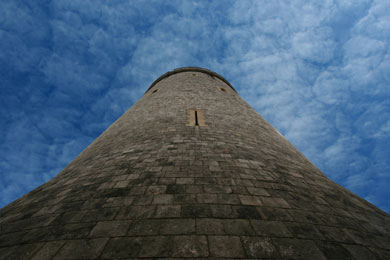
Windsor Castle Tower.
Photo: [email protected]
The night that King John signs Magna Carta, he throws himself down on the floor of Windsor Castle, and howls with anger. His fury as Brits establish and protect basic freedoms will be felt by other princes as Brits take unprecedented steps toward checking royal power and establishing parliamentary democracy.
1215 KING JOHN SIGNS MAGNA CARTA, THE GREAT CHARTER OF LIBERTY
King John loses Normandy to France, steals land and money from Brits, and exacts heavy taxes. He appoints judges who rule according to his whim, not according to the Common Law, and he gives the kingdom of England to the Pope as a fiefdom. Aghast, the Brits say, enough.
On June 15, churchmen, barons, and representatives from the self-governing towns led by Stephen Langton, Archbishop of Canterbury, gather in a meadow outdoors, armed and on horseback, in case the King decides to fight. The meadow is Runnymede, close to Windsor, where King Alfred met in a Witan centuries earlier. Here they force John to agree to their terms.
The big document that will record their rights and freedoms is famously called MAGNA CARTA (the big charter). Copies, written on vellum in black ink made from the galls on oak trees, are sent out across the kingdom to barons, sheriffs, and bishops.
John hardly takes time to change his boots before he attacks his barons. His efforts are in vain. Exhausted by his campaigns, depressed by the loss of his baggage train and his crown jewels in a freak tide in the Wash, he dies in October 1216 after devouring “a surfeit of peaches.”
The barons, who had called in the French Dauphin to help, now had to get rid of him, and decide what to do about Magna Carta. Would its promises extend, as written, "to all the free men of our kingdom, for Us and Our heirs forever, all the liberties underwritten. . ."
THE RIGHTS AT STAKE IN MAGNA CARTA
A number of modern writers, perhaps a little bored at having to repeat the same stirring story, have debunked Magna Carta and the Brits behind it. They malign Stephen Langton, and call the Carta “a ragbag” of miscellaneous clauses. Decide for yourself.
MAGNA CARTA LAYS THE GROUND FOR:
-
A guarantee of impartial justice to everyone by promising "To no one will we sell, to no one will we refuse or delay, right or justice."
-
The right to trial by jury. "No freeman shall be taken or [and] imprisoned or disseised orexiled or in any way destroyed, nor will we go upon him nor send upon him, except by the lawful judgment of his peers or [and] by the law of the land." The right to trial by jury develops over the centuries.
-
The right to habeas corpus – you have the body, produce him. Habeas corpus means that jailors cannot hold you in prison without charging you. They must bring you before a judge who will decide whether there is enough evidence to charge you with a specific crime, or order you released. Magna Carta is viewed as the cradle of this right, but writs to correct violations of personal liberty by directing a judge to investigate the legality of a detention were in use before Magna Carta. Brits will enshrine the right to habeas corpus during the reign of Henry VII and in the Habeas Corpus Act of 1679.
-
The right to property. Lands, houses, and franchises seized by the King without the legal judgment of the person's peers are to be restored to them. No freeman's property can be seized except by the lawful judgement of his peers and the law of the land.
-
The right to livelihood. No fine can be so great as to destroy a person's livelihood.
-
Restoring the people's rights to forest and riverbanks. This right, so often overlooked, affirms that the people have ancient rights to cut wood and graze their animals in certain forests that had been enclosed by John. (Wood at this time is the equivalent of oil and steel today. It builds, furnishes, and heats houses, and is used to build wheels, carts, tools, ships, and barns.) The "commons" also have the right to fish their rivers. The idea of public parks and national forests such as Hampstead Heath and Epping Forest springs from this ancient right.
-
The right of the Church to be free.
-
The right of London and other cities to retain their ancient liberties.
-
The right of the barons and bishops to advise the King, and to establish the amount of taxes to be paid. Further, the barons will choose twenty-five of their number "to observe and hold, and cause to be observed, the peace and liberties we have granted and confirmed to them by this our present Charter," with any "transgression redressed without delay." (These clauses, which particularly infuriated John, lay the ground for Parliament.)
-
The right of a people to travel freely in and out of their country, except during war.
- For the entire text of Magna Carta »
In succeeding centuries Magna Carta will become a cradle for liberty, and inspire revolutionary Brits in America.
Photo: [email protected]
1217, 1225 MAGNA CARTA REDUX
In 1217 knights carry Henry, a boy of nine, to his coronation as King Henry III. They have forced the French Dauphin, barefoot and shirtless on an island in the Thames, to renounce his claim to the throne. In the name of the boy king, his regent, William Marshal, reissues a charter of liberties based on the 1215 Magna Carta and "a charter of the forest", and promises the young King will obey them.
Significantly, and perhaps ominously, Clause 61, which allows 25 barons to overrule the King, is omitted. In 1225, when Henry III becomes a man, he freely reissues both charters. They are read aloud four times a year: At the feast of St Michael, at Christmas, at Easter, and at the feast of St John. Gradually, despite being endangered by John, Henry and his son Edward I, Magna Carta becomes, as the great Blackstone writes, "fixed upon an eternal basis". (In 1297 Edward I, Henry's son, will reissue the charters with Parliament.)
1240s-50s RESISTING POPE AND KING
The iniquities of the Church are deservedly remarked; the contributions of Christians to freedom are frequently overlooked.
Robert Grosseteste is a poor boy who receives an education when his intelligence brings him to the attention of the Church. He's exhilarated by ideas. He studies the Classics, mathematics, and the properties of light, and becomes a bishop. He spends much of his adult life resisting the corruption of the Papacy and the encroachments of the King.
Both New Testament and Classical texts on freedom inspire Grosseteste. Classical knowledge was spreading, and the young scholar, like thousands of Brits for centuries to come, read about those Greeks who had gladly died for freedom. They had shouted the word freedom when they charged the invading Persians at Salamis, vowing their country, their children, and the sanctuaries of their gods would be free or they would die. (Aeschylus, The Persians, 402)
Urging reformers who have a cause to stand together, Robert Grosseteste famously writes, “United we stand, divided we fall.” His essay on the difference between monarchy and tyranny influences Simon de Montfort and the next great battle for freedom.
The de Montfort ancestors of Prince William on his mother's side fight for just government in the 13th century.
1258-1260 MONTFORTS STRUGGLE FOR JUSTICE
Peter de Montfort is a good horseman, an excellent swordsman, and a cool and skilled mediator in the hectic campaigns of the 13th century. He represents Henry III on foreign business. In England he owns and manages the Castle of Beaudesert. Preoccupied, Peter has no time for the growing cause of reform.
Brits are talking about reform because they dislike paying for Henry’s misguided foreign adventures, and because they are incensed at the corruption of Henry’s sheriffs who are extorting funds and obstructing justice. Henry, whose one good idea is to build Westminster Abbey, refuses to change his sheriffs and remains embroiled in disasters abroad. England is devastated by a bad harvest, and Brits face famine.
Peter’s twenty-year-old son, Piers, joins the reformers. Peter’s comrade-at-arms and distant relative Simon de Montfort enters the fray to support reform. Peter is torn between loyalty to the King and the need for change. He decides to throw his weight behind his son and the reformers, and finds himself in a running battle with Henry III.
1258-1259 MONTFORT, BARONS, KNIGHTS, MERCHANTS, AND CLERGY END ABSOLUTE MONARCHY AND ESTABLISH PARLIAMENT WITH PROVISIONS OF OXFORD AND WESTMINSTER
The Montforts and their allies among barons, knights, merchants, and clergy break the King's power by balancing it with incorruptible sheriffs and a powerful council to advise the King. They compel Henry to sign the Provisions of Oxford (1258) which call for:
- Incorruptible sheriffs, accountable to the council, who are restricted to one-year terms and must live in the counties they serve.
- Travelling justices to hear appeals and see that justice is done.
- A council of barons to meet as a Parliament to approve or disapprove taxes and discuss affairs of the realm.
- Three regularly scheduled Parliaments a year.
Although the reformers see Magna Carta as the foundation of their actions, they have broken new ground: They have set the stage for Parliament. The implications for representative government are momentous.
In 1259 they approve the Provisions of Westminster, which reinforce the Provisions of Oxford, and stipulate certain inheritance and taxation reforms.
Henry III gnaws and tunnels “like a rat,” trying to undermine the Provisions. Prince Edward, his son and heir, uses bribes and gifts to seduce reformers. The King dissolves the Council, tears up the Provisions and fields an army.
Simon and Peter de Montfort and the young bachelor knights rush to protect the reforms. They meet the King and Prince at the Battle of Lewes. Hampered by a broken leg, Simon de Montfort fights brilliantly, and captures the King.
1264-1265 SIMON DE MONTFORT DARES TO OPEN UP PARLIAMENT; FIRST COUNTRY-WIDE PARLIAMENTARY ELECTIONS HELD
The Provisions call for a Parliament where Brits can make decisions about taxes and their system of justice, but the reality is that the Brits in Parliament are a small group of barons and churchmen. In a daring move that combines calculation with political imagination, Simon de Montfort invites the "common people" to attend Parliament. He sends messengers to every county and many cities and towns, asking them to send two elected representatives to Parliament.
For the first time men across the country vote in Parliamentary elections. (In the counties they have to meet a 40-shilling property qualification. In the towns there are different voting requirements.) Representatives of the yeomen of the shires and the people of the big towns join the March 1265 Parliament. Nothing like it has been seen since Rome was a republic fifteen hundred years earlier.
1265 MONTFORTS AND BACHELOR KNIGHTS VOW TO DEFEND REFORMS
Prince Edward breaks his sworn word to support the reforms, and gathers an army to destroy the reformers. Simon, Peter, and a group of young bachelor knights vow to defend them. Among the young knights are Simon de Montfort’s sons Henry and Peter and Peter’s son Piers.
The Vale of Evesham
“Unless a grain of wheat falls into the earth and dies, it remains by itself alone, but if it dies, it bears much fruit.” (John 12:24) Christ's words inspire Brits who believe that freedom will survive only if they are willing to die to defend it.
Photo: [email protected]
1265 OUT OF DEFEAT. . .
In August the Montforts and the bachelor knights camp in the Vale of Evesham, close to Evesham Abbey. They are on their way to London, where support for reform remains strong. Travelling with them is Henry III. They treat him with exquisite courtesy while he remains their prisoner. On August 4, 1265, Prince Edward and his army surprise and surround them.
Simon de Montfort refuses either to exploit the captive King as a pawn or to use the abbey for military purposes. He urges the young bachelor knights to escape and support the reforms at another time and place. They refuse to desert him.
The day darkens as a storm moves in. Montfort saddles up, and faces the large host opposing them. "They have our bodies," he says. "God has our souls," and he spurs his horse into battle.
Simon, Peter and the bachelor knights fight valiantly, resisting the overwhelming force of Edward's army. A small circle of knights that includes their sons fights to defend them. Simon and Peter are killed, and Simon's sons. At Edward's orders, Montfort is hacked into pieces, and parts of his body are buried in different parts of the kingdom, to avoid founding a martyr's grave and pilgrim site.
Modern thinkers may wonder why Montfort did not surrender, but chose to die defending the cause of reform. After all, he knew the Battle of Evesham was lost before he began to fight. Perhaps because there are some things worth dying for, and perhaps because he knew that dying to defend them, Brits would never forget him.
To almost everyone's surprise, Parliament and the cause of freedom survives. When Prince Edward becomes Edward I he learns that if he wants money, he has to win the approval of the men of his country, who gather in Parliament.
Though Montfort is dead, Brits sing about him, for years afterward. The songs "re-member" him, and Brits sing his reforms into life. Peter's son Piers, who survived the battle, becomes one of the Disinherited. For more, see the INGENIOUS TIMELINE and Oxford University »
1267 STATUTE OF MARLBOROUGH REAFFIRMS PROVISIONS OF WESTMINSTER
In November, at Marlborough, where Parliament is meeting, Henry III agrees to the Statute of Marlborough, which affirms the Provisions of Westminster. The Statute also specifies that redress for property damages will be obtained through the courts.
Brits will have to defend Magna Carta and their rights
and liberties repeatedly.
Photo montage: lindawettengel.com
1279 ARCHBISHOP PROTECTS MAGNA CARTA
The Archbishop of Canterbury John Pecham (his name is sometimes spelled Peckham) is determined that Edward I will not ignore the liberties guaranteed to Brits in Magna Carta. The Archbishop orders every cathedral and collegiate church to post Magna Carta on its doors, and threatens to excommunicate anyone who violates it.
In 1284, after a series of bitter winter campaigns,
Edward I conquers gallant Prince Llywelyn and Wales. Over the next seven hundred and fifty years the Welsh will fight and win important battles for Britain and for freedom.
Photo: walesdirectory.co.uk
1295 "MODEL PARLIAMENT" ESTABLISHES EARLY RULES OF REPRESENTATION
Edward I calls Parliament into session because he needs money. In this Parliament, each county sends two knights of the shire to represent it, and each borough sends two burgesses. Sending two representatives become settled practice, which is why the Parliament becomes known as the "Model". Parliament reluctantly agrees to Edward I's request for heavy taxes for his French campaign, but the King and his earls and barons are about to clash.
1298 PARLIAMENT ENDS KING'S CONTROL OF FEUDAL LEVY; INSISTS ON POWER OF TAXATION
Edward I orders his barons and earls to bring their men and fight for him in France. They boldly refuse to sail. Instead they ride into London, demanding that the King respect Magna Carta, recognise the liberties of clergy and people, and lower taxes. Edward returns, and agrees at the Parliament held in Lincoln to two principles which have far-reaching consequences:
- The King has no right to demand that Brits fight whenever and wherever he chooses.
- The King can no longer plead 'urgent necessity' as a reason for imposing taxation without consent. In future, Parliament will have to agree to taxes.
When you contribute to this website,
you support the Best of the Brits.
Four crucial ideas emerge as Brits fight for freedom.
FREEDOM NETWORK »
Katherine Fischer Drew describes the philosophical history that leads to Magna Carta; shows Magna Carta's pivotal role in the development of Common Law and freedom; and offers thematic biographical studies of the key Brits who created it.
For UK orders:
For US orders:
This book appears limited in its understanding of Magna Carta, but it hums with details about life lived in England in 1215.
For UK orders:
For US orders:
Simon and Peter de Montfort were older men when they fought for freedom, but their sons, who fought with them, were William's age. Go back far enough, and we all share a dash of blood with heroes. But is courage born or made? There never has been and never will be freedom without courage.
For UK orders:
For US orders:
Children love Our Island Story, Marshall's thrilling history of Britain from the Romans to the death of Queen Victoria. Now available from Galore Park » or from the independent UK think tank Civitas »
R.W. Southern of Oxford University reveals the astonishing intellectual ideas of a humble, brave, and brilliant man.
For UK orders:
For US orders:
The U.S. House of Representatives exhibits a sculpture relief of Simon de Montfort. This is a superb account of the complex and passionate man he was.
For UK orders:
For US orders: