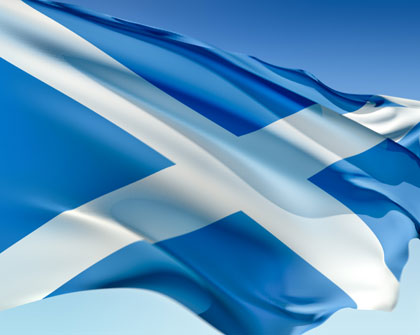
In 1320 Scots issued the Declaration of Arbroath. Stating that Scotland had converted to Christianity through the inspiration of St. Andrew, they passionately affirmed their love of liberty -
It is in truth not for glory, nor riches, nor honours that we are fighting, but for freedom – for that alone, which no honest man gives up but with life itself.
St Andrew - his Greek name means manhood and valour - was Christ's first apostle and the brother of Peter. He is said to have preached in Asia Minor, Scythia, Russia and Greece and to have been martyred on an X-shaped cross. it is believed that his relics were brought to St Andrews early in the 8th century.
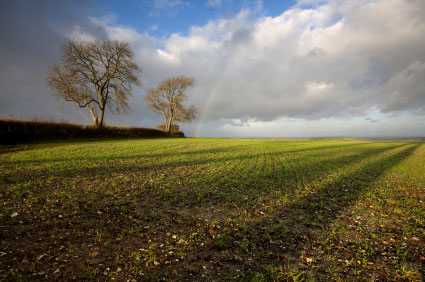
During a 9th century battle, the Scots saw a cloud shaped like a saltire – an X-shaped cross – in the blue sky, and declared that St Andrew was watching over them. They won the battle.
The Scots have stood shoulder to shoulder to defend freedom - their own freedom, the freedom of fellow Brits and the freedom of men and women around the world.
Their valour is legendary. Their scientific achievements, innovative ideas and enterprise have helped to build the modern world
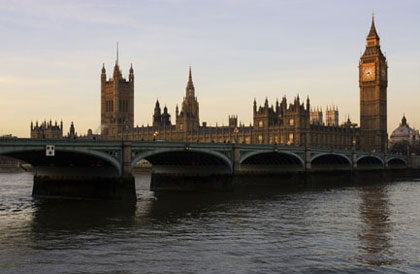
By right Parliament does not belong to civil servants or MPs. It does not belong to the dominant political party or to the government. It does not belong to the European Union. By right Parliament is the people's house. The people created it and fought for it. By right it is theirs.
Today the house that belongs to the British people is being destroyed by the European Union, the government and the political parties.
The recent investigation and arrest of Conservative MP Damian Green by anti-terrorist police in a case that had nothing to do with anti-terror activities shows how little this government respects the people's house, the people's freedom or even the freedom of MPs.
Green was arrested because he had leaked documents that showed that the Labour government had hired thousands of illegal immigrants to work in Whitehall, thereby undermining respect for law and creating a security risk, and had used oppressive measures to keep Labour MPs in line, though every MP is bound to serve all the people according to his or her conscience. The idea that a party would force any MP to vote against his conscience is repellent.
The third leaked document showed the Labour government's real face - its insulting contempt for the people. In this miserable memo the Labour government muttered that increasing poverty would cause increasing crime.
The idea that poverty and crime are inextricably linked is an insult to millions of poor, honest people. It is disintegrating families that are behind crime, and the government's policies have contributed to their disintegration.
But more important than their content is this point -
The "leaked" documents do not belong to the government. They belong to the people. The problems they contain should have been discussed in Parliament by the servants of the people and they should have been solved.
Instead we face an incompetent government that cannot solve problems, ignores the British Constitution, deliberately destroys the house of the people and abusively invades the homes of British people.
There are people who are working to restore the house of the people to the people.
We noted the coolness of the Brits attacked in Bombay. We also would like to salute the courage of the Indians who risked their lives to protect their guests. From the Times -
They were heroes in cummerbunds and overalls. The staff of the Taj Mahal Palace hotel saved hundreds of wealthy guests as heavily armed gunmen roamed the building, firing indiscriminately, leaving a trail of corpses behind them.
Among the workers there were some whose bravery and sense of duty led them to sacrifice their own lives, witnesses said.
. . .The Taj Mahal had been renowned for its sublime service for decades. Few of the hotel's wealthy patrons would have predicted, however, that the men and women who delivered their meals and carried their bags - people earning a fraction of the sums of those they served - would display such courage and composure as the death toll quickly rose around them.
As the terrible events of Wednesday night unfolded, the staff of what had been Bombay's finest hotel leapt into action. Scores of tales later emerged of unnamed workers hiding guests, barricading doors, tending the vulnerable and issuing orders.
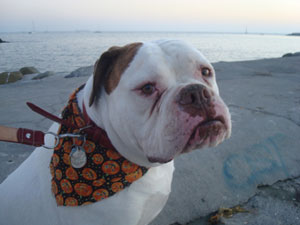
I've had a wonderful Thanksgiving with my nieces in LA. There are said to be a slew of Brits in Hollywood, but aside from a glimpse of Hugh Laurie, playing House on television, I haven't seen them. The only real trace of a Brit in LA that I've seen is in the person of my niece Marisa's American bulldog, Dickie.
Though larger in size, the American bulldog is the closest surviving relative of the Old English Bulldog. They were not altered to as great an extent as were their British bulldog cousins.
The breeders say that the American bulldog is a fine, "foaming type of dog", a trait especially evident when he is inhaling the scents of roast turkey. He's friendly and also, occasionally, willful, but so are all dogs. That's one reason we like them so much. The American bulldog's bloodlines go back to mastiffs living in Britain BC and to the dogs brought by Normans to England in the 11th century.
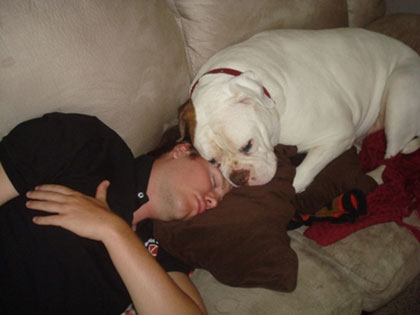
He's found a comfortable pillow in a young man whose last name is Beagle.
Just down the road from me, Greg Parker, a fifty-four-year-old engineering professor and amateur astronomer, has captured spectacular and rare wide-field astronomical images with a small observatory in his garden.
They are the result of his skill, Noel Carboni's ability in processing images and Parker's intense dedication.
Going out night after night to his 11- inch telescope and a specialised digital camera in the New Forest, he has recorded photographs of the universe that rival those from NASA telescopes. They have now been published in the book Star Vistas.
Following Captain Cook through New Zealand's enthralling landscape
Cook broadened the world's mind. His circumnavigation and charting of New Zealand was a masterpiece. Ship Cove, on the northern fjord coast of the South Island, was a key point in his ocean strategy. Between January 1770 and February 1777 he based himself here five times, 100 days in all.
When I heard the ghastly accounts of terrorism in Bombay, I felt terribly for the victims of the assaults. I also felt a swell of pride for the response of the British people who were attacked.
They were staying at the Taj Hotel, built by British engineer WA Chambers, or travelling through the magnificent railway terminus, originally called the Victoria Terminus, built in 1888 to celebrate Queen Victoria's Jubilee, or were at St George's Hospital. These buildings were all constructed during the Raj and are recognized as symbols of Bombay - Mumbai - today. British architect Edwin Lutyens designed the area where the Taj is located. But more impressive than the British architecture were the cool-headed Brits interviewed on CNN in the last 24 hours.
The person who affected me most was a young woman in evening dress and a sparkling necklace who had climbed down a fireman's ladder from a high floor in the hotel, and yet was able to deliver a calm and lucid description of the events leading up to her rescue.
It's said that the perpetrators were Muslims who were specifically looking for Brits and Americans. This website has always recognized the threat to the British people and, indeed, to the people of the world from violent Islamists.
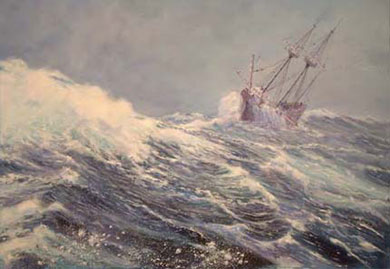
Painting of the Mayflower by Mike Haywood. This post is revised and published every year.
The 102 men, women, and children who left Plymouth in 1620 to sail west across the Atlantic crowded into a small boat with their ploughs, guns, a spaniel and a mastiff. Many of the pilgrims slept on the Mayflower's deck, sheltering under rowboats as they headed into the equinoctial gales of the Atlantic. Halfway across, storms cracked a main beam, and almost sank the ship, but they made the necessary repairs, and sailed on, not toward civilization, but toward wilderness.
Whatever persuaded them to make the voyage?
According to their journals, they decided to go to America because they wanted to share Christ's Gospel and worship as they pleased and because they longed to retain their English language and customs.
By late November, they had been sailing the Atlantic for two months, and decided to land wherever they could. But desperate though they were, the wintry desolation of Cape Cod on America's eastern seaboard, took them aback. They realized they had to make a plan of action if they were going to survive.
On deck the men drafted an astounding agreement.
They bound themselves to cooperation and self-government under majority rule. Their agreement to make decisions cooperatively and democratically was remarkable then. It is still remarkable today.
The Mayflower Compact they wrote was just three sentences long.
They didn’t churn out turgid paragraphs about how their cooperation was to occur. They knew they had to live according to the Ten Commandments and Christ's teaching to love God and each other. They understood that at times they would certainly fail, but they were not in any doubt about the honesty, respect and love which were called to.
After they landed on the Cape they fished and hunted for food with the help of the spaniel and mastiff. The Indians brought them corn. Nevertheless half the pilgrims died of malnutrition and exposure. The Indians also suffered, some at the hands of unscrupulous settlers, and many because they had no resistance to infectious diseases from Western Europe.
In 1619, British settlers in Virginia celebrated “a day of thanksgiving to God”. In 1621, the pilgrims thanked God and their neighbours with a three-day feast with the Wampanoag people.
By 1640 there were 20,000 Brits in New England, and they were flourishing. Despite death and loss, and sometimes despite themselves, they helped to plant freedom in their newfound land.
More than a century later, in the darkest, most miserable days of the American Revolution, a great victory was won at Saratoga on 31 October 1777, and Sam Adams led Congress in declaring "a day of Thanksgiving" to God. Those thanksgivings were accompanied by the prayer that all people under the yoke of tyranny be made free.
To all those who defend justice and freedom today, thank you.
I do not spend much time noticing worms unless I am digging and accidentally chop one in half. Charles Darwin, however, did observe this boneless animal, which has no eyes or ears but a number of hearts and a very long intestine.
He wrote an entire book about them, observing that all plants, and consequently all life, would vanish from the face of the earth if worms disappeared. Our lives depend on animals who pass soil through their bodies, transporting minerals, and tilling the earth to create a network of pores through which water, nutrients, and air can circulate.
Worms have not been studied much since Darwin, but it's hoped that will change. Volunteers are being sought for help in carrying out Britain’s first census of earthworms.
Harnessing the energies of thousands of people to produce research is a modern development - and can be immensely effective.
Cat wrote the other day about the responsible people who didn't make dodgy investments. She wondered who was looking out for them as governments raced to rescue the irresponsible. James Bartholomew reports that Singapore, whose guiding principles were established by the inestimable Raffles, has a different idea -
Meanwhile in Singapore, the government - which has announced a stimulus plan based on subsidies for increasing training by the labor force, which will be paid for by tapping into the surpluses run up during the fat years - announced today a reduction in the pay of top civil servants and politicians to reflect the economic downturn. Basically when the economy is hot, they get higher pay and bonuses, when it's not, they get lower pay.
On this day, Howard Carter and Lord Carnarvon become the first people to enter the tomb of Egyptian King Tutankhamun in over 3000 years. The story of Howard Carter, who managed to make the tremendous discovery against all the odds, is here.
When I was a child one of my favorite places was Pease Library, where every book was a doorway into a forest, an ancient city, a grassy plain or stormy sea peopled by men and women who were witty, wise and brave - or sometimes not. I accepted without question the idea that my town would house books and freely lend them, even to a child, and I climbed the big hill home happy to have books in my bag. Less happy when I walked them back overdue!
So I was glad to see in the autumn issue of This England, a column about the earliest recorded library which made books available to readers like me.
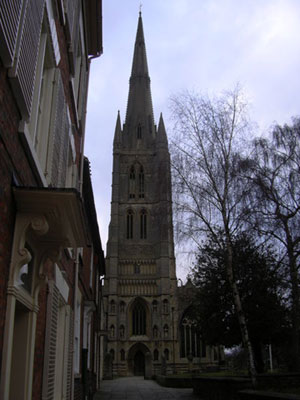
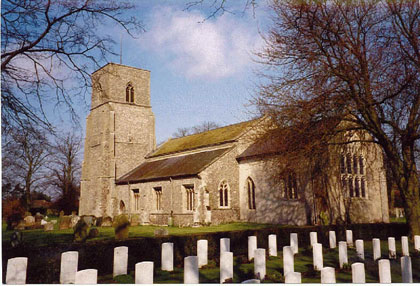
Founded by Francis Trigge, a Lincolnshire rector in 1598, the library occupied, and still does, a small room above the south porch of St. Wulfram's Church.
St Wulfram's Church, Grantham. Simon Jenkins in his book England's 1000 Best Churches awards 5 stars to only 18 churches. One of them is St Wulfram's.
In the National Year of the Book, when over the half the population of Britain is said to be registered with a local library, here is the church with the library that started them all, followed by coffee-house libraries in the 18th century, libraries in inns and circulating libraries and my own library. Many of those built in the early twentieth century in America and Britain had the help of industrialist Andrew Carnegie, who left Dunfermline for Allegheny, Pennsylvania, when he was thirteen, working as a bobbin boy and borrowing library books to read at night.
The internet has changed many things. Sitting here in the airport, on my way to Thanksgiving in LA, I and many other people are on laptops, but on board the plane I'll be reading, flying into 7th century England while flying south.
We've posted repeatedly about the "hate crime" inquests that were stifling free speech in Canada.
Mark Steyn and Ezra Levant refused to be cowed, and their resistance generated a breakthrough for free speech. Mark writes -
. . .Ezra Levant and I and a few others went nuclear on the Dominion's thought police and gave them the worst year of publicity in their three-decade existence. The result is that, earlier this month, over 99 per cent of delegates to the Conservative Party convention voted to abolish Section 13 (the "hate speech" provision) of the Canadian Human Rights Act, and a brave principled Liberal, Keith Martin, renewed his private member's motion in the House of Commons to do the same.
This morning, the CHRC issued the so-called Moon Report on free-speech issues. Most of us expected it to be a whitewash. Instead, Professor Moon says:
1. The first recommendation is that section 13 of the Canadian Human Rights Act (CHRA) be repealed so that the CHRC and the Canadian Human Rights Tribunal (CHRT) would no longer deal with hate speech, in particular hate speech on the Internet.
This is a great tribute to what Ezra calls his campaign of "denormalization" of Canada's Orwellian "human rights" racket. . .
David wrote that John Sergeant was leading the strictly come dancing competition due to a loyal public which refused to be told how to vote by the judges. Recently Sergeant bowed out since winning might be "a joke too far".
Looking at their last dance, I think the public saw some things they liked very much -
Sometimes the people working for government are brilliant. This was certainly the case with Sir Rowland Hill, Secretary of the Post Office, and his Surveyor for the Western District, novelist Anthony Trollope. Even so, the public improved on their excellent plans.
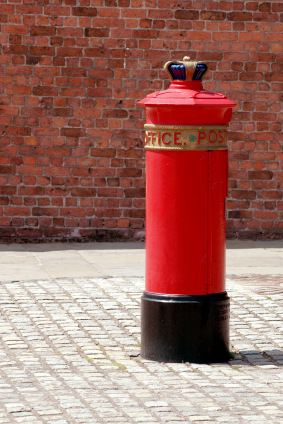
Sent by Hill to sort out mail collection in the Channel Islands, Trollope introduced pillar boxes sometime around this date in 1852. They appeared in the rest of Britain in 1853. First painted green - an awkward colour as people bumped into them - they were redesigned by the House of Lords, and by local towns and foundries.
Beginning in 1874 they were all repainted red. That this took ten years is a testimony to the glacial pace of government when it is getting something right. Hexagonal and rectangular shapes also had their time in the rain, but in the end the public demanded and received the classic cylinder, giving new meaning to the ancient phrase, "from pillar to post".
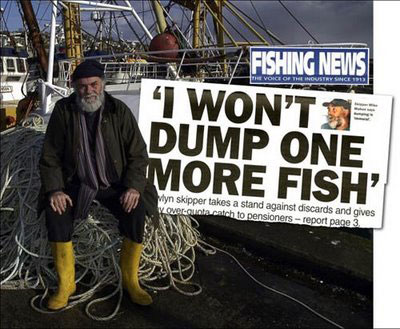
After 25 years of living with the lunacy of the EU's fishing policy and its criminal degradation of Britain's fishing grounds, Mick Mahon has had enough and has decided he will discard no more fish. Instead, he is "waiving the rules", landing all the fish he catches and giving them away to the Fishermen's mission for charity. He risks arrest and imprisonment.
We are seeing the reestablishment of tribalism, and a direct attack against the individual responsibility and freedom created in Britain and America over centuries.
Who is looking out for the responsible people? The individual people and individual families who paid their mortgages and showed up for work every day, who did not make a fortune on dodgy derivatives, did not gamble that house prices would go up and up and did not borrow against their home to pay for a new car and vacation. They, and the small, solvent banks, are being punished for the excesses of the irresponsible spenders.
Tribes of bankers and corporate managers are being saved, supposedly because we would all fail if they failed. What is unknown is how much we will have to pay for saving them and for interfering with a free economy's pruning of poor thinking and poor management with bankruptcy.
Not surprisingly, government will not look at the government policies that encouraged the production and distribution of junk loans in the first place.
Meanwhile free and responsible people and the teamwork and community they naturally generate are being smothered under the demands of the new religion - "The state is your shepherd. You will not want'.
I know I am not the only person who thinks this is rubbish.
Sometime in your life you have probably met someone who doesn't really know you or your history, can't see the good you've done and without much evidence has written you off as a bad egg. Your protests don't matter. Your contributions are flatly ignored.
Imagine that a mother ship from a more advanced civilization landed in the great forests and swamps of Europe fifteen hundred years ago. The explorers on board decided to be helpful. They established communities where they
Cut down the forests, drained swamps, invented a plough strong enough to carve the heavy soil, planted crops, improved seed, raised and improved breeds of domestic animals and raised botanicals to treat the ill.
Nursed the ill, including plague victims, at the risk of their lives, set bones and established the first hospitals.
Taught young children to read and preserved and copied books.
Carried no weapons and established sanctuaries where no weapons were ever to be drawn or used.
Established the first hotels - clean, safe and inexpensive - for travellers across Europe.
Cared for those in need and provided sanctuaries for women.
Attempted to teach a philosophy of human dignity, responsibility and love.
Worked to establish a system of justice that would protect the innocent.
Centuries later, after many of these things had been achieved, the mother ship flew away, and all memory of her vanished. Some, greedy for wealth, destroyed the stone sanctuaries, took their land and spread stories that the men and women who had built them were selfish, superstitious and corrupt. Others denied that the builders had made any contributions. Many others simply never knew. They were taught about mistakes and vices, but never about the builders' virtues.
As you've guessed, monks and nuns and lay Christians made these contributions. The stones cannot speak of them.
Speaking truth to power - Batten and the Bruges Group
The Bruges Group defends Britain with a hard-hitting report by UKIP MEP Gerard Batten-
How many £ billions the British people have sent to the EU, how many more £ billions they are sending this year, how much is lost to fraud, what red tape costs British business people and how useful it would be to leave the EU and escape the recession - you can read it here.
We just covered historian Niall Ferguson's extremely timely book on Money. Mallory reports that In the current issue of The Week, Niall lists his picks for best books ever, including one that changed his life.
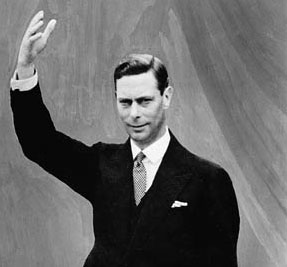
We've added details about George VI's leadership during World War II to the Liberty file on the war.
The king was pretty insouciant while bombs were dropping. Ducking into a bomb shelter during an air raid, he had a cup of tea with those who were there.
He created the George Cross and George Medal to pay tribute to heroic civilians, whom he had observed during and following air raids.
The king's contribution to the war effort could be described thus - He gave his people a light so that they 'could tread safely into the unknown’.
We've found details about the king's views of the British Constitution which may interest you, and which have, we believe, affected his daughter, HM The Queen. We'll write about them later. For now here is the king on two separate occasions - the first is poignant; the second, innocently droll-
In his final Christmas broadcast the king said -
I think that, among all the blessings which we count today, the chief one is that we are friendly people. . .I wonder if we realize just how precious this spirit of friendliness and kindness is.
The king did not much like modern art. When John Piper completed his brooding series depicting Windsor Castle, which had been commissioned by the queen, the king is said to have remarked to him ‘You've been pretty unlucky with the weather, Mr Piper.’
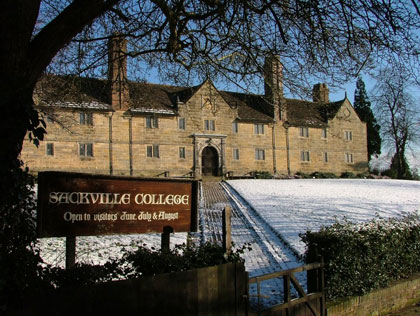
I've been thinking and writing about bequests that stay with us. The 2nd Earl of Dorset left a bequest for poor, unmarried persons in East Grinstead that is still a home for the elderly - Sackville College - and beautiful - today, four hundred years later.
One of the people who helped to run the college was the Revd. Dr. John Mason Neale, who wrote the carol "Good King Wenceslas".
“The important things are the ones you don’t expect”
We mentioned the increasing numbers of British and Australian scientists who are pointing out problems with global warming science in Some like it cold.
Here is free-wheeling physicist Freeman Dyson debunking global warming methodology.
Alistair Cooke, whose 100th birthday is today, was "a terrific writer who became famous as a talker - on Radio 4 in Britain and on PBS in America".
For British broadcasters visiting New York, it was the BBC equivalent of whale-watching off Cape Cod: After days of hanging around the corporation’s Rockefeller Center studios, you’d be rewarded by a glimpse of a dapper figure in trilby and camel-hair coat. He’d glide past reception and into the studio, place a typed script on a wooden, straw-latticed lectern and begin to. . .talk. . .
Trained in secrecy, fifty British female agents were sent into Nazi-occupied Europe by the Special Operations Executive (SOE) because the Allies were desperately short of men. Often young and attractive, the women parachuted in behind enemy lines to serve as couriers and wireless operators, organize resistance groups and carry out sabotage. They included a princess and a shop girl. They spoke fluent French, were unspeakably brave and resourceful, and they did not expect they would return home alive.
They were trained in the country - agents used to joke that SOE stood for ‘Stately 'Omes of England'. They learned how to go undercover, how to handle a firearm and how to face interrogation. None of them ever gave up sensitive information under torture.
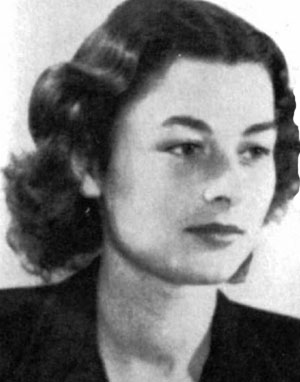
The daughter of a French mother and a British father, fiery Violette Reine Elizabeth Szabo, née Bushell (1921–1945), reputed to be the best shot in SOE, a beautiful widow of twenty-three, parachuted twice into France as a courier. . .Three days after arriving in France for the second time in 1944, to assist the maquis in sabotage around Limoges, she and her two companions were caught in a German ambush. According to her George Cross citation, Szabo, armed only with a sten sub-machine gun, covered her companions' retreat for twenty minutes until she had no more ammunition and was taken prisoner. When interrogation could extract nothing from her, she was imprisoned and shot at the concentration camp at Ravensbrück.
Nancy Wake (b. 1912) was an energetic New Zealand-born Australian with a strong personality. She twice worked in France, initially from her home in Marseilles, where she was known to the resistance as White Mouse. After being captured and interrogated she was rescued from prison by her friends. Then, aged thirty-two, she parachuted back into France in April 1944, and became virtually the head of 7000 maquisards in the Corrèze, whom she led with verve and by example; she returned safely to Britain in September 1944.
Of the eleven women agents who arrived in France down the short ladder of the Lysander aircraft, eight were captured, often within months of landing. Vera Eugenie Leigh (1903–1944), still beautiful at forty, was one of these agents. She became a courier between Paris and the Yonne river, and was arrested in 1943.
Another was the intrepid 28-year-old Diana Hope Rowden (1915–1944), formerly in the WAAF, who was a courier in the Dijon area and was arrested at almost the same time. Leigh and Rowden were interrogated by the Gestapo at the notorious Avenue Foch. In July 1944 they were moved to Natzweiler concentration camp where they were given lethal injections.
Lilian Verna Rolfe (1914–1945) was an imperturbable thirty-year-old woman who was set down by Lysander in April 1944, destined for the area around Orléans. Three months later she was arrested by accident: the Germans were making a sweep of the area before evacuation, and discovered to their surprise that they had caught an SOE wireless operator. She was shot at Ravensbrück.
A shy doctor's wife, Cecily Margot Lefort [née MacKenzie] (1900–1945), landed by Lysander in June 1943 and was employed as a courier in south-eastern France. Captured and later imprisoned in Ravensbrück, she probably died in the Judenlager extermination camp.
Eileen Nearne (b. 1921), at twenty-two an energetic and resourceful wireless operator, already experienced in work at one of the SOE listening stations in Britain (where messages to and from agents were sent and received), went by Lysander to work in Paris. She was caught at her set and amazingly, even after torture, persuaded the Gestapo that she was just a little shopgirl who knew nothing. Nevertheless, she was sent to Ravensbrück and afterwards, while being moved, effected a miraculous escape and was rescued by the advancing Americans.
Most notable among those who survived was the redoubtable Pearl Witherington (b. 1914). Originally a courier in the Auvergne, she revived her ailing network after her organizer's capture, and eventually commanded an active maquis of over 3500 men. So effective were her ‘modest capabilities’ that a German army of 18,000 preferred to surrender to the Americans rather than fall into the hands of her men.
Marguerite Knight (b. 1920) was a keen and competent courier in the Yonne at a confused and dangerous time in her network, who managed to survive unharmed, as did Sonya Esmée Florence Butt (b. 1924), one of the youngest of the couriers. Sonya became the weapons training officer for the maquis around Le Mans.
Immediately after the war the fate of many agents was unknown. The SOE was ordered to close, and many accounts were destroyed or lost.
It was left to Vera Atkins, the briefing and conducting officer of F section, to take a year travelling through Europe to discover the fates of those agents who did not come back - most of whom she had known personally. It was through her efforts that the tragic details became known of those courageous ones who died.
Before they did, they disrupted German occupying forces, tied down police and soldiers, especially after the Allied landings, and gave support, guidance, and supplies to the maquis and anti-German forces. General Eisenhower, Supreme Allied Commander, paid tribute to their 'very considerable part in our complete and final victory'.
Niall Ferguson looks like a prodigy. He is the author of an astonishing number of bestselling history books - Paper and Iron, The House of Rothschild, The Pity of War, The Cash Nexus, Empire, Colossus, and The War of the World. He is a professor of history at Harvard, a senior research fellow at Oxford, and a senior fellow at Stanford's Hoover Institution.
Ferguson has just published The Ascent of Money: An Economic History of the World, which looks like another carefully researched and wildly colourful read. It's also a Channel 4 presentation.
One of his more sober points:
Money is based on trust.
As we can painfully see, recent losses in our economy are closely related to loss of trust. Are the bankers and politicians going to do something about it?
Ferguson suspected a liquidity crisis was in the making more than two years ago, and decided to write a one-shop book that would explain economic crisis in the span of 4,000 years of financial history. The interview starts slowly, but takes off as soon as Ferguson starts to speak -
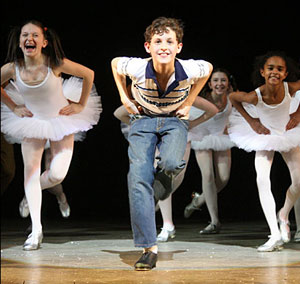
Lee Hall describes the relentless hard work of production and the opening nights of Billy Elliot in New York.
As the economy everywhere worsens, a play about a boy who escapes an economic meltdown may appeal. (The show's suggestion that mining's decline was entirely caused by Margaret Thatcher reminds me that musicals are fantasies. Maggie seems to have been cast as Scrooge.) Judging by the reviews, Billy Elliot is a joyous experience.
Anglo skeptics of "man-made" climate change are on the increase.
Quadrant, a journal of ideas, literature, poetry and historical and political debate published in Australia, has taken another look at the science behind climate change theories. Robert M Carter writes -
The basic flaw that was incorporated into IPCC methodology from the beginning was the assumption that matters of science can be decided on authority or consensus; in fact, and as Galileo early showed, science as a method of investigating the world is the very antithesis of authority. A scientific truth is so not because the IPCC or an Academy of Science blesses it, or because most people believe it, but because it is formulated as a rigorous hypothesis that has survived testing by many different scientists.
. . .science reality in 2008 is that the IPCC’s hypothesis of dangerous, human-caused global warming has been repeatedly tested and failed. In contrast, the proper null hypothesis that the global climatic changes that we observe today are natural in origin has yet to be disproven. The only argument that remains to the IPCC — and it is solely a theoretical argument, not evidence of any kind — is that their unvalidated computer models project that carbon-dioxide-driven dangerous warming will occur in the future: just you wait and see! . . .
Shiver. You will note when you click on the post's link that observed flux density values have not moved upward in eleven months. This means that the Sun, which was expected to show increased levels of magnetic energy after its typical eleventh-year-low, has not done so. In the past, decade-long low levels have been accompanied by mini ice ages on Earth.
Global warming alarmist James Hansen of NASA has not joined the skeptics, but he has increased their firepower by being the source of repeated mathematical and statistical mistakes. His most recent error - that October 2008 was the hottest ever - could not be supported since it was based on September temperatures
British historian Paul Johnson, who is quoted in Robert Carter's article, bluntly states -
Marxism, Freudianism, global warming. These are proof — of which history offers so many examples — that people can be suckers on a grand scale. To their fanatical followers they are a substitute for religion. Global warming, in particular, is a creed, a faith, a dogma that has little to do with science. If people are in need of religion, why don’t they just turn to the genuine article?
In Britain, Roger Helmer MEP has an excellent video-talk on the subject.
UK Astrophysicist Piers Corbyn, founder of the UK based long-term solar forecast group Weather Action and creator of the solar-particle based "Solar Weather Technique" of long range weather forecasting, asserts that the global warming Theory has ‘failed consistently and dramatically’.
Robert Carter concludes that "Attempting to ‘stop climate change’ is an extravagant and costly exercise of utter futility".
Do you want to pay high carbon taxes to save our earth from a threat that does not exist - when the money could be spent to save our seas and forests from real pollution and destruction?
In an email, the Anchoress wrote, "The Queen is elderly and a great lady. . .but she should have clued into this a little sooner."
Agreed.
Though David noted the change of tone and text between The Queen's first and second letters, it is not certain that the Queen has "twigged it".
An anonymous commenter made an interesting suggestion -
Perhaps you should write to Bonici and pre-empt Straw's reply. You might well ask how and why the Queen expects her Minister, who has had a major hand in the transfer of our nation's sovereignty to Brussels and who is therefore arguably guilty of treason, to answer these important questions impartially. Would the police defer to a burglar on the issue of whether or not the sanctity of a property had been invaded and goods therefrom purloined?
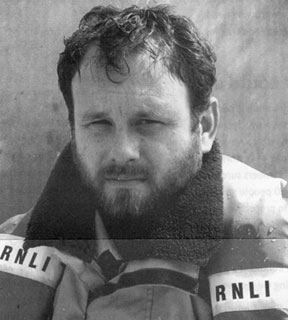
They have faced 33-foot waves, blizzards, force 9 gales and sub-zero temperatures.
Image: Murray Langton
Cat wrote below about Josie Grove's Dragonfly charity for terminally ill children, and mentioned that there were more than 170,000 British charities. Here is another great one whose appeal just came in my post -
For 184 years the Royal National Lifeboat Institution's lifeboat crews have been going to sea to save lives - on average 8,000 a year. On call 24 hours a day, 365 days of the year, they receive no government funding.
The RNLI was established by Sir William Hillary who was 60 when he took part in the rescue, in 1830, of the packet St George, which had foundered on Conister Rock. He commanded the lifeboat and was washed overboard with others of the lifeboat crew at one point, but everyone aboard the St George was rescued with no loss of life.
Sir William's appeals for help from government received little response, but the public came through, and they have ever since.
There are more than 230 volunteer lifeboat stations around the United Kingdom and the Republic of Ireland. £20 will keep a lifeboat running for 5 minutes or help pay for sea boots. To contribute and read about some of their recent rescues.
The Private Patient, the latest Adam Dalgliesh mystery from PD James, has arrived in America, and Baroness James, now 88, has dropped a clue about the future.
The author of 20 novels, which she began writing when she was 42, James was asked in the Wall Street Journal (14 November, no link) whether her latest book, which carries a sense of closure, is the final Adam Dalgliesh novel. She answered,
"If it were the last, I would have finished on a good note."
Her books are beautifully written, with fascinating social details. James seems as interested in how people live as who committed murder.
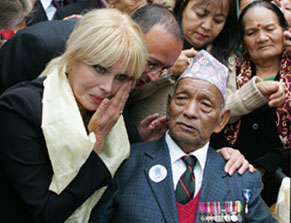
Joanna and the Gurkha Justice Campaign call on the Government to act immediately to allow all retired Gurkhas, who have served all across the world in defence of Britain, the right to stay in the UK, without reservation. We wrote about the cause here, and are very glad to hear this news from Joanna Lumley -
On Thursday, I will be in Parliament Square, Westminster at 11am before handing in the Gurkha Justice petition.
We've had fantastic support from across the country, and the petition we'll be handing in will be one of the biggest ever collected in the country - in a little over six weeks. Thank you so much for the support.
Our team are sorting the petition ready to hand in, but they tell me any signatures up until Wednesday night will be included. A really big last burst of signatures would be fantastic - please remind any friends, family and colleagues to make sure they sign at www.gurkhajustice.org.uk before 9pm on Wednesday!
I really hope that, on Thursday, the Government will finally bow to the pressure from our thousands upon thousands of petition signatories from across the country, to the Home Office Select Committee, and to the High Court, all of whom have backed justice for Gurkhas.
A really big turnout on the day will really add to the pressure of the petition. It will show how strongly we all feel about righting this wrong. If you can come along to Parliament Square in Westminster by around 10.30am on Thursday 20th November, I would simply love to see you there.
We will be joined by a number of the real stars of the campaign themselves - the ex-Gurkhas who have served our country so loyally. Amongst them will be Honorary Lieutenant Tul Bahadur Pun VC who served with my father, and who has been such a huge inspiration to
the campaign.
At around 11am I've been asked to say a few words in Parliament Square, and I'll be joined by other members of the Gurkha Justice Campaign and some special guests are joining us from Parliament.
After that, a small delegation will go to Cenotaph and lay a wreath, before going on to Downing Street to hand in the petition.
Many people have written to The Queen with the same concerns that I have. Britain's sovereignty and the liberty of the British people are being threatened. The Queen's constitutional duty is to defend them.
I think those thousands of letters may be having an effect.
After my first letter met with a disappointing reply, I wrote again in August and at the end of September. In August:
I wrote to Your Majesty recently about the Lisbon treaty. Ms Bonici sent a reply. It didn't have my name on it as she has apparently been very busy dealing with many letters similar to mine.
So many of your subjects have written to Your Majesty precisely because Your Majesty is a constitutional monarch. Your Majesty's subjects expected that a constitutional monarch would uphold the constitution. A part of that constitution is the Coronation Oath, which Your Majesty swore before God and to the people.
Archbishop of Canterbury: Will you solemnly promise and swear to govern the Peoples of the United Kingdom of Great Britain and Northern Ireland, Canada, Australia, New Zealand, and of your Possessions and the other Territories to any of them belonging or pertaining, according to their respective laws and customs?
Queen: I solemnly promise so to do.
Archbishop: Will you to your power cause Law and Justice, in Mercy, to be executed in all your judgements?
Queen: I will.
At the time Your Majesty swore the Oath we British were sovereign and made our own laws. Our traditional custom is to freely govern ourselves. With Royal Assent to the Lisbon Treaty Act and Your Majesty's subsequently signing the ratification document, Britain becomes a mere province of the European Union. Your Majesty's subjects will be governed by Brussels, and not by Your Majesty's government.
It is Your Majesty's right, nay, it is Your Majesty's duty and obligation, to refuse Royal Assent to Acts of Parliament that threaten the People's laws and customs or Your Majesty's constitutional position. . .
The September letter:
Your Majesty,
It is the right of the British people to petition their monarch.
My first petition to Your Majesty was a letter of the 25th of June. It was answered by Mrs Sonia Bonici, who said, “I should explain to you that there is no question of Her Majesty, as constitutional sovereign, refusing Royal Assent to an Act which has been passed by both Houses of Parliament”.
I wrote to Your Majesty again on the 11th of August. I have not received a reply to my second letter although it makes a constitutional point of the gravest importance for Your Majesty and the British people and the continuation of the Monarchy itself.
In Canada, in 1964, Your Majesty made unequivocally clear what the people expect from their constitutional sovereign - “The role of a Constitutional Monarch is to personify the democratic state, to legitimate authority, to assure the legality of its measures and to guarantee the execution of its popular will.”
Parliament may try to persuade Your Majesty to obey it, but Your Majesty has pledged to defend the laws and customs of the people and Your Majesty’s constitutional writ extends to protecting your people from a tyrannical Parliament and from any unjust statute that Parliament may pass.
What would Your Majesty’s father, our dearly beloved George VI, have done if he had been told by Parliament to give away Britain’s freedom and sovereignty to Hitler? Would he, could he possibly have agreed to do Parliament’s bidding?
The answer, again, was made by Your Majesty - “I shall work as my father did throughout his reign to uphold Constitutional government and to uphold the happiness and prosperity of my peoples”.
In giving your Royal Assent to the Lisbon Treaty, Your Majesty has ignored the wishes of your people, which were also ignored by Parliament.
Tyrannical is a realistic description of Parliament, which promised the people a vote on the EU’s Lisbon Treaty and then broke its promise. Negligent is an honest description of many MPs who admitted that they had never read the Lisbon Treaty.
Foreign leaders are agreed that the Lisbon Treaty is the same as the EU constitution. Parliament is forcing the British people to accept this unwanted political settlement, which is sweeping away their long-treasured liberties, laws and customs, which have stood them in such good stead for hundreds of years.
Our Declaration of Right and Bill of Rights plainly state:
“That no foreign prince, person, prelate, state, or potentate hath, or ought to have, any jurisdiction, power, superiority, pre-eminence, or authority, ecclesiastical or spiritual, within this realm”.
Giving any foreign body authority over the British people is unconstitutional.
Britain’s Constitutional government includes a sovereign, a parliament and a judiciary. Are we to believe that Parliament’s overweening domination has reduced the champion of the people, Your Majesty, to a cipher, who cannot speak for us or defend our liberties and whose Royal Assent means nothing because it can never be denied?
Perish the thought.
It was and is still Your Majesty’s responsibility as our constitutional monarch to refuse Parliament your Royal Assent when Parliament passes unconstitutional statutes.
The second reply from Buckingham Palace shows a slight and perhaps significant change.
The Queen may be concerned that a grave threat and a great constitutional question face her:
I urge anyone who has not written to express their concerns to The Queen and everyone who has written to write again, and to write or meet with the Lord Chancellor.
Josie Grove was very young when she faced death, and poignantly wise.
Diagnosed with acute myeloid leukaemia at 14, she had undergone two failed bone marrow transplants and rounds of agonising treatments. She was 16 when consultants told her that another round of painful treatments in hospital would prolong her life, but not for long.
Josie thought about it carefully and made up her own mind. Her parents respected her decision.
Josie decided not to return to hospital, but to create memories with her family and to do one last thing for others.
She loved the idea of dragonflies - how the larvae lie underwater gazing at the surface until they finally float to the top to break free as dragonflies - but they cannot go back down to tell others how wonderful it is.
Before she died, Josie set up a Dragonfly charity to help terminally ill children. She had found arts and crafts and a small bequest the most helpful gifts for her, so she established her charity to distribute arts and crafts and small bequests to terminally ill children.
In her remaining weeks she created a design for gold and silver dragonflies and saw them manufactured. Proceeds from sales go to her charity.
One of her happiest days, just before she died on 26 February 2007, was presenting a cheque for £10,000 to the Children's Cancer research department at RVI Newcastle.
The United Kingdom has over 170,000 registered charities, each one started by a person or group of people with a dream of helping others. Josie was one of those people.
Voting for the winners of Strictly Come Dancing, the public is defiantly saving John Sergeant, despite his having two left feet.
Dr Sandra Wheatley, a social psychologist and author, said: "Each week the judges become increasingly frustrated by the public's decision to save John, and that makes us even more determined to vote for him. It's the 'buggeration factor' and it's a part of the British psyche - that feeling of 'I'll show you'. It's the same with X Factor - viewers like to inflict their opinions on Simon Cowell by voting against his wishes."
Don't count this factor out on the political scene.
In his new book Outliers, Malcolm Gladwell looks at the reasons for success. Aside from luck - going to a private school with a terrific computer in the case of Bill Gates - and genius, Gladwell thinks every successful person puts in at least 10,000 hours of hard work.
He writes about the Beatles, "By the time they had their first burst of success in 1964, they had performed live an estimated twelve hundred times. Do you know how extraordinary that is? Most bands today don't perform twelve hundred times in their entire careers." But something else was going on, too.
The other day in a post on Liverpool we noted that there were more than 300 Merseyside bands performing at the same time as the Beatles. Liverpool seems to have been a musical petrie dish on an enormous scale. The creativity, energy and competitiveness of all those bands must have been inspiring. (But no wonder the Beatles had to look for gigs in Hamburg.)
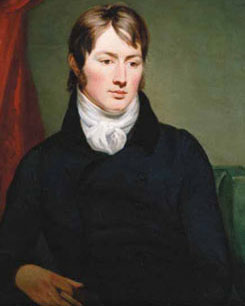
John Constable in 1799
Another outlier, painter John Constable had to work for years before he had any success. Even the grandfather of the woman he wanted to marry dismissed his early attempts.
Constable was lucky to have parents whose business in the country supported his London studies, but he created tens of thousands of sketches and hundreds of paintings before he had any professional recognition - and only after he had made a daring artistic leap.
The Science Timeline seems to consist almost entirely of outliers.
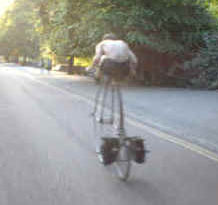
Wearing a pith helmet, which saved his life in Greece, engineer Jonathan "Joff" Summerfield has completed his tour of the globe on the penny farthing he built, pedalling his handmade replica of a Victorian bicycle into Greenwich Market, south-east London, where his journey began two-and-a-half years ago.
Broken arms and legs, earned while riding the penny farthing in Britain, slowed him down, but he pedalled through Europe, the Middle East, Australia, New Zealand and China unscathed. Scaling the Himalayas was a bit more of a challenge.
Even on the flat the rider encounters the problem described by the Victorians as 'taking a header'. "If the front wheel jams or if you apply too much front brake, the back wheel lifts and the rider follows the arc of the wheel. The first thing to hit the ground is your head, and fatalities were common."
He may be the first man to have completed the circumnavigation on a penny farthing since Brit Thomas Stevens, in 1887.
Back home Joff said, "The more I have travelled, the more I have appreciated England and my roots".
He travelled lightly, and raised money for the Born Free Foundation, a wildlife charity.
"Slumdog Millionaire" is the film world's first globalized masterpiece. This perfervid romantic fable is set in contemporary Mumbai, the former Bombay, but it draws freely, often rapturously, from Charles Dickens, Dumas père, Hollywood, Bollywood, the giddiness of Americanized TV, the cross-cultural craziness of outsourced call centers and the zoominess of Google Earth. It's mostly in English, partly in Hindi and was directed by a Brit, Danny Boyle, with the help of an Indian co-director, Loveleen Tandan. The young hero, Jamal Malik, is a dirt-poor orphan from the Mumbai slums. "Is this heaven?" Jamal asks after tumbling from a train and looking up to see the Taj Mahal. I had the same feeling after watching the first few astonishing scenes: Was this movie heaven? The answer turned out to be yes.
Slumdog Millionaire is born out of the swirling energy of Brits and Indians -
English-born screenwriter Simon Beaufoy and Indian author and diplomat Vikas Swarup; the brilliant Mumbai cast and Lancashire-born director Danny Boyle (best known for Trainspotting); Oxford born cinematographer, Anthony Dod Mantle, whose "images come at you like light itself, in waves and pulsing clusters"; composer A.R. Rahman and film editor Chris Dickens.
Below, a scene from the movie - heart-twisting innocence -
Boyle on filming -
India. "The wave comes back. The thing is given you."
An article in the Telegraph celebrates and criticizes the Prince of Wales who has just turned 60 and may someday become King of England.
With his latest aspiration - to be Defender of Faith rather than Defender of the Faith - the Prince will continue to create controversy.
It seems to us that becoming a servant king, according to the Coronation Oath, would suffice.
The Prince works unflaggingly on behalf of young people, organic farming, the preservation of rain forests and other causes. He is the Patron of over 350 charities in Britain and the Commonwealth.
I was interested in the Prince's encounter with writer and broadcaster CW Nicol, as described in the Telegraph -
Nicol is "a Welshman who has successfully restored one of Japan's mountain forests. . .and is now a seventh dan black belt at karate and an unlikely national treasure.
"The whisky-loving Mr Nicol, bearded and ruddy faced, is fluent in Japanese and has Japanese citizenship". He has rejuvenated the 45-acre Afan Woodland, buying parcels and helping 483 species of trees and plants, and 343 species of mushrooms and fungus, to thrive.
". . .As the Prince and Mr Nicol leant on their respective crook and walking stick, sitting in a wooden shelter in front of an open fire, it looked as though they were lifelong soul-mates. . ."
Royal Navy has captured pirates - what happens next?
Instapundit alerted us to the story in the Times -
HMS Cumberland, on anti-piracy patrol as part of a Nato maritime force, detected the dhow which was towing a skiff, and identified it as a vessel which had been involved in an attack on the Danish-registered MV Powerful earlier yesterday. The pirates had opened fire on the cargo boat with assault rifles. Under rules of engagement which allows the Royal Navy to intervene when pirates are positively identified, the commandos were dispatched from the frigate in rigid-raider craft and sped towards the pirates’ dhow. . .
The pirates surrendered. We salute the Royal Navy.
What happens next?
Six months ago the Foreign Office warned Royal Navy warships patrolling pirate-infested waters that there is a risk that captured pirates could claim asylum in Britain.
Ian Fleming's birth one hundred years ago has generated more than the usual coverage of the latest James Bond film.
Yesterday, Allen Barra wrote that there is not much biographical information about Bond in the films or books, but there was some personal information about what he wanted in a woman.
Actually, Bond tells us exactly what he wants in a wife in the most private passage Fleming ever wrote about him (On His Majesty's Secret Service). I published the paragraph in a book about marriage because I thought some men would share Bond's feelings -
Hell! I'll never find another girl like this one. She's got everything I've ever looked for in a woman. She's beautiful, in bed and out. She's adventurous, brave, resourceful. She's exciting, always. She seems to love me. She'd let me go on with my life. She's a lone girl, not cluttered up with friends, relations, belongings. Above all, she needs me. It'll be someone for me to look after. I'm fed up with all these untidy, casual affairs that leave me with a bad conscience. I wouldn't mind having children. I've got no social background into which she would or wouldn't fit. We're two of a pair, really. Why not make it for always?
I know I've mentioned this before, but if the Anglosphere has enjoyed success, it's partly due to brave and brilliant women and the men who respected them.
Camille Paglia gave us close readings of forty-three poems written in English which she could "wholeheartedly recommend to general readers". To everyone's surprise but Paglia's, her book BREAK, BLOW, BURN was a best-seller.
She spent five years looking for the poems she wanted to include -
"Once launched on the task of gathering possible entries, I was shocked and disappointed by what I found. Poem after poem, when approached from the perspective of the general audience rather than that of academic criticism, shrank into inconsequence or pretension."
Not so those by Shakespeare, Donne, Herbert, Marvell, Blake, Wordsworth, Shelley and Coleridge who provide her first sixteen poems. (Donne's extraordinary Holy Sonnet XIV provides the title of her book.)
I was glad to see that Paglia included Shakespeare's Sonnet 29, which has comforted me in troubled times - though not as troubled as those experienced or imagined by the author. My heart lifts as the last five lines rise like the lark -
When, in disgrace with fortune and men's eyes,
I all alone beweep my outcast state,
And trouble deaf heaven with my bootless cries,
And look upon myself and curse my fate,
Wishing me like to one more rich in hope,
Featured like him, like him with friends possessed,
Desiring this man's art, and that man's scope,
With what I most enjoy contented least;
Yet in these thoughts myself almost despising,
Haply I think on thee, and then my state,
Like to the lark at break of day arising
From sullen earth, sings hymns at heaven's gate;
For thy sweet love rememb'red such wealth brings
That then I scorn to change my state with kings.
Paglia likes precision in language, and burning contrasts - Blake's bleak "London" is the hellish opposite of Wordsworth's mellow "Composed upon Westminster Bridge". She doesn't include any poems by Gerard Manley Hopkins or Ted Hughes, but Hughes includes "Inversnaid" by Hopkins in his School Bag collection. It could almost be read as a riposte to Paglia's project -
. . .What would the world be, once bereft
Of wet and of wildness? Let them be left,
O let them be left, wildness and wet;
Long live the weeds and the wilderness yet.
Paglia believes that great poetry can make us new.
Bottling the risk-taking spirits of entrepreneurs?
Entrepreneurs' ability to take risky decisions may be a valuable "evolutionary" advance that could be bottled so that more cautious corporate managers can enhance their performance, a ground-breaking study from Cambridge University suggests.
Writing in Nature, the lead author of the research said the findings "raise the question of whether one could enhance entrepreneurship pharmacologically".
The research is interesting, but reading the financial news, you might conclude that some had already imbibed too much of this brew. . .
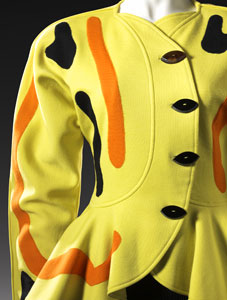
Along with the mini skirt and the black suit, Jean Muir's little black dress is a British style icon. But her great innovation was to unite the sensibility of a ballet dancer with the precision of an engineer to create clothes that responded to a woman's moving body.
Her technically complex articles were crafted from black jersey, wool, crêpe, cashmere, supple leathers and suedes. She eliminated laborious hand-sewing so her pieces could be available as ready-to-wear.
They were not inexpensive, but they lasted ages, and never looked out-of-date since she had no interest in fashion trends.
She established her own company, Jean Muir Ltd, with her husband, and was splendidly successful. She was autocratic, too, and was "an alarming presence on the London scene" (DNB). She looked a bit like a pixie.
She believed that British creativity in crafts (she was a trustee of V&A;) had carried Britain far, and would again. She did not let her friends know she was dying of cancer. As she had instructed, all the flowers at her funeral in 1995 were white.
Her husband gave her sketchbook and thousands of clothes, patterns and colour swatches to the National Museum of Scotland, which has just opened an exhibit of her work.
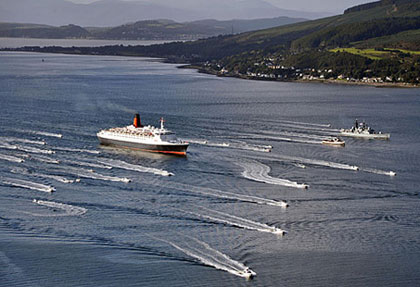
On one of her last trips, the QE2 travels to the Clyde, where she was built a little more than forty years ago. In the 20th century the Clyde was the world centre of shipbuilding.
Image: Ian Arthur/AP Released by Britain's Ministry of Defense
As I've written, I sailed on the QE2 through a terrific North Atlantic gale, and it was one of the most wonderful experiences in my life. She was lovely and sailed swiftly through the storm to aid a ship in trouble.
I grew very fond of her. On the vast ocean she kept us safe and happy.
Her ocean-going days are ending, and she does not appear enthused. She will become a floating hotel in Dubai.
I'll always remember lying in bed in one of her cabins at night and listening to her sigh on the sea.
Her Majesty's question is a common sense rebuke to politicians and financial wizards who, having failed nationally, believe they ought to be rewarded with even greater responsibilities.
Lieutenant Colonel John McCrae, MD, Canadian Army (1872-1918)
This year, Armistice Day, November 11, marks the 90th anniversary of the end of the First World War. Henry Allingham, 112, will be joined by Harry Patch, 110, and William Stone, 108, the only other known surviving veterans of the Great War in Britain, at the Cenotaph in London on Tuesday November 11 for a service of remembrance.
At the Field of Remembrance at Westminster Abbey, on Remembrance Sunday and in the silence observed on 11 November at 11 am, we recall the sacrifices of thousands of British and Commonwealth servicemen and their wives, mothers, daughters and sisters.
The men fought for freedom. The women ran canteens, nursed the ill and injured, and drove ambulances onto battlefields to retrieve their wounded men.
On November 11, in America, Veterans Day honours the sacrifices of American soldiers.
They shall not grow old, as we that are left grow old.
On the eve of World War One, Sir Edward Grey declares, "The lamps are going out all over Europe. We shall not see them lit again in our lifetime."
More than three million Brits died or were wounded protecting Europe from conquest by Germany. Fear and greed, an insatiable lust to dominate and the inability of the democracies to make a credible response to the threats of a dictator entangled Europe and Britain in a war that spread catastrophically across the world.
As if they were mountain climbers, a web of treaties roped the nations together. Germany struggled to obtain the summit and dominate the others. They had thought the rope would be their safety, but Germany pulled all of them into the yawning chasm of war.
In 1914 Britain tried to arrange a conference of great nations to stop the disaster. According to research in Imperial German archives, opened in the 1960s, the Kaiser was looking for a reason to launch a war against Russia and its ally France, and the assassination of the Austro-Hungarian Crown Prince in Serbia gave him his excuse.
Germany attacked Russia because the Kaiser believed that growing Russian military power will soon make German dreams of European domination impossible. Declaring war against France, the Kaiser threatened to invade Belgium. Britain issued an ultimatum, for she was pledged to defend Belgium's neutrality.
However, despite her sea-power, which had kept the world's sea-lanes free for trade for 100 years, Britain had a small army and could not make a credible response. Germany rejected Britain's ultimatum.
World War One began in the first week of August, 1914 with Germany declaring war against France; Britain declaring war against Germany; Austria-Hungary declaring war against Russia and Serbia; Britain and France declaring war against Austria-Hungary; and the Ottoman Empire entering the war on Germany's side. Even Japan, linked by treaty to Britain, enters the fray by declaring war on Germany.
Brits fought bravely on the Western and Eastern Fronts, in France, Russia, the Caucasus and Persia, Mesopotamia, Egypt, Italy, Serbia, Greece, Romania, in the North Sea and the Atlantic.
In 1916 and 1917, the neutral United States attempted to mediate a peace. Germany declared unrestricted submarine warfare, sank three US merchant ships, and proposed an alliance with Mexico to retake Texas, New Mexico, and Arizona. The United States entered the war as an ally of Britain. Cuba, Panama, and Brazil, among others, followed suit, and so did China. The entry of the United States on the side of the Allies made victory possible.
Purchased at enormous human cost, Allied victory in November, 1918, opened the door to liberty for many subject peoples newly freed from the Austro-Hungarian, German, Russian and Ottoman empires. The independent countries of Czechoslovakia, Latvia, Lithuania, Estonia, Poland, Austria, Hungary, the new Kingdom of Serbs, Croats, and Slovenes, and the Republic of Turkey were born.
In Britain, women won the right to vote, and the British Parliament established the principle of self-rule for India, which had contributed one million men to the war effort.
Dictatorships cannot abide justice and freedom and cannot live without domination. Twenty years later, dictators will drag the world into World War Two.
The question we still face today is how to stop dictators.
The Foundling Museum, Britain's original home for abandoned children and London's first public art gallery, has a new director, Lars Tharp. He will speak Monday evening about Harlots, Rakes & Crashing China, a "rumbustuous introduction to 18th century ceramics and William Hogarth".
Born in Copenhagen, educated in England, Lars worked at Sotheby's before becoming the ceramics expert for BBC Antiques Road Show and an energetic promoter of Hogarth, an artist who contributed to the children's home. Hogarth fascinates us.
An English Interior, a current Foundling Museum exhibit by John Kindness, pays tribute to Hogarth and Desperate Dan.
Jo Behari is the enterprising woman who started Home Jane, a professional London firm of women tile layers, plumbers, electricians and builders.
The firm is doing so well because women like employing women to handle home repairs.
We're working on setting up a section on entrepreneurs - the people who generate jobs, provide services, pay taxes and generally keep families and nations going.
Businesspeople may look dull, but they're risk-takers with nerves of steel. Even the lady running the corner shop has to face frightening challenges. That was something Napoleon never understood.
He called England a nation of shopkeepers without realizing that's why he couldn't defeat her. Her entrepreneurs were too tough.
The plot is Noel Coward's and concerns Larita, a motor car racer from America who weds a Brit and shocks his appalled and appalling family. Jessica Biel plays Larita. Kristin Scott Thomas is her superb mother-in-law; Colin Firth plays her father-in-law; and Ben Barnes is her husband.
The story might almost be a metaphor for Coward returning from his first trip to New York in 1921, determined "to inject the staid drawing-room dramas of the London West End with the speed of Broadway" (Oxford DNB).
I grew a little tired of Coward's hedonism after I grew up, but this movie looks to be, in Coward's words, "lots of fun".
The Royal British Legion cares for the serving and ex-Service community. Buying a poppy supports their work and gives thanks for the sacrifices of the men and women in the Armed Forces and their families. It's personal.
The men and women of the Service have been and are gallant in deed.
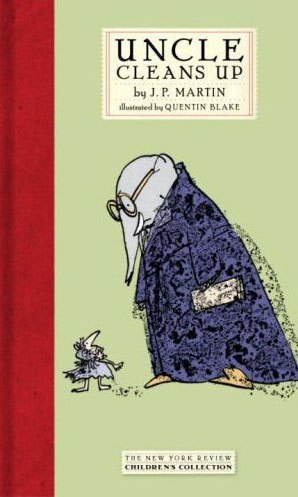
Quentin Blake's drawings for more than 300 children's books are variously described as riotous, fantastical, sophisticated, "deceptively slapdash" and (by children) "grown-up". I think his philosophy of book illustration could be a pretty good philosophy for life.
Blake likes to draw character and gesture, and works standing up, surrounded by pots of ink and quills. He was recently mobbed by young fans, and presented with the JM Barrie Lifetime Achievement Award.
About illustrating stories he says, "Well, you don’t crowd the good bits. In Matilda, the boy eats a chocolate cake as punishment and the teacher smashes the plate down on his head, but you don’t illustrate that – you illustrate the moment before."
Life. . .Don’t crowd the good bits.
Even those who don't like fossicking will like Quentin Blake's illustration of it.
In ancient Britain, the new year was celebrated early in November, after the harvest was in.
The latest archaeological, linguistic and DNA research suggests that the people who lived in Britain in 1,000 and 2,000 BC, during the Bronze and Iron Ages, were the descendants of people who had lived in the isles for thousands of years. We call some of these people - especially those living in the west of Britain and in Ireland - Celts. They were distinguished by their language, art and religious beliefs. They traded with and shared their culture with Celts who lived and roamed as far away as Switzerland, Greece and Galatia in Turkey. At the time, great swathes of Britain were shadowy with trees, many of them oak trees, which the Celts revered, believing that the oak was the gateway between worlds and, more practically, feeding their pigs on acorns.
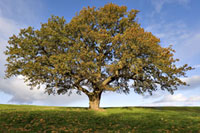
Magna Carta was written with the ink made from oak 'apples'. Robin Hood’s greenwood tree was the oak. Robert Kett fought against the land enclosures of the 16th century under the Oak of Reformation. In 1687, in Connecticut, the Colony’s Charter was hidden in the Charter Oak for safekeeping. In 1787 the three Williams - Wilberforce, Pitt and Grenville - swore to abolish the slave trade under an oak tree. The oak is the national tree of England, Wales and the United States, and we think that the structure of the English oak is a visual sketch of the organizing principles of the British and American Constitutions.
In the 17th, 18th and 19th centuries hundreds of British explorers risked their lives to send the seeds of trees back to London from wildernesses all over the world, making Britain the richest conserver of plants in the world. Inspired by John Evelyn's book Sylva, published in 1664, Brits planted a million trees. Perhaps all this was a throw-back to tree-loving Celts?
Recent reports say that trees are not the best carbon offsets, but they are a source of oxygen and joy, and during the Celtic new year, before the ground grows too hard, is a good time to plant one. People sometimes think they will never see their tree grow tall, but Hugh Johnson writes,
On a piece of land which was completely cleared 15 years ago I have oaks 25 feet high, from acorns, presumably sown by jays the year the land was cleared.
A few years ago, I wrote about planting a tree with a friend -
We carried our stick of a tree - a white Oregon oak looking slightly disheveled with a few withered leaves still hanging from its twigs and its root ball wrapped in a burlap bag - into the field. We needed to find a place where the oak could spread out, and we walked round together, to see where the oak might like to grow. We found the place, not too close to the house and not too far from a beech tree, because in my opinion trees like company. My friend began to dig.
He was a good man with a shovel, and dug a hole three to four times the width of the root ball and deep enough so the trunk of the oak rose above the hole and the roots rested on a firm base of undisturbed earth that wouldn’t settle with time. Even young oaks have long tap roots so the hole had to be quite deep, and we tapered the hole since most new roots grow horizontally, near the surface.
We stood the oak in the hole, to see if we had the depth right and the roots had enough room to spread out. Not quite, but close. He used the fork to break up the bottom of the hole, and improve drainage. We roughed up the walls of earth to break up any glazing from the shovel that could block growing, and I teased the roots out from the root ball.
I used to think gravel at the bottom of the hole would improve drainage, but recent studies have shown it doesn't. Water puddles above the layer of gravel, and only slowly drains away, rotting the roots.
A tree is like a child - the early years are important. A newly planted oak likes plenty of water for two or three years, particularly in dry spells. A couple of buckets a week from a friendly hand makes a real difference, though the great oaks in a nearby field have grown on their own without help from man or woman.
I wondered how long I would be here to water the oak and watch it grow, but I thought, we'll give the young oak a good start, and it's better to plant a tree and never see it grow than never plant a tree at all.
We stood the oak in his place, and tied him to his stake, and spread the roots in their natural position. Then we began filling the hole, sifting soil we'd mixed with leafmold between all the roots and rootlets and packing them in. We were sparing with compost, because a tree sinks as compost decomposes, and the roots grow round and round seeking compost when they should be branching out into the soil. We put some compost close to the surface, where the bulk of feeder roots grow, and stepped hard around him, firming the earth.
When I saw the young oak standing there, looking small and intrepid and dear, I was happy. My friend was smiling.
We poured a couple of buckets of water over him, eliminating any air pockets and giving him a good drink. I like to think the bucket of water was a benediction for all three of us.
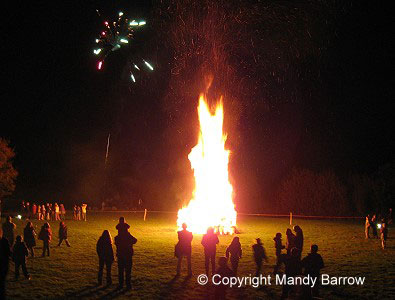
Curious how a botched attempt at revolution could give rise to thousands of jovial bonfires all over Britain. Perhaps there's a lesson there?
Image: Woodlands Junior School, Kent
For us, Guy's gunpowder, treason and plot to blow up the King and Houses of Parliament in 1605 was a brilliant excuse for fires and fireworks. When I was a boy, we always had a bonfire in our garden on the 5th of November, or in the garden of friends. Weeks before I was studying the fireworks in the two shops nearby. How many of the rockets, bangers, roman candles and little fizzing pyramids could I afford?
To raise the money, we would make a Guy, stuffing old clothing with straw or crunched up paper and sitting him by the road. The more splendid looking your Guy, the more pennies you could collect. Meanwhile, I was gathering dry wood and brush, not always so easy to find in damp November, for our bonfire.
It was a family affair. On the day, our mother made special delicious toffee in a flat tray and sometimes toffee apples. That night we put the Guy on our bonfire and our father lit it. We sang raucous songs and when the bonfire had calmed down a bit, set off fireworks and ate toffee.
If Senator McCain and Governor Palin win, as I think they will, I will tell you why I think they won, how that win connects with the history of freedom in Britain and America and why it had nothing to do with the color of anyone's skin.
To my mind, judging a person by the content of his character rather than the color of his skin is always the right thing to do.
UPDATE: MY ELECTION PREDICTION IS WILDLY OFF BASE - I am watching the election returns this evening on the Pacific Coast, and at half past eight in the evening my time the networks are calling the election for Senator Obama. If so, and though it may seem a stretch to say so, the 18th and 19th century Brits who helped to abolish the African slave trade and slavery laid the groundwork for the Senator's victory. The Telegraph reports on the "Dream Realized".
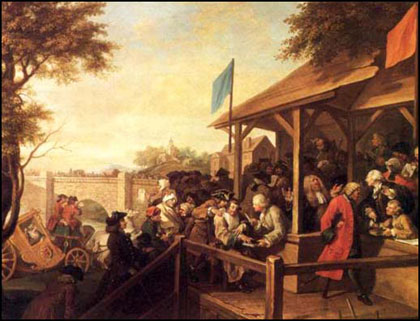
Polling (1754) by William Hogarth. Long lines then, too, even though not all men and no women could vote. Voting is the only reliable poll - unless voters have been pressured or votes have been stolen.
In 1872, PM William Gladstone introduced the secret ballot. Previously men had to mount a platform in full view of their neighbours and announce their choice of candidate to the officer who recorded it in the poll book. Some men were told how to vote. Others were punished when they did not support their employer's candidate.
You know why the secret ballot is important - you want to cast your ballot without intimidation. It's no one's business but your own how you vote.
In the 1840s the Chartists launched their million-man movement for voting rights, including a secret ballot for every voter.
The first secret ballots were introduced in Australia in 1856. In the United States the secret ballot became known as the Australian ballot.
I support secret ballots everywhere. Picture IDs which do not undermine the secret ballot seem like a reasonable idea for registering to vote and for voting.
To step on a plane I have to show a picture ID. To drive I have to carry a picture ID. To cash a check I sometimes have to present a picture ID. It seems fair to require a picture ID when registering to vote and when voting. People who do not fly, drive or cash checks should be helped in obtaining a voter's ID.
A voter's registration and poll appearance can be cross-checked, just as I'm cross-checked when boarding a plane. That may eliminate last-minute voter registrations. But then, it's hard to get on a flight last minute, too.
Why should your vote be stolen by a voter pretending to be someone else and voting more than once?
In August, the congressman, senator and one-time Democratic nominee for the US presidency, George McGovern, wrote about legislation with the Orwellian name the Employee Free Choice Act -
The key provision of EFCA is a change in the mechanism by which unions are formed and recognized. Instead of a private election with a secret ballot overseen by an impartial federal board, union organizers would simply need to gather signatures from more than 50% of the employees in a workplace or bargaining unit, a system known as "card-check." There are many documented cases where workers have been pressured, harassed, tricked and intimidated into signing cards that have led to mandatory payment of dues.
Under EFCA, workers could lose the freedom to express their will in private, the right to make a decision without anyone peering over their shoulder, free from fear of reprisal.
Many Democrats, including Senator Obama, are pushing to do away with the secret ballot in union elections.
When they were opposed by employers, unionists depended on the secret ballot to organize.
Why would anyone subvert the secret ballot today?
The Wall Street Journal described voter fraud in the US among Republicans and Democrats. It's a sorry tale. Today Glenn Reynolds discusses other electoral irregularities.
Thirty-four-year old Paula Radcliffe "hit the front from the start and pushed the pace all of the way, running into the teeth of a strong headwind for most of the 26.2 miles" to win the women's division of the New York Marathon for the third time - and raise the flag with a steady smile.
The world record holder was so dominant in gusty conditions at the New York City Marathon that she served in the dual roles of leader and windbreaker and still breezed to a comfortable victory Sunday. . .
I've run marathons. Anyone who has can imagine what it took Paula to run New York in those conditions in 2hr 23min 56sec.
A fellow runner said, "I feel bad that Paula did so much work but. . .she was so tough, she just hammered us with eight miles to go."
. . .Radcliffe won with negative splits, running the second half of the race almost three minutes quicker than the first, another testament to the stamina she had left, even though the opening mile took a slow 6:31, such was the wind as the runners made the steep climb out of Staten Island into Brooklyn across the Verrazano-Narrows Bridge.
Paula's philosophy, which she attributed to her dad - "'Never look behind you, it's a sign of weakness.'"
Driving with great control and judgement, just twenty-three-years old, Lewis Hamilton has become Formula One's youngest ever champion in the season-ending Brazil Grand Prix at Interlagos.
Edward Gorman wondered whether Hamilton's finish - with more points than anyone over the last two seasons - meant anything else. He says that it does - "Lewis appears near the very top of this table" of greats.
In addition to his skill, Lewis has been driving McLaren's terrifically engineered cars. McLaren's superb team, seen here have put him over the top.
And, as we mentioned in a previous post, his dad has been a huge supporter.
Eternal Father, strong to save,
Whose arm doth bind the restless wave,
Who bids the mighty ocean deep
Its own appointed limits keep;
O hear us when we cry to Thee
For those in peril on the sea.
O Savior, whose almighty word
The winds and waves submissive heard,
Who walk'st on the foaming deep,
And calm amid its rage did sleep;
O hear us when we cry to Thee
For those in peril on the sea!
Most Sacred Spirit, who didst brood
Upon the chaos dark and rude,
And bid its angry tumult cease,
And give us light and truth and peace;
Oh, hear us when we cry to Thee,
For those in peril on the sea!
O Trinity of love and power,
Our brethren shield in danger's hour;
From rock and tempest, fire and foe,
Protect them wheresoe'er they go;
Thus evermore shall rise to Thee
Glad hymns of praise from land and sea.
I found the credits to this video as moving as the video itself.
The hymn is used by both the Royal Navy and the US Navy. (Personal note - my uncle George Gleason served with the US Navy in North Africa during World War II.) The words of the hymn are often changed a little, sometimes to include the soldiers of all the Armed Forces. Some people today detest our Armed Forces. They are hopeful that talking and the passing of laws will change the world.
If only that were true!
The slave trade would never have ended without the Royal Navy. Men were lost, and hundreds of thousands of men and women were saved.
Greece would not have been freed from the Ottoman (Turkish) Empire without the Royal Navy (and French and Russian squadrons). Navy men were lost, and the misery of millions was lifted.
The Royal Navy defended Britain from invasion many times. Men were lost but the British people were not ruled by foreigners.
The Royal Navy helped to defeat Nazi Germany and with the US Navy maintained the freedom of the seas from pirates from 200 years. Men and women were lost, but millions were freed from a fate worse than death.
The music is by John Bacchus Dykes (1823-1876) who was assistant organist at St John's Church when he was ten years old. He wrote more than 300 hymns, including The King of love my Shepherd is. The words are by William Whiting.
Anglican Feast Days celebrate certain men and women for their bravery, insights, contributions, and faith in Christ. They were social reformers, poets and scientists, evangelists, and MPs, mystics, missionaries, scholars, kings and social and constitutional reformers. They include
Most of them met huge challenges. They were very human. They were true.
In the lifetime that is childhood, what is hardest for a child to bear, lack of justice or lack of love? A child senses that the person who treats her unfairly does not love her.
Like children, the saints instinctively knew that justice and love are connected, the way muscle is connected to bone.
BRITS AT THEIR BEST - The British Constitution, British Life, The Knights, Artists, Freedom, Ingenious Inventors, Innovative Thinkers, the Science Timeline, Abolishing Slavery, Discounts to Museum, Cruises, Google Ads Copyright David Abbott and Catherine Glass 2010
You can make a donation to keep this site up and expanding -
FRIENDS & SUPPORTERS -
M. SCOTT ANDERSON supported Brits at their Best with a contribution.
DAVID ARLAN made a donation to Brits at their Best.
ANTHONY FRANCIS supported Brits at their Best with a contribution.
JAMES HODGE made a donation to Brits at their Best.
KATERINA EYRE BREWER made a contribution to the website in memory of her beloved father, JOHN MEREDITH EYRE. He died at the age of 43 after serving in the British Army and raising his children to love music and to cherish their English heritage.
GILL CHANT made a gift to the website in memory of her mother ‘MAC’ CHANT, who loved the arts.
SIMON JACKSON made a contribution to Brits at their Best, which he called ‘an excellent and important site’.
ANONYMOUS made a donation to Brits at their Best because ‘It lifts my spirit to visit your site’.
JOHN WRAKE made a contribution to the website in memory of T/141188039 SGT. C.R. RITTER, Workshops Section, 3 Company, Royal Army Service Corps, killed on active service in the Cameron Highlands, Perak, Malaya, on 2nd March 1950, aged 21. While trying to recover a civilian vehicle that had broken down, he was ambushed by Communist terrorists.
GREGORY J. BURROWS supported Brits at their Best with a gift.
They brought honesty and common sense, fair play and compassion, bravery and self-discipline, rational thought and faith and a passionate love of liberty to a 2000-year-long struggle to achieve freedom.
Make sightseeing and eating out more affordable with Discount Britain. Save 20% on United Kingdom attractions as well as on the total food and drinks bills at popular London restaurants (for up to six people). No restrictions, pre-pay or registration required. Click on the image above to go straight to Discount Britain and print the page for that attraction.
To find many other 20% discounts for hotels, shopping, theatre, tours, museums and cricket all over the United Kingdom, just scroll down Discount Britain. Click on the place you want and print the discount.
Brits at their best produced thousands of indispensable inventions, developed wildly popular sports, designed romantic houses and gardens, created astonishing literary masterpieces, lived with style and humour, tackled dangerous missions with daring and ingenuity, and fought with indomitable courage to establish and protect the free world.
We aim to describe their superb achievements and extraordinary lives.
CATHERINE (CAT) GLASS
I'm an American and the descendant of Czech, Irish, and English defenders of freedom. We are learning about liberty, reason, imagination, fair play, a generous and forgiving spirit, love of God, the rule of just law, representative government, books, gardens, music, art, sports, inventions. . .We are sharing what we learn.